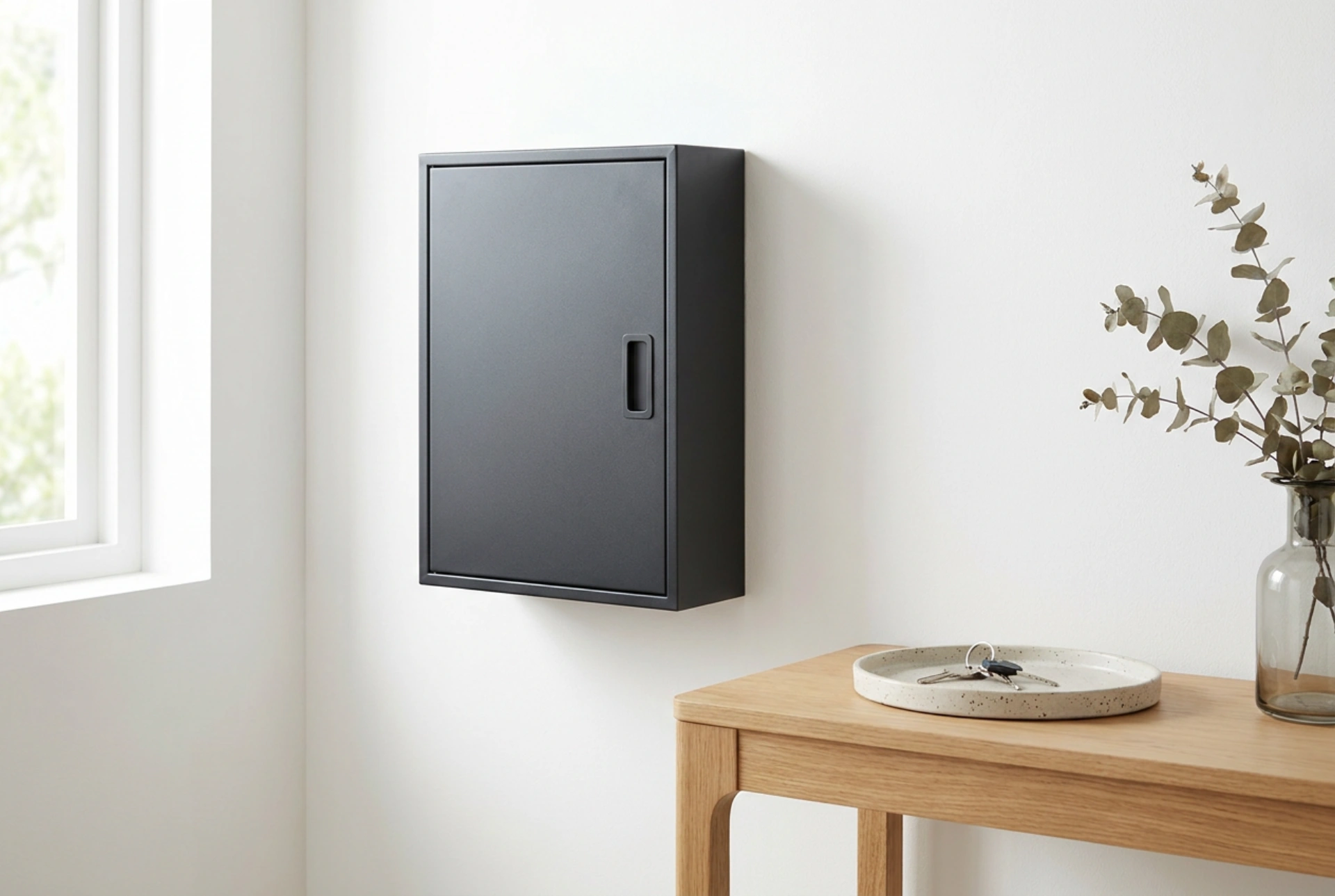


The entryway is the home’s primary transition zone, where outdoor items must be rapidly organised to prevent clutter from spreading into living spaces. Installing a wall-mounted metal key cabinet creates a dedicated, high-durability hub that systematically resolves the daily search for keys while protecting wall surfaces from impact damage.
The Physics of Entryway Friction and Key Storage
Every time you cross the threshold of your home, a physical transition occurs. Keys, wallets, and fob devices are transferred from high-mobility carrying states (pockets, bags) to stationary storage. Without a designated, low-friction receptacle, these items scatter across the nearest horizontal surfaces, such as console tables or kitchen worktops. This creates visual clutter and increases the risk of misplacement. A wall-mounted cabinet reduces this operational friction by providing a vertical, eye-level destination that requires minimal physical effort to use immediately upon entry.
Why Metal? The Material Science of Key Cabinets
Choosing the right material for an entryway organiser is critical for long-term durability. While wooden hooks or plastic trays wear down over time, metal—specifically powder-coated steel or aluminium—offers distinct mechanical advantages:
- Impact and Scratch Resistance: Metal keys carry sharp brass or steel edges. As keys are hung up or dropped into a cabinet, they repeatedly strike the backplate. Powder-coated metal surfaces withstand thousands of these high-velocity micro-impacts without chipping, peeling, or scratching.
- Non-Porous Hygiene: Keys are high-touch objects that accumulate sebum, dirt, and pathogens from daily handling outdoors. A metal cabinet is non-porous, meaning it does not absorb organic oils. It can be sanitised regularly with alcohol-based disinfectants or mild detergent solutions without risk of warping or moisture damage.
- Magnetic Versatility: Ferrous metal cabinets double as magnetic notice boards. You can use neodymium magnets to secure paper receipts, outgoing mail, or small notes directly to the exterior or interior door of the cabinet, streamlining your household admin.
Ergonomic Placement and Structural Mounting
To ensure the key cabinet is integrated seamlessly into your daily routine, its placement must follow strict ergonomic principles. The optimal mounting height lies within the 'neutral reach zone'—typically between 120 cm and 140 cm from the finished floor level. This aligns with the average elbow height, allowing you to open the cabinet and hang keys without bending or stretching your shoulder joint.
When securing the cabinet, consider the substrate of your entryway wall. Since key cabinets hold concentrated weight (especially with heavy work keys or security fobs), proper mechanical fastening is essential:
- Solid Masonry Walls: Use nylon wall plugs (rawlplugs) paired with countersunk steel screws. This creates a secure expansion grip inside the brick or concrete.
- Plasterboard (Drywall) Walls: Never rely on standard screws. Use hollow-wall anchors (such as toggle bolts or metal self-drilling plasterboard anchors) to distribute the shear force across a wider surface area of the gypsum board.
Position the cabinet on the lock side of the front door rather than the hinge side. This ensures that as you step inside and close the door behind you, the cabinet is immediately accessible without requiring you to walk around the door leaf.
Interior Organisation: Preventing Hook Congestion
Effective key storage relies on logical spatial distribution. Avoid crowding multiple keychains onto a single hook, which leads to physical tangling and accidental drops. Group keys by frequency of use: place daily house and vehicle keys on the most accessible, front-row hooks. Seasonal keys (such as shed locks, padlocks, or spare car keys) should be relegated to the back or lower hooks. Label each hook systematically using generic, non-permanent adhesive labels or colour-coded tags to allow every household member to identify the correct key at a single glance.