

Engraved keepsake boxes hold deep sentimental value, but their detailed, recessed inscriptions are notorious for trapping dust, skin oils, and environmental residues. Cleaning these delicate micro-crevices requires a precise understanding of material science to avoid abrading the fine edges of the engraving or stripping away protective finishes.
The Physics of Engraved Surfaces
Engraving alters the surface topography of wood, metal, or glass, creating deep grooves and micro-crevices. These recessed areas act as natural traps for airborne particulates through gravitational settling and electrostatic attraction. Over time, these fine dust particles bind with ambient moisture and airborne lipids, forming a stubborn film inside the lettering. When cleaning, the primary risk is mechanical abrasion. Using coarse cloths or applying excessive downward pressure can round off the crisp edges of the engraving, permanently dulling the legibility of the design. Additionally, many metal and wooden boxes feature chemical oxidants or dark waxes within the grooves to contrast with the surface; aggressive scrubbing can wash away these contrast agents, rendering the inscription faint.
Cleaning Wood and Lacquer Inscriptions
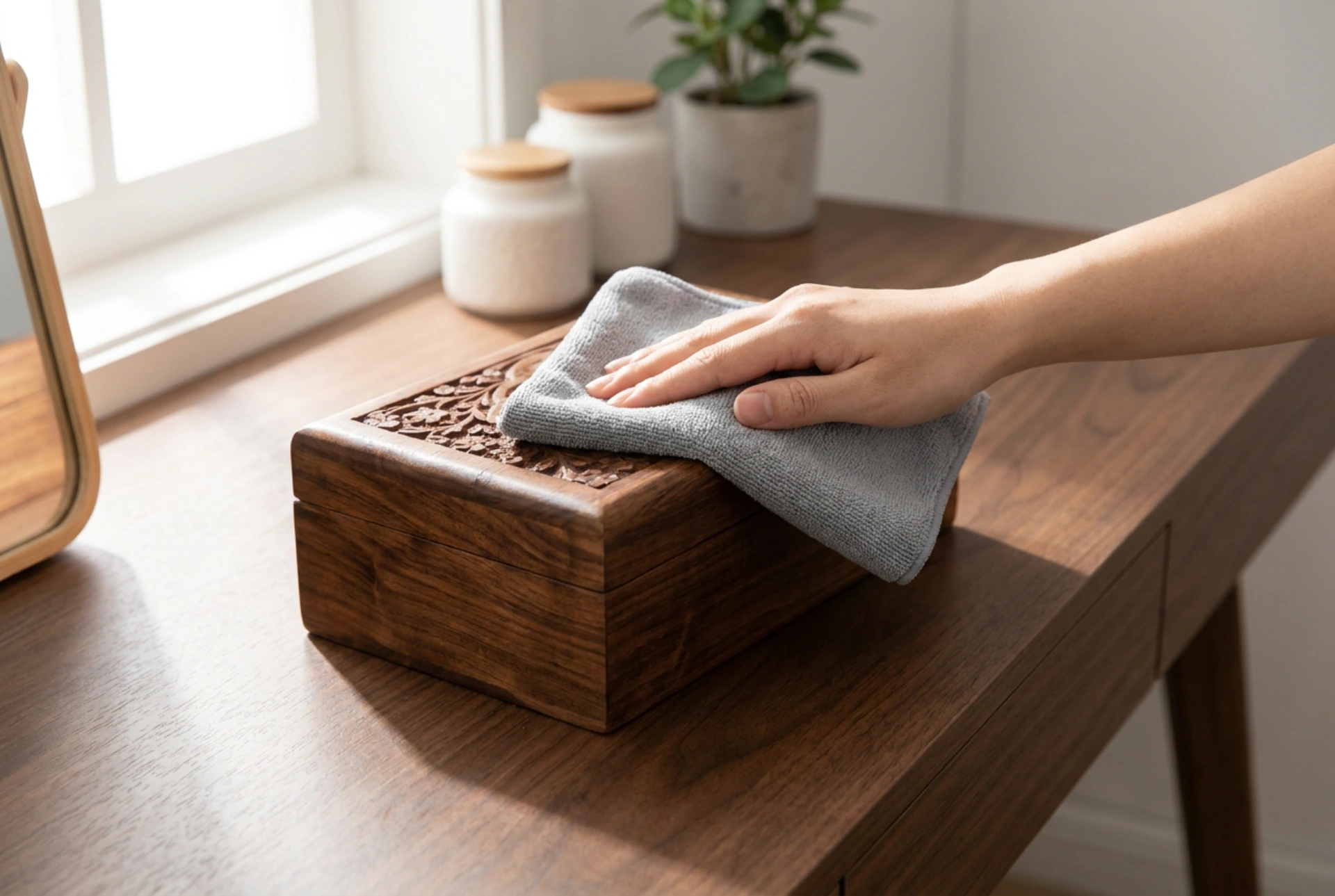
Wooden boxes are highly susceptible to moisture and relative humidity fluctuations. Wood is hygroscopic, meaning it absorbs and releases water vapor, causing the grain to expand and contract. If liquid cleaner penetrates the raw wood exposed within the engraved grooves, it can cause the wood fibres to swell, warping the inscription and lifting the surrounding lacquer. To clean wood safely, never spray liquids directly onto the surface. Begin with a dry, ultra-soft natural-bristle brush, such as a high-quality makeup powder brush, to gently sweep dust out of the grooves. For persistent grime, use a slightly damp microfiber cloth wrapped over a fingertip. If a solvent is required, opt for a highly diluted solution of pH-neutral vegetable-based soap in distilled water. Distilled water is crucial because it lacks the dissolved minerals found in tap water, which can leave white crusts inside the engraving upon evaporation.
Handling Engraved Metals: Preventing Tarnish and Clogging
Metal boxes, particularly those made of silver, pewter, or brass, present unique chemical challenges. These metals react with sulfur compounds in the air to form dark tarnish (such as silver sulfide). While polished surfaces can be buffed, the engraved channels are difficult to reach. Avoid using thick polish pastes; these compounds dry into a hard, white crust that clogs the engraving, which is incredibly difficult to remove without scratching the metal. Instead, utilize the principle of chemical reduction or use liquid-based, non-abrasive metal cleaners sparingly. Apply the liquid cleaner with a cotton bud, working strictly along the lines of the engraving. For intricate work, wrap a piece of soft cotton around a wooden toothpick to gently extract residues from the deep crevices. Always rinse the area with a damp cotton bud dipped in distilled water and dry immediately with a clean microfiber cloth to prevent water spots.
Precision Cleaning Protocol: Step-by-Step
To ensure no damage occurs during the cleaning process, follow this methodical, low-impact sequence:
- Dry Dusting: Use a handheld rubber air bulb (such as those used for camera lenses) to blow loose dust out of the grooves. Follow up with a soft, dry artist’s brush, brushing along the direction of the engraving lines.
- Targeted Solvents: Dampen a cotton swab with distilled water or a 50:50 mixture of distilled water and isopropyl alcohol (safe for glass and unvarnished metal, but avoid alcohol on lacquered wood). The swab should be damp, not dripping.
- Micro-Detailing: Gently roll the damp swab over the engraved lettering. Rolling the cotton prevents the fibres from snagging on sharp metallic or wooden edges, unlike dragging or scrubbing motions.
- Moisture Removal: Immediately follow with a dry cotton swab or the corner of a clean microfiber cloth to absorb any residual moisture, preventing swelling or oxidation.