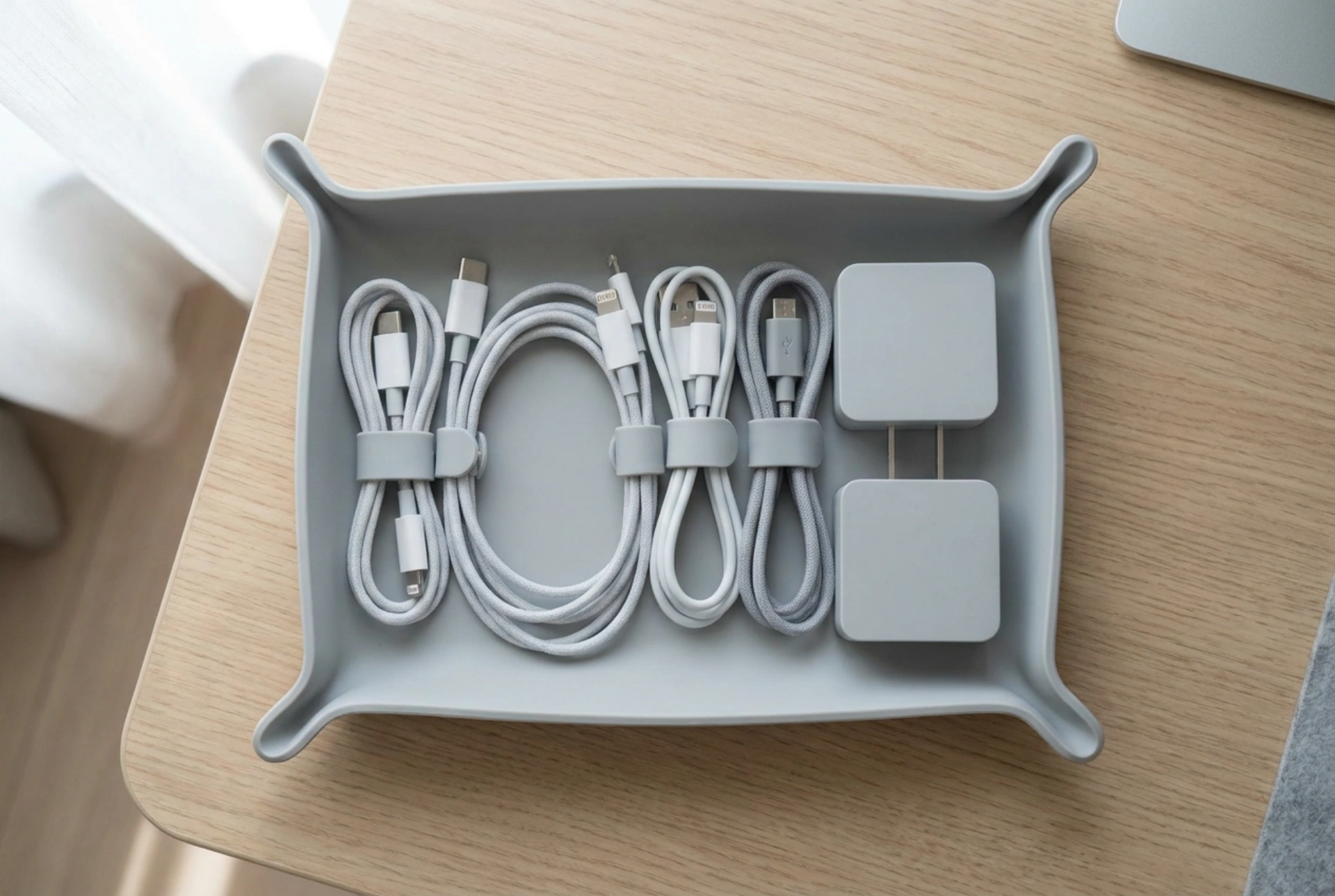


Managing a chaotic mass of charging cables and power adapters requires an understanding of the physical properties of polymer sheathing and the mechanics of copper wire strain. Implementing a structured organization system not only clears visual clutter but actively extends the lifespan of your electronics by preventing internal wire degradation.
The Science of Cable Wear: Why Tangle Prevention Matters
To organize cables effectively, one must first understand why they fail. Most charging cables consist of fine, stranded copper conductors insulated by thin plastic layers, all encased in an outer sheath of polyvinyl chloride (PVC) or thermoplastic elastomer (TPE). These materials possess inherent elasticity, but they are highly susceptible to "coil memory" and structural fatigue.
When a cable is bent sharply or wrapped tightly around a power adapter, it undergoes tensile stress on the outer edge of the curve and compressive stress on the inner edge. Exceeding the minimum bend radius—typically defined as ten times the outer diameter of the cable—causes micro-fractures in the copper strands. Over time, this cumulative mechanical stress increases electrical resistance, generates localized heat during charging, and eventually leads to complete cable failure. A dedicated, well-spaced organizer prevents these damaging tight bends.
Pre-Sorting and Restoring Cable Material Integrity
Before placing any cable into a storage system, it must be inspected, cleaned, and categorized. Cables that have remained coiled or stuffed in drawers for long periods often develop a sticky residue. This tackiness is caused by plasticizer migration, a process where the chemicals that keep PVC flexible slowly leach to the surface. To restore the polymer surface, wipe the cable down with a microfiber cloth lightly dampened with a mild solution of isopropyl alcohol (70% or lower) and water. Avoid harsh solvents, which can permanently dissolve the protective TPE outer jacket.
Once cleaned, categorize your cables by connector type (USB-C, Micro-USB, proprietary formats) and maximum power delivery capacity. Mixing high-wattage laptop cables with low-ampere accessory wires leads to inefficiencies when searching for the correct pairing. Grouping these items by functional output ensures you always select the optimal wire for your specific device requirements.
The "Over-Under" Coiling Method: Neutralizing Torsional Stress
The primary mistake made when organizing cables is winding them tightly around a hand or an elbow. This action imparts a torsional twist with every loop, putting continuous rotational tension on the internal copper cores. When released, the cable naturally loops and tangles itself to relieve this internal torque.
To eliminate this issue, professional technicians use the "over-under" coiling technique:
- The Over Loop: Hold one end of the cable in your non-dominant hand. With your dominant hand, bring the cable toward you, forming a natural, relaxed loop, and place it in your holding hand.
- The Under Loop: For the next loop, roll your wrist outward as you grab the cable, twisting it in the opposite direction. Bring this loop up to your holding hand. This motion cancels out the torsional twist introduced by the first loop.
- Secure the Coil: Alternate these two movements until the entire cable is coiled. Secure the finished coil with a reusable hook-and-loop strap or a flexible silicone tie. Avoid using standard rubber bands, as vulcanized rubber degrades rapidly, leaving sticky, sulfurous residues on your cable jackets.
Designing the Interior of Your Cable Organizer
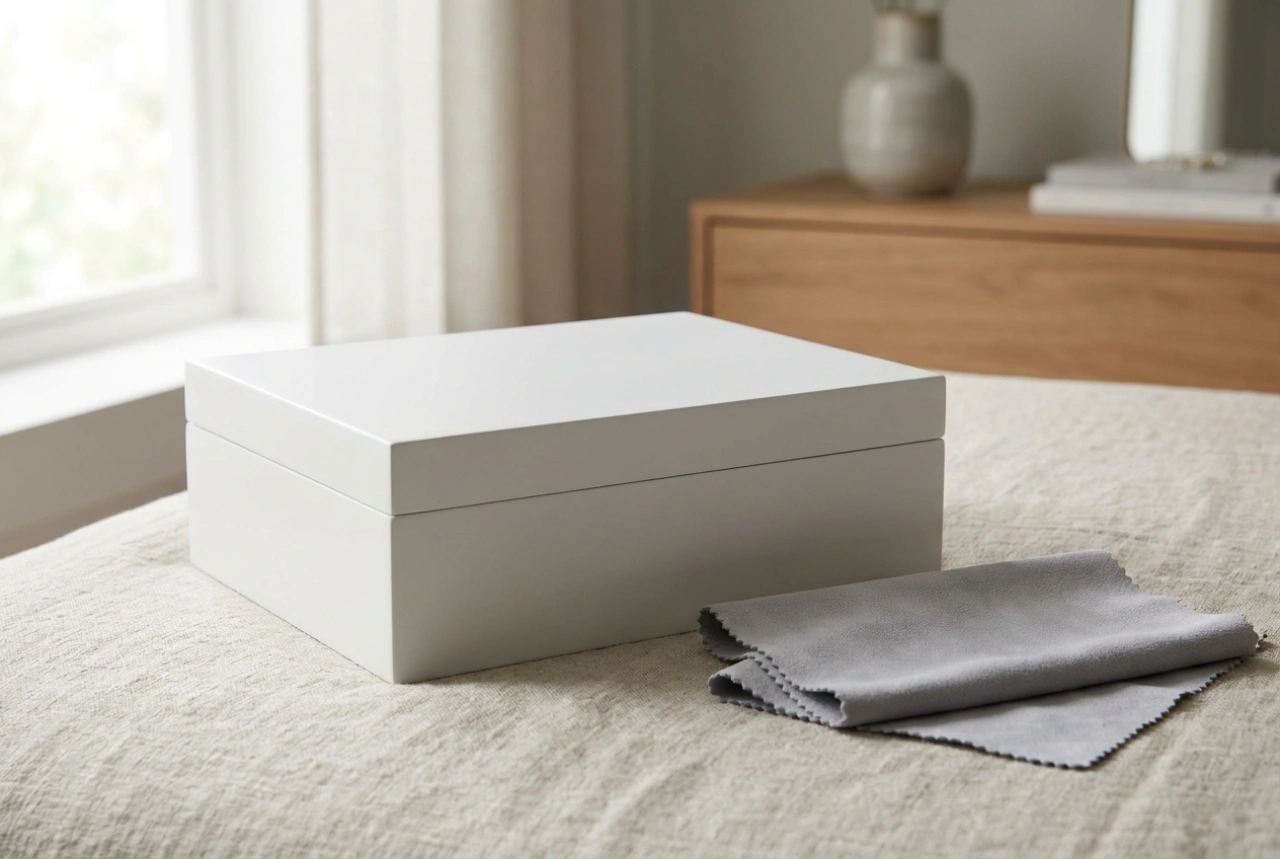
An effective organizer is more than a simple box; it is a system of compartmentalized physical barriers. When choosing or configuring an organizer, look for adjustable dividers made of non-conductive, anti-static materials such as silicone, heavy-duty felt, or treated wood. Place larger, heavier power bricks at the bottom or in dedicated rear compartments. These power bricks contain transformers that retain heat; storing them with sufficient clearance ensures adequate air circulation and prevents thermal buildup.
Arrange your coiled, secured cables vertically within the organizer slots, similar to files in a cabinet. This vertical orientation prevents the "compaction effect," where cables at the bottom of a stack are compressed under the weight of others, risking damage to delicate connectors. Label each slot or cable strap clearly to maintain the system over time, ensuring every cable returns to its designated place immediately after use.