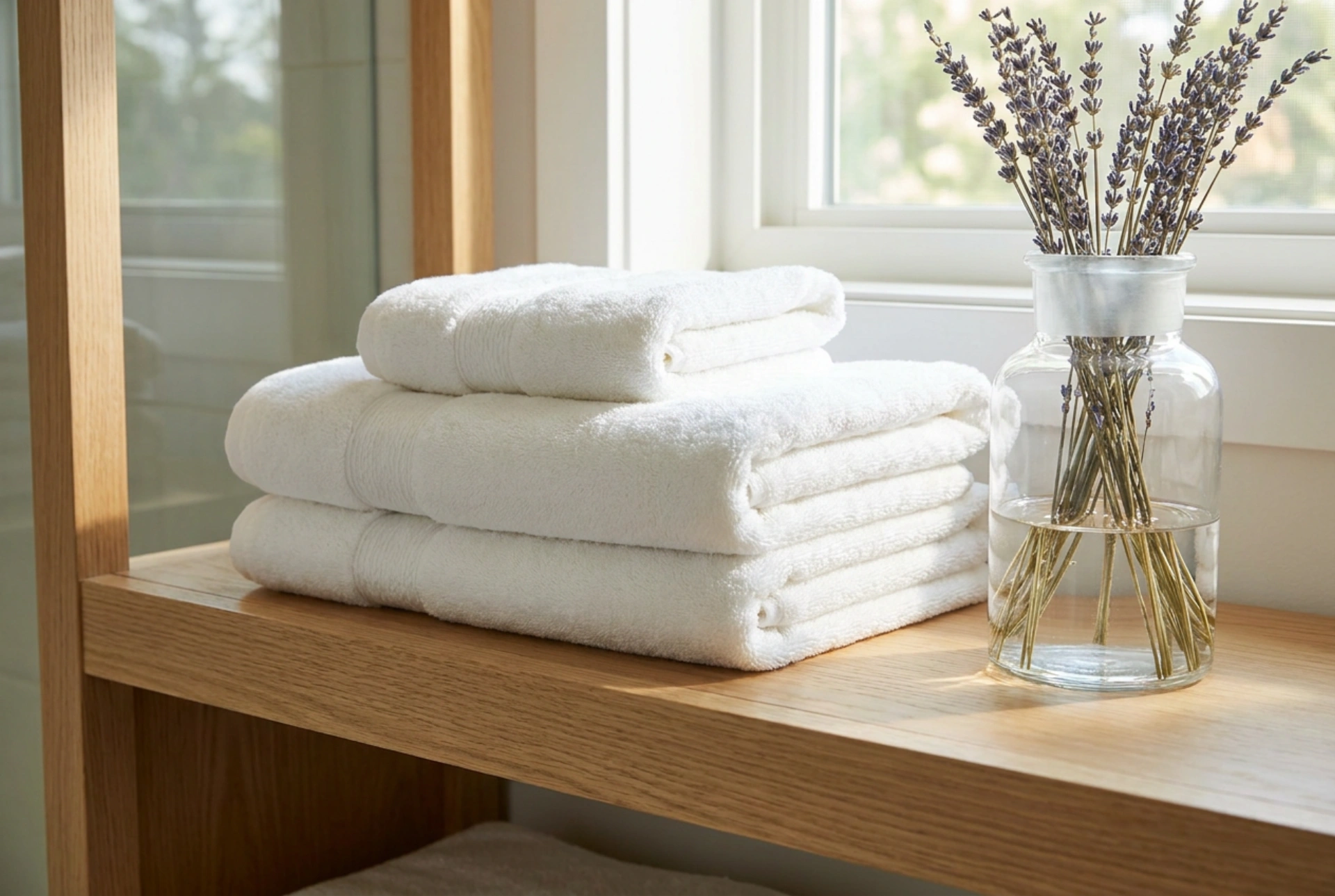


New towels often feel exceptionally soft in the shop, yet they fail to absorb water effectively during their first few uses. This paradox is caused by industrial finishing agents applied during manufacturing, which must be chemically stripped to unlock the natural capillary action of the cotton fibres.
The Science of Shop-Fresh Towels: Why They Repel Water
During the manufacturing process, textile mills treat cotton yarns with industrial sizing agents, starches, and synthetic softeners. These chemical compounds, often containing silicone-based polymers, are designed to make the fabric look plush, resist wrinkling, and feel incredibly soft to the touch on retail shelves. However, these finishing agents form a hydrophobic (water-repelling) barrier over the hydrophilic (water-attracting) cellulose fibres of the cotton.
Cotton is naturally highly absorbent due to its molecular structure. It consists of cellulose polymers rich in hydroxyl groups, which readily form hydrogen bonds with water molecules. When these hydroxyl groups are coated with silicone or paraffin emulsions, water cannot make direct contact with the fibre surface. Instead of being drawn into the gaps between the woven loops (known as capillary action), water beads up and rolls off. To activate your towels, you must break down this synthetic barrier without damaging the underlying cellulose structure.
Step One: Stripping Chemical Coatings with Acetic Acid
The first wash of any new towel should never involve standard laundry detergents or commercial fabric softeners, as these will only compound the chemical buildup. Instead, the first phase relies on acetic acid, commonly found in standard distilled white vinegar. Acetic acid acts as a mild solvent that dissolves alkaline chemical residues, starches, and silicone finishes.
- The Process: Place the new towels into the washing machine drum. Do not overload the machine; towels require ample space for water to circulate freely. Select a standard cotton cycle at 40 degrees or 60 degrees Celsius. Check the care label for temperature limits; 40 degrees is ideal for vibrant colours, while 60 degrees can be used for pure whites.
- The Agent: Pour 150ml to 200ml of distilled white vinegar directly into the detergent drawer or the fabric softener compartment. Do not add any laundry detergent.
- The Mechanism: The acidic environment breaks the chemical bonds of the industrial softeners, suspending them in the wash water so they can be rinsed away. Additionally, acetic acid helps to lock in dyes, preventing colour bleeding in future washes.
Step Two: Restoring Fibre Loft with Sodium Bicarbonate
Once the initial chemical barrier is stripped, the second step is to open up the cotton fibres to maximise their volume and surface area. This is achieved using sodium bicarbonate (baking soda), a mild alkali.
Run a second consecutive cycle, this time omitting the vinegar and instead adding 50g of sodium bicarbonate directly into the washing machine drum. Wash the towels at the same temperature. Sodium bicarbonate neutralises any lingering acidic residues and acts as a gentle physical buffer. Its chemical properties slightly raise the pH of the water, which causes the individual cotton fibres to swell slightly. This swelling action unlocks the tight twist of the yarns, lifting the pile and creating microscopic pockets within the weave. These pockets are what hold water, drastically increasing the overall absorbency of the towel.
The Physics of Drying: Shaking and Air Flow
The mechanical treatment of the towels post-wash is just as critical as the chemical treatment. Before drying, vigorously shake each towel out. This physical snapping action uncoils the compressed terry loops that have been flattened during the spin cycle.
If using a tumble dryer, opt for a low to medium heat setting. Excessive heat can bake the cellulose fibres, causing them to become brittle and lose their natural elasticity. The constant tumbling motion, combined with gentle warmth and airflow, mechanically lofts the loops, ensuring maximum surface area for water absorption. If air-drying, hang the towels in a well-ventilated area away from direct, harsh sunlight, which can stiffen the fibres. Avoid drying them directly on radiators, as rapid, static heat compresses the weave and reduces future absorbency.