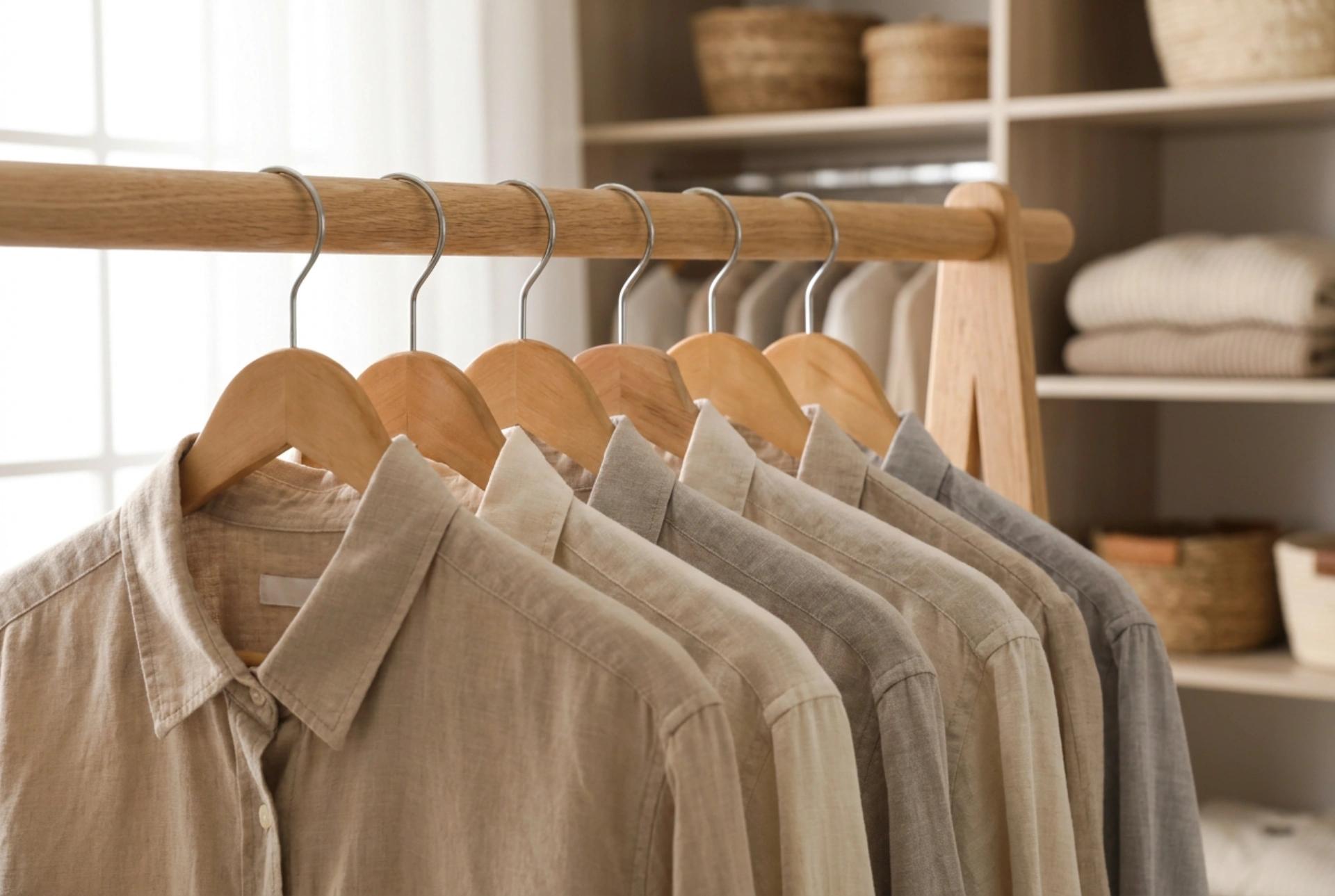


Inexpensive plastic hangers are a staple in most closets, but their slick surfaces and thin profiles often cause unsightly shoulder bumps, fabric stretching, and structural damage to garments over time. By understanding the physical forces at play and applying correct hanging techniques, you can prevent these distortions and extend the lifespan of your wardrobe.
The Physics of Shoulder Bumps and Fabric Stretching
When a garment is suspended from a hanger, gravity pulls the fabric downward while the hanger provides an equal and opposite upward force. On thin tubular plastic hangers, this upward force is concentrated over a very small surface area. According to the principles of physics, pressure is force divided by area (P = F/A). When the surface area of the hanger is narrow, the concentrated pressure exerts significant stress on the delicate warp and weft threads of your clothing.
This stress causes fibers to stretch permanently, resulting in the dreaded 'shoulder nipples' or puckered seams. Knitted fabrics, such as wool, cashmere, and loose cotton weaves, are particularly susceptible because their looped structures allow for high elasticity but low resistance to sustained, localized tension. Woven fabrics like linen and heavy denim resist this deformation better, but long-term suspension on sharp plastic edges will still distort the shoulder alignment and weaken the seams.
Optimizing Plastic Hangers to Distribute Weight
To mitigate fabric damage, you must increase the surface area of the support or increase the friction between the fabric and the plastic. This prevents the garment from sliding off-center, which creates uneven tension and warps one side of the garment more than the other.
- Broaden the shoulder support: You can modify standard plastic hangers by wrapping the ends with thick cotton fabric or felt. This increases the contact area, distributing the weight of the garment more evenly and mimicking the shape of human shoulders.
- Introduce friction: Apply thin silicone adhesive strips or wrap cotton bias tape around the sloping arms of the hanger. The increased coefficient of friction prevents slippery synthetic or silk fabrics from sliding off, keeping the collar and shoulders perfectly centered.
- Avoid heavy garments on thin profiles: Heavy winter coats, structured blazers, and thick denim jackets should never be placed on standard tubular plastic. The weight of these garments will bow the plastic, causing the hanger to sag and pulling the collar and shoulders inward, ruining the jacket’s internal tailoring.
Hanging Protocols for Different Fabric Types
Different textile constructions require specific physical configurations to remain pristine when stored. Implementing these targeted hanging methods protects the structural integrity of your clothes.
Knits and Sweaters: The Fold-Over Method
Heavy sweaters should never be hung by the shoulders on plastic hangers. Instead, use the folding gravity-distribution technique. Fold the sweater in half vertically so the two sleeves align. Place the hook of the hanger in the armpit area, then fold the sleeves and the body of the sweater over the sloping shoulders of the hanger toward the hook. This keeps the weight of the garment centered over the hook’s apex, eliminating downward pull on the shoulder seams.
Shirts and Blouses: Structural Alignment
For button-down shirts, always fasten at least the top and middle buttons before hanging. Fastening the collar button stabilizes the yoke of the shirt, keeping it aligned symmetrically on the plastic frame. This prevents the shirt from shifting, which can cause the collar to crease unevenly and the shoulder seams to stretch out of shape.
Trousers: Balanced Draping
To hang trousers on a plastic hanger with a horizontal bar, fold them along their natural creases and drape them over the bar. Ensure the weight is balanced equally on both sides of the bar to prevent the trousers from sliding off. If the plastic bar is too smooth, slide a piece of cardboard tubing or felt over the bar to increase friction and prevent creasing.
Environmental Management in the Wardrobe
The interaction between plastic, fabric, and the surrounding atmosphere also plays a role in garment preservation. High humidity weakens natural fibers, making them more pliable and susceptible to stretching under their own weight. Keep your wardrobe well-ventilated and avoid cramming hangers tightly together, which compresses fabrics and creates friction that can warp collar shapes and lapels.