

Maximising spatial perception in a compact bedroom requires a strategic understanding of light physics and material finishes rather than simply clearing clutter. A white mirrored wardrobe serves as an optical tool that can double the perceived depth of a room when positioned and finished correctly.
The Physics of Light Reflection and Mirror Positioning
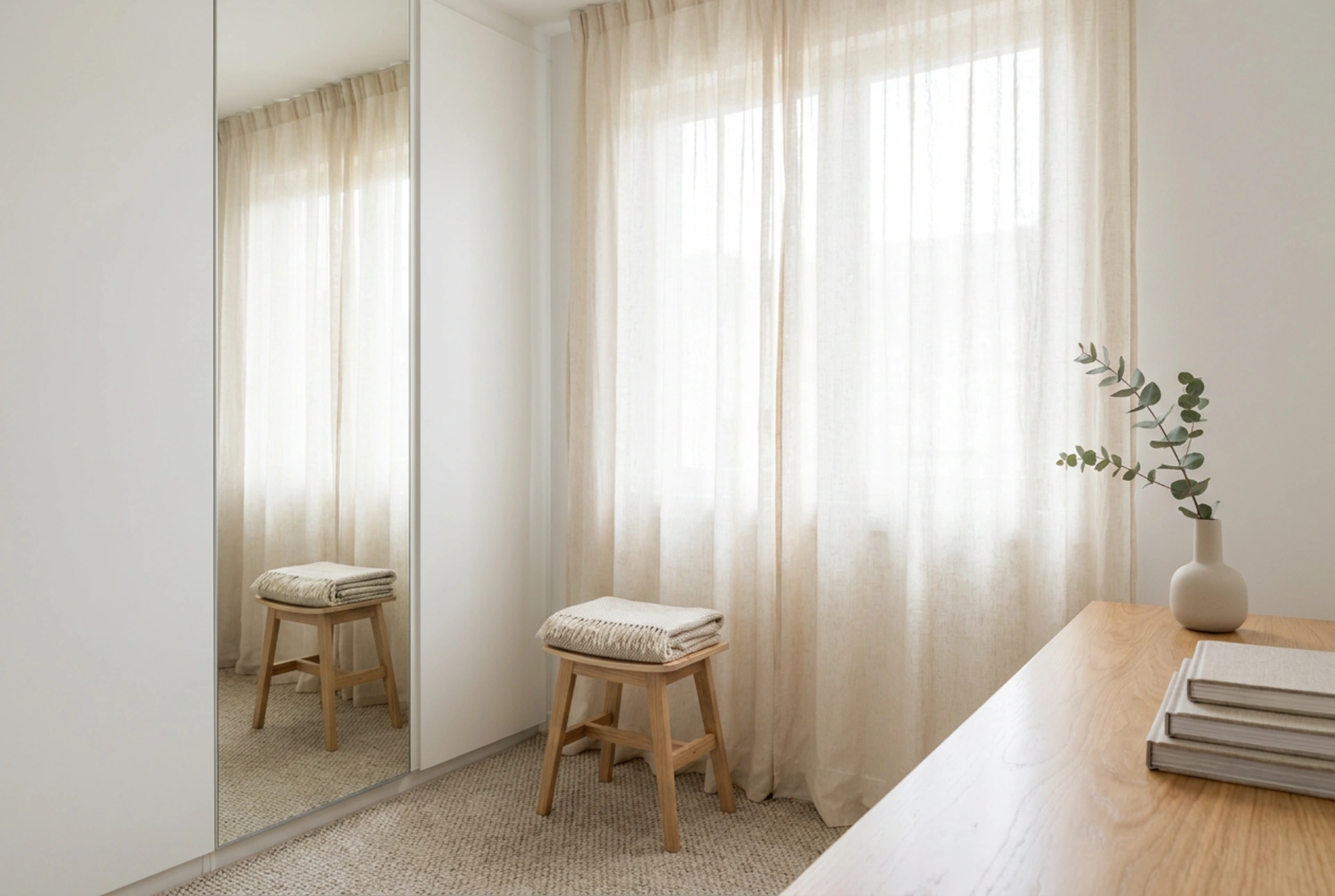
To make a small bedroom feel larger, you must manipulate both natural and artificial light. Mirrors do not create light, but they redirect it. Placing a mirrored wardrobe opposite or adjacent to a window allows the glass to capture incoming light rays and bounce them deep into the darker corners of the room. This process increases the overall lux level of the space, reducing harsh shadows that visually compress a room. However, angles matter. A mirror placed directly opposite a bed can sometimes feel visually disruptive; positioning it adjacent to the bed or at a 90-degree angle to the primary light source creates a softer, more diffused expansion of space without creating distracting direct reflections.
Material Science: Gloss, Matte, and Light Diffusion
The finish of your white wardrobe doors significantly impacts how light behaves within the room. White paint has a high Light Reflectance Value (LRV), meaning it reflects the majority of light rather than absorbing it. However, the texture of this white surface dictates the quality of that reflection:
- High-Gloss Finishes: These create specular reflection, where light bounces off at a consistent angle, behaving similarly to a mirror. This is highly effective for bouncing light but can sometimes highlight fingerprints and minor structural imperfections.
- Satin and Matte Finishes: These produce diffuse reflection. The light rays scatter in multiple directions, creating a soft, uniform glow. This eliminates harsh glares and helps the wardrobe blend seamlessly into painted drywall, reducing its perceived physical mass.
Combining a central mirrored panel with surrounding matte white doors offers the perfect balance: the mirror provides deep spatial illusion, while the matte frames soften the overall aesthetic and prevent the room from feeling cold or overly clinical.
Minimising Visual Weight Through Structural Integration
The human eye perceives space by tracking edges and contrast. To make a large piece of furniture like a wardrobe disappear, you must minimise these visual boundaries. Choosing a floor-to-ceiling wardrobe eliminates the horizontal shadow line that typically forms between the top of a standard wardrobe and the ceiling. This vertical continuity draws the eye upward, making the ceiling appear higher. Furthermore, handleless doors equipped with push-to-open mechanisms or integrated J-pull profiles remove protruding hardware. This flat, unbroken plane behaves like an architectural wall rather than a heavy piece of freestanding furniture, significantly reducing the visual weight of the unit.
Textural Balance and Room Harmony
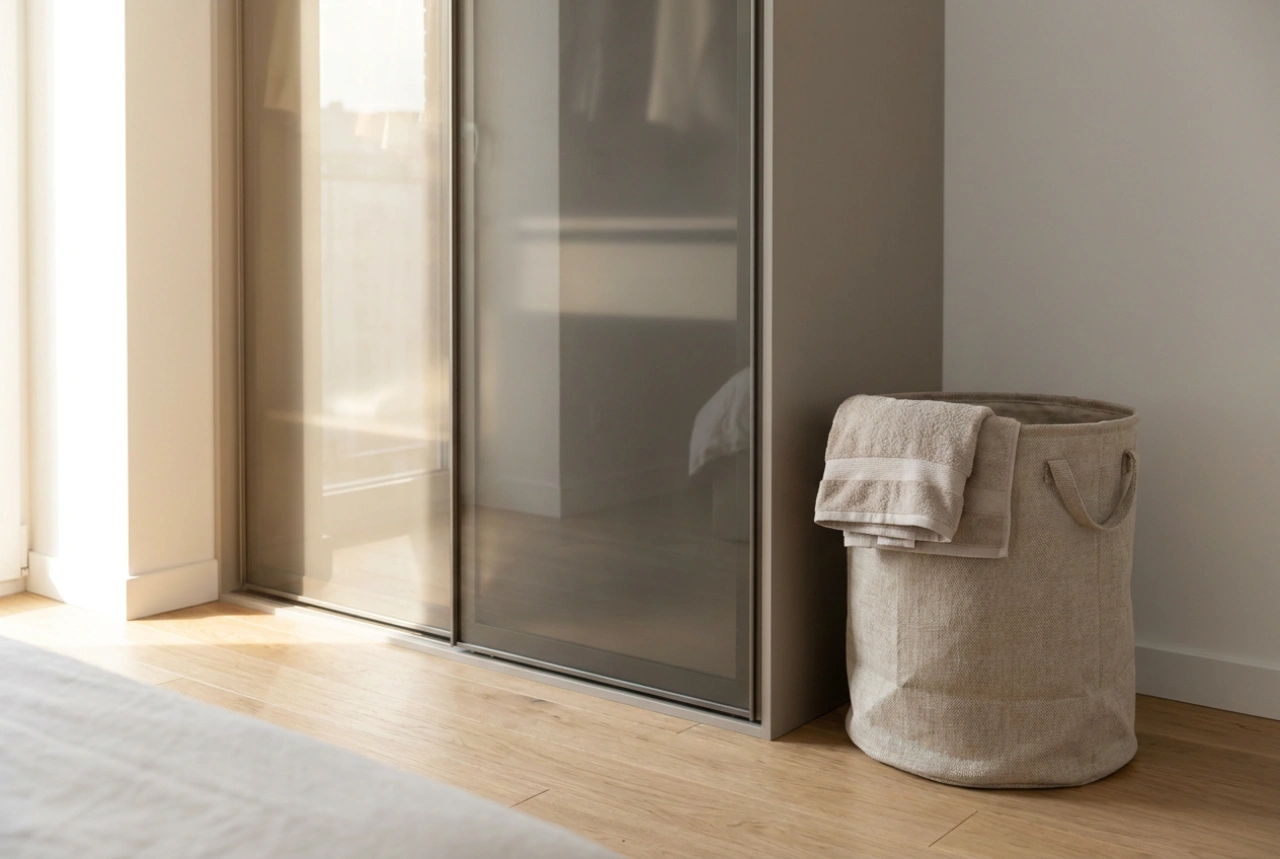
While white and mirrored surfaces are highly effective, an excess of reflective materials can make a bedroom feel sterile. To counter this, introduce low-reflectance, high-texture materials in the immediate surroundings. Linen curtains, matte timber flooring, and woven textiles absorb light slightly, providing a grounding contrast to the highly reflective wardrobe. Additionally, matching the wardrobe’s white tone to the exact undertone of your bedroom walls (whether warm plaster-white or cool alabaster) prevents the formation of stark, contrast-heavy outlines that define the physical limits of the room, keeping the transition smooth and visually open.