

Displaying ornamental plates on tabletop stands or plate racks is an elegant way to showcase ceramic artistry, but it introduces constant physical risks to delicate glazes and structural integrity. Securing these pieces requires understanding the mechanical forces of balance, friction, and material compatibility to prevent catastrophic falls and surface abrasion.
The Physics of Balance: Angle of Inclination and Weight Distribution
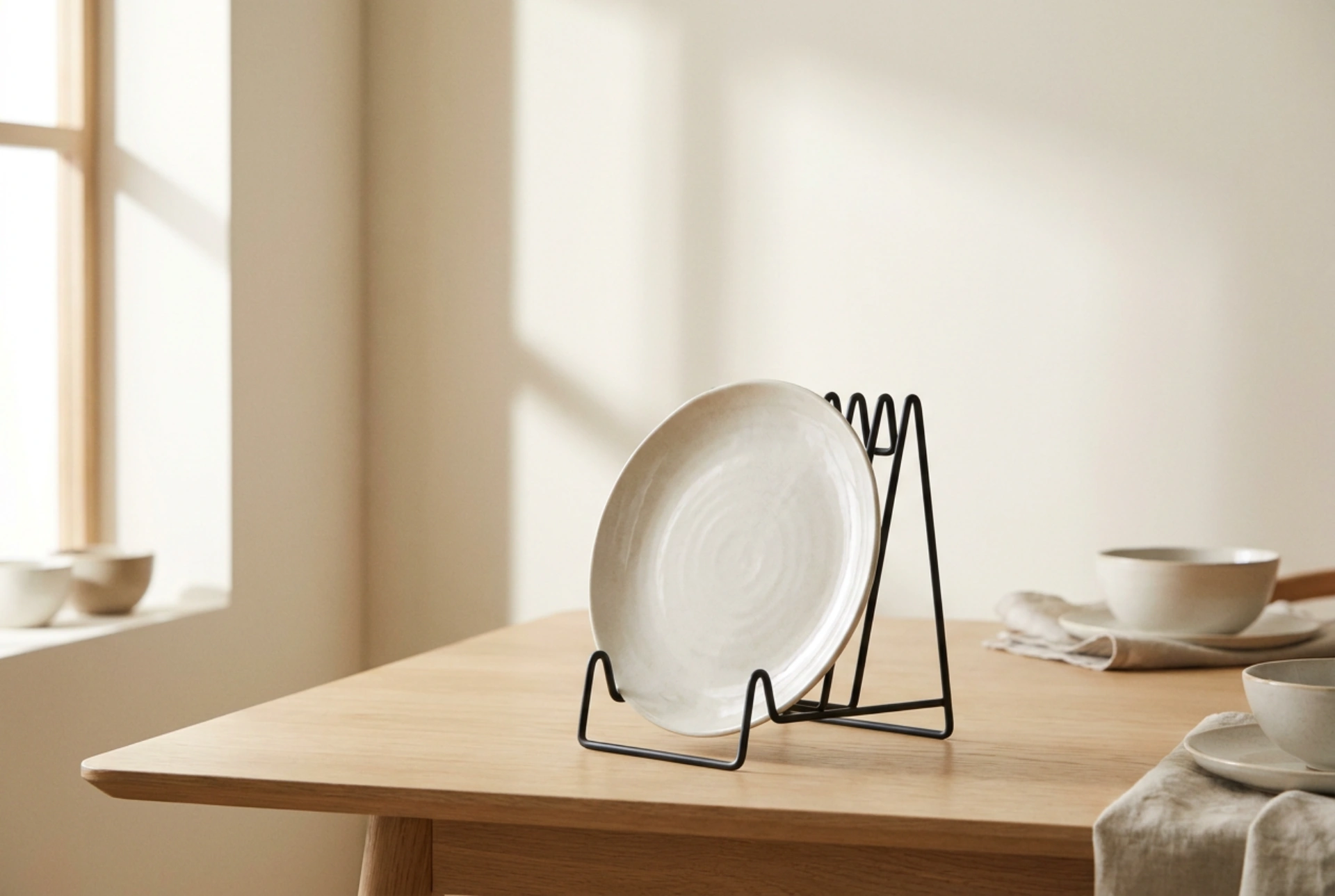
The stability of a plate on a stand relies heavily on the laws of physics, specifically gravity, torque, and the centre of mass. When a plate is resting on a stand, its weight is distributed across three main points of contact: the two front support hooks and the rear support leg of the stand. For optimal stability, the plate must lean back at an angle of between 10 and 15 degrees from the vertical plane.
If the lean angle is too shallow (less than 10 degrees), the plate's centre of mass shifts too far forward. Even a minor vibration—such as footsteps on a wooden floor or a door slamming nearby—can shift the centre of gravity past the tipping point, causing the plate to fall forward. Conversely, if the lean angle exceeds 20 degrees, excessive backward force is exerted on the rear support leg of the stand. This can cause the stand to slide backward or buckle under the weight, particularly if placed on a polished, low-friction surface like polished wood or marble.
Material Science: Selecting and Modifying Stands for Maximum Protection
The material of the display stand directly interacts with the delicate glaze of your ceramic plate. Uncoated metal wire stands, while sturdy, pose a significant risk of scratching or chipping the glaze, especially at the high-pressure contact points along the bottom rim. Acrylic stands offer excellent visibility but are prone to static electricity, which attracts abrasive dust particles, and can lack the weight needed to anchor heavier stoneware.
To mitigate these risks, follow these material-focused modifications:
- Apply Silicone or Vinyl Sleeves: Cover any metal contact points with clear silicone tubing or heat-shrink vinyl sleeves. This simple barrier prevents direct metal-on-ceramic contact, eliminating the risk of scratching while significantly increasing the coefficient of friction to stop sliding.
- Choose Weighted Bases: For heavier earthenware or porcelain, select stands with a broad, weighted base. A low centre of gravity in the stand itself prevents the entire assembly from tipping over if bumped.
- Avoid Acidic Wood Finishes: If using wooden stands, ensure they are sealed with a cured, inert polyurethane coat. Unsealed wood or those finished with acidic oils can off-gas organic compounds that tarnish or damage delicate overglaze decorations over long periods.
Mitigating Micro-Vibrations and Sliding
Micro-vibrations are the silent enemy of displayed ceramics. Over weeks and months, subtle building vibrations cause hard ceramic surfaces to micro-slide against hard stand surfaces, gradually shifting the plate out of its safe zone. This phenomenon is known as 'creep'.
To counteract micro-vibrations, use a small pea-sized portion of microcrystalline museum wax on the underside of the stand's feet and at the base contact points where the plate rests. This non-drying, acid-free wax absorbs kinetic energy and anchors the stand to the shelf without damaging wood finishes or ceramic glazes. Ensure the surface is completely dry and free of dust before application, as dust acts as a dry lubricant, rendering adhesives useless.
Safe Handling and Maintenance Protocols
More damage occurs during cleaning and handling than at any other time. Never attempt to dust or clean a plate while it is sitting on its display stand. Applying downward or lateral pressure with a duster can easily displace the plate or collapse the stand's rear support.
The correct order of operations is to carefully lift the plate off the stand with both hands, supporting it from the bottom and back, and place it flat on a padded surface, such as a microfibre towel. Once the plate is safely removed, dust the stand separately. When returning the plate to the stand, always double-check that the lower rim is fully seated in the retention hooks and that the plate's back is resting flush against the rear support. An asymmetrical alignment creates uneven torque, which can lead to a slow, structural failure of the stand over time.