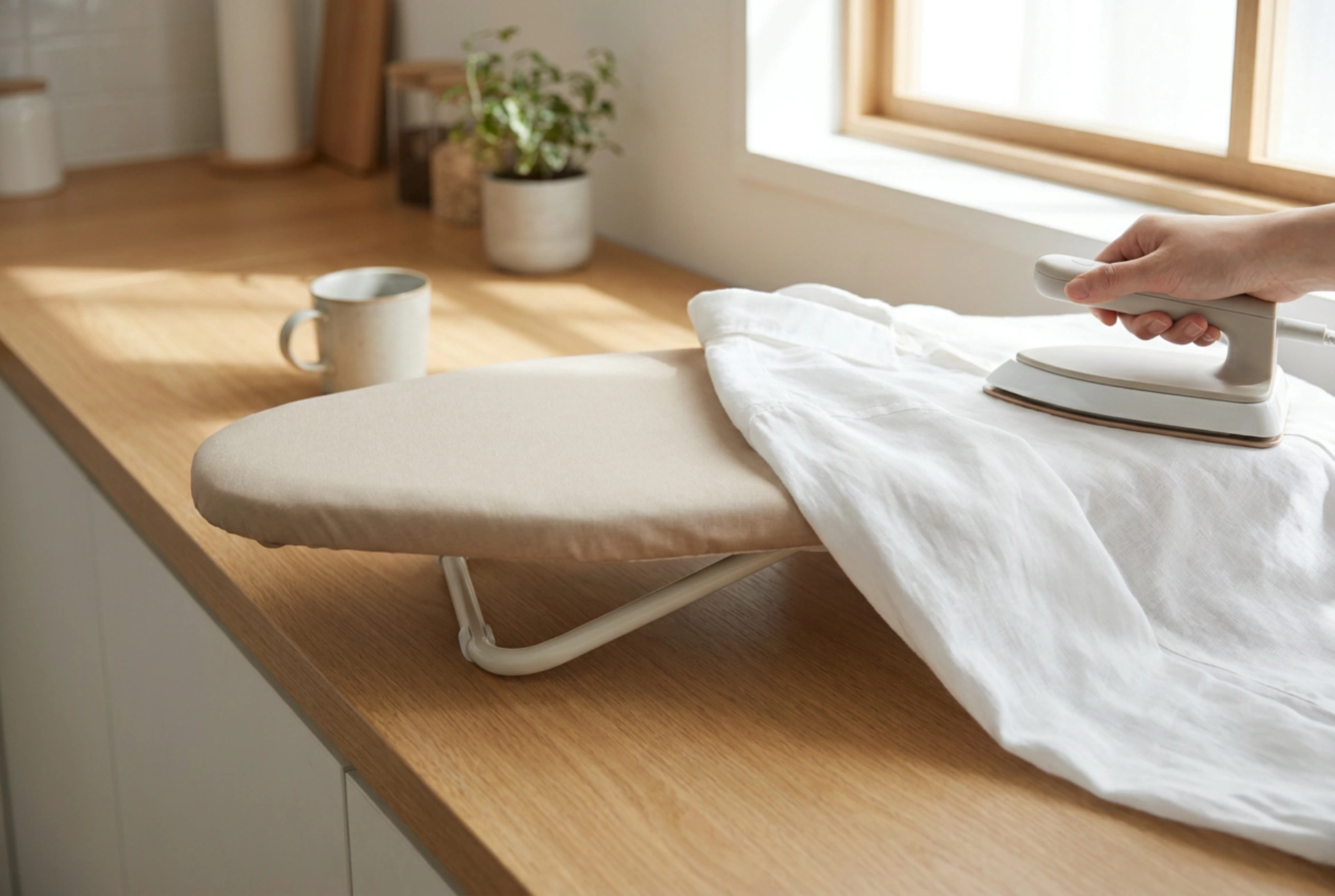


Setting up a standard floor-standing ironing board for a single creased collar or a pair of sleeves is highly inefficient. A compact tabletop ironing board offers a rapid, space-saving alternative that utilizes fundamental thermodynamic principles to achieve pristine results in fraction of the time.
The Thermodynamics of Pressing: How Heat and Moisture Work Together
To understand why a tabletop ironing board is highly effective for quick touch-ups, one must look at the molecular structure of textiles. Natural fibers like cotton and linen consist of cellulose polymer chains bound together by hydrogen bonds. When fabric wrinkles, these bonds are locked into distorted positions. Ironing is not merely a mechanical flattening process; it is a thermal and chemical intervention.
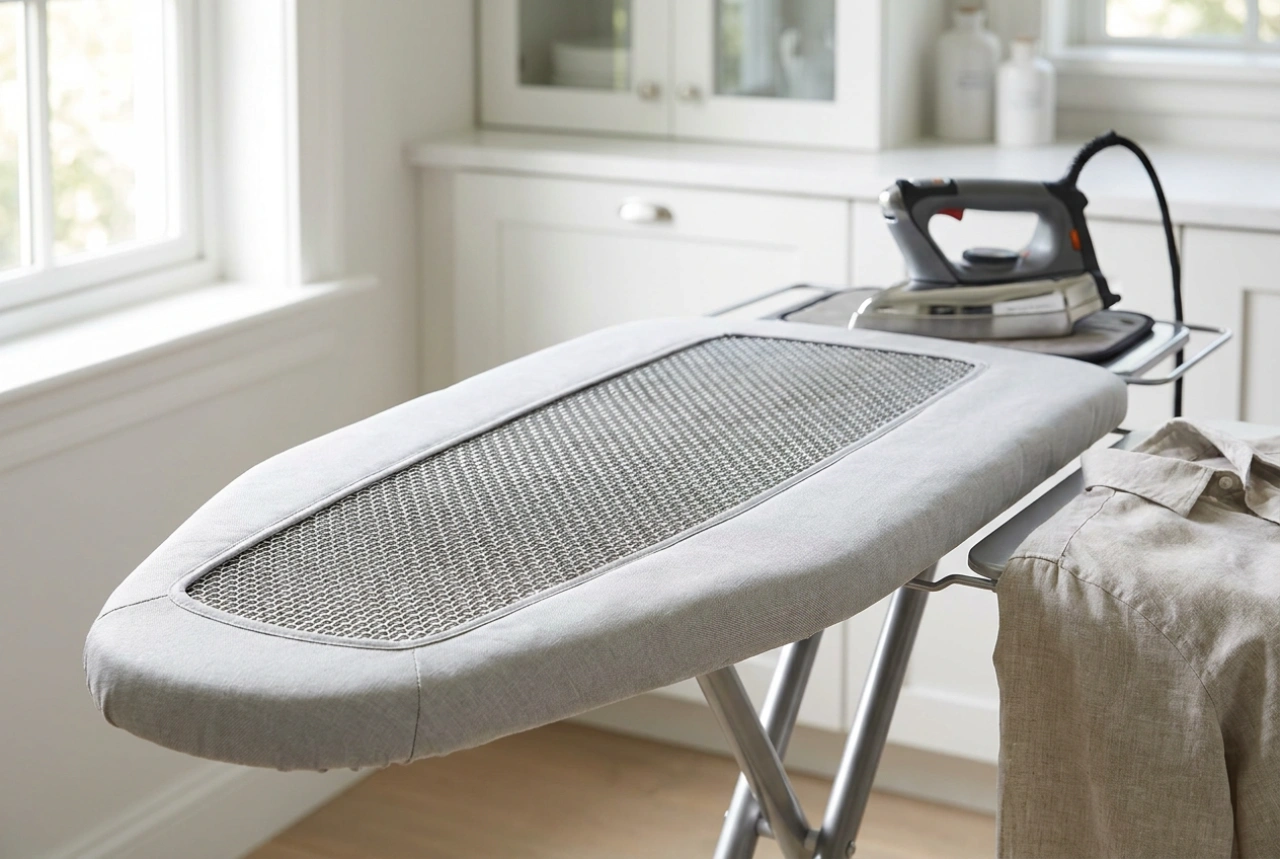
Heat from the iron plate raises the temperature of the fibers above their glass transition point, making the polymer chains mobile. Applying moisture, either through steam or a fine spray, acts as a plasticiser, breaking the existing hydrogen bonds. As the iron moves across the fabric, the combined downward pressure and heat reform these bonds in a flat, aligned state. A high-quality tabletop board maximizes this process by utilizing a reflective cover, often coated with metallic particles, which bounces heat back up through the underside of the garment. This dual-directional heat application significantly accelerates the pressing cycle.
Surface Selection and Protecting Your Underlying Furniture
Because a tabletop ironing board sits directly on existing furniture—such as dining tables, desks, or kitchen worktops—managing thermal conduction is vital. Placing a hot iron over a thin, poorly insulated board can transfer damaging heat to the underlying wood, laminate, or stone surface, leading to warped finishes or clouding in polyurethane varnishes.
To prevent thermal damage, effective tabletop boards feature non-slip rubber or silicone feet. These feet serve two crucial purposes: they prevent lateral movement during vigorous ironing strokes, and they create a physical air gap between the board’s underside and the table. This air gap acts as an insulating layer, allowing heat and escaping steam to dissipate safely. Additionally, a high-density fiber felt pad beneath the cotton cover is essential. This pad absorbs mechanical pressure and dampens heat transfer, ensuring that the temperature of the underlying table remains well below the threshold of structural or aesthetic damage.
Optimal Order of Operations for Compact Pressing
Ironing on a smaller surface area requires a structured approach to prevent freshly pressed sections of a garment from wrinkling while you work on another. Utilizing gravity and systematic positioning is key to mastering the tabletop board.
- Collars and Cuffs: Always start with these double-layered, structurally stiff areas. Iron from the outer points inward to prevent the fabric from bunching at the edges.
- Yokes and Shoulders: Fit the shoulder curve of the shirt over the tapered end of the tabletop board. This allows the fabric to lay flat without pulling.
- Sleeves: Lay the sleeve flat along the length of the board, aligning the seam. Iron from the underarm seam outward to create a crisp, clean fold.
- Body Panels: Slide the garment along the board, pressing one section at a time. Work from the button placket outward, allowing the completed sections to drape gently off the far side of the table.
By pulling the fabric slightly taut with your non-dominant hand ahead of the iron, you introduce mechanical tension. This tension, combined with a smooth, linear gliding motion along the warp and weft of the weave, ensures deep creases are eradicated on the first pass.
Adapting to Material Chemistry
Different textile fibers react uniquely to heat and pressure. For cellulosic fibers like linen and cotton, use high temperatures and ample steam to break the robust intermolecular forces. Synthetic fibers like polyester and nylon have much lower melting points; high heat will cause the polymer chains to fuse, resulting in a shiny patch or permanent melting. When touch-pressing synthetics on a compact board, always lower the iron temperature and use a clean cotton pressing cloth as a barrier to distribute the thermal load evenly and prevent static buildup.