

Achieving a perfectly transparent, streak-free window requires understanding the physical chemistry of glass surfaces and managing the evaporation rate of cleaning agents. This guide explains how to select the right surfactant-to-solvent ratio and apply the correct mechanical techniques to eliminate residue entirely.
The Chemistry Behind Glass Streaks
To prevent streaks, we must first understand what they are. Streaks are microscopic layers of dissolved dirt, hard water minerals, or excess detergent residue that remain on the glass pane after the liquid carrier evaporates. Glass is not perfectly flat on a microscopic level; it contains tiny pores and ridges where mineral deposits can easily lodge.
When you use standard tap water to clean glass, the dissolved calcium and magnesium ions remain behind as the water evaporates, leaving white spots or cloudy lines. This is why professional-grade window cleaning solutions rely on distilled or demineralised water. Additionally, high-quality formulas contain volatile solvents, typically isopropyl alcohol or ethanol. These alcohols lower the surface tension of the water, allowing it to spread evenly across the hydrophobic glass surface, and accelerate the evaporation rate so the liquid dries before it can pool and form water spots.
The Role of Surfactants and Solvents
A professional cleaning solution relies on a precise balance of surfactants and solvents to break down organic soils like fingerprints, soot, and pollen. Surfactants are amphiphilic molecules, meaning they have both a hydrophilic (water-attracting) head and a lipophilic (fat-attracting) tail. They surround oil droplets, lift them from the glass, and suspend them in the water droplet.
- Isopropyl Alcohol: Acts as a fast-evaporating solvent that cuts through grease without leaving a film. It lowers the boiling point of the mixture, ensuring rapid drying.
- Non-ionic Surfactants: These are preferred over anionic surfactants because they do not carry an electrical charge, reducing the likelihood of leaving static-charged residues that actively attract environmental dust after cleaning.
- Acetic Acid: In mild concentrations, weak acids help dissolve alkaline mineral deposits (limescale) from rain, but they must be balanced to avoid etching sensitive window seals or frames.
Selecting and Preparing Your Tools
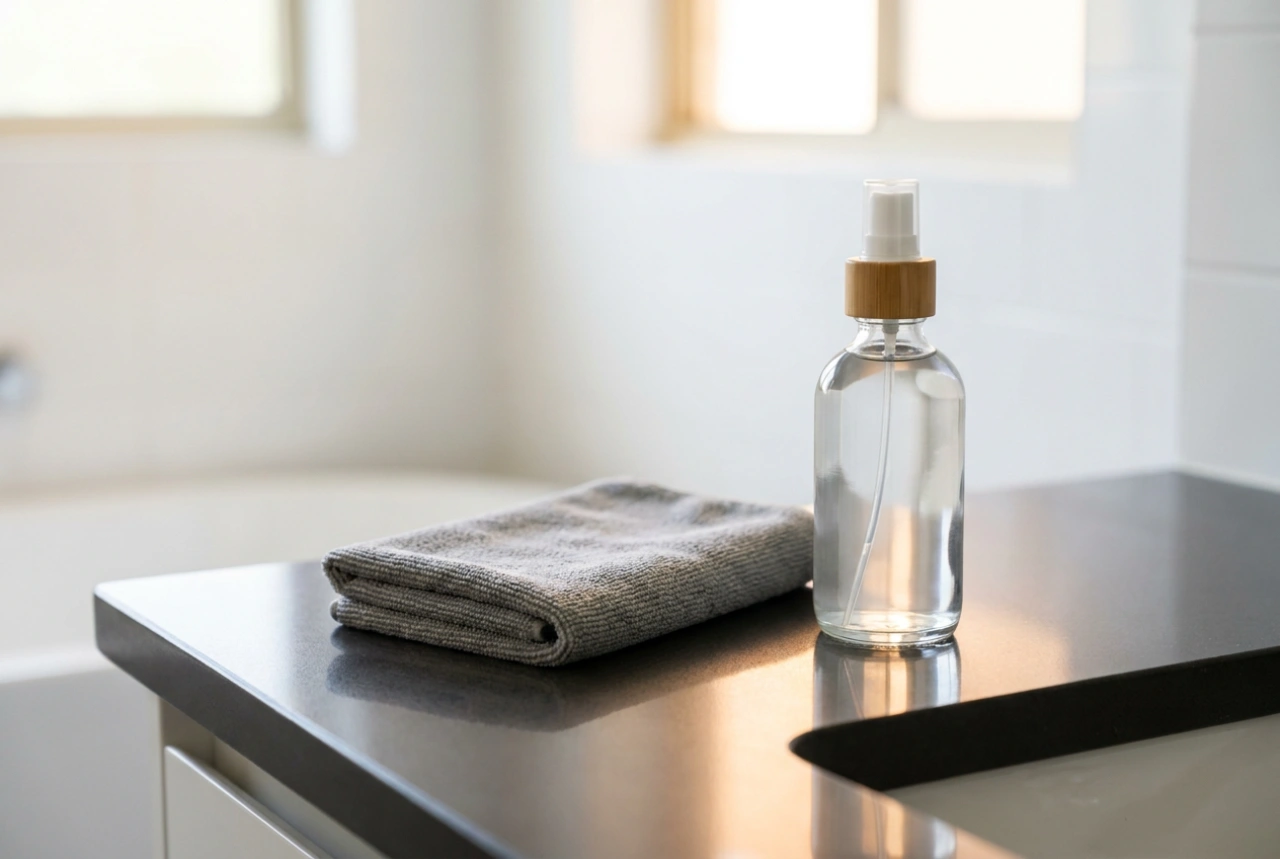
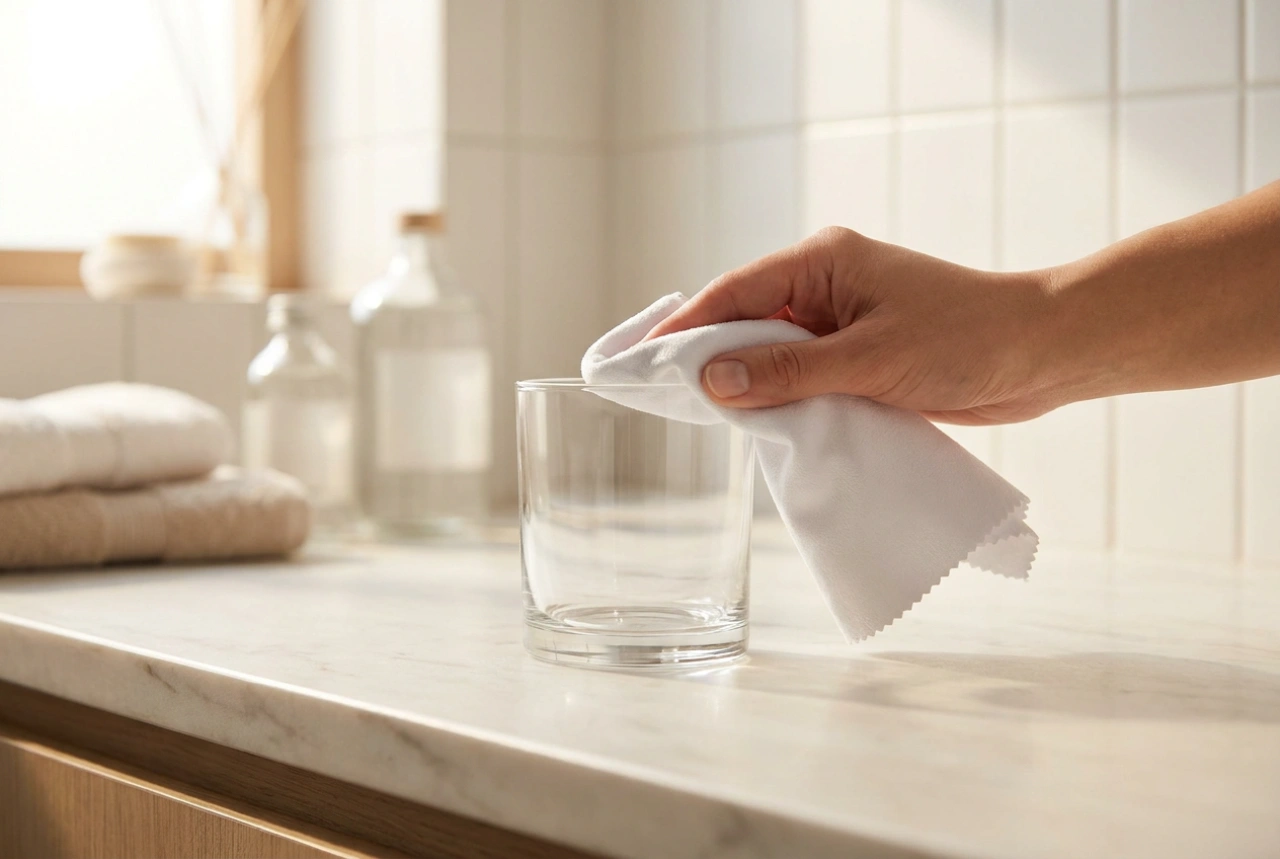
The mechanical action of wiping is just as critical as the chemical formula. Traditional cotton rags or paper towels are inefficient because they shed cellulose fibres and redistribute dirt rather than absorbing it. Instead, professional cleaning relies on split-fibre microfibre cloths and high-grade rubber squeegees.
Microfibre is made from a blend of polyester and polyamide. During manufacturing, these fibres are split, creating a vast network of microscopic hooks and channels. This structural design uses capillary action to draw liquid and dirt deep into the cloth, keeping it away from the glass surface. For glass, a low-pile or waffle-weave microfibre cloth is superior, as it minimizes friction and prevents lint shedding.
The Professional Application Protocol
To achieve a flawless, streak-free finish, follow this systematic methodology that coordinates chemistry, temperature, and physical movement:
1. Dry Dusting
Before applying any liquid, use a dry microfibre cloth or a soft brush to remove loose dust, pollen, and cobwebs from the glass and frame. Skipping this step turns dry dust into a muddy slurry when sprayed, making it much harder to clean and increasing the risk of scratching the glass with abrasive dirt particles.
2. Controlled Spraying
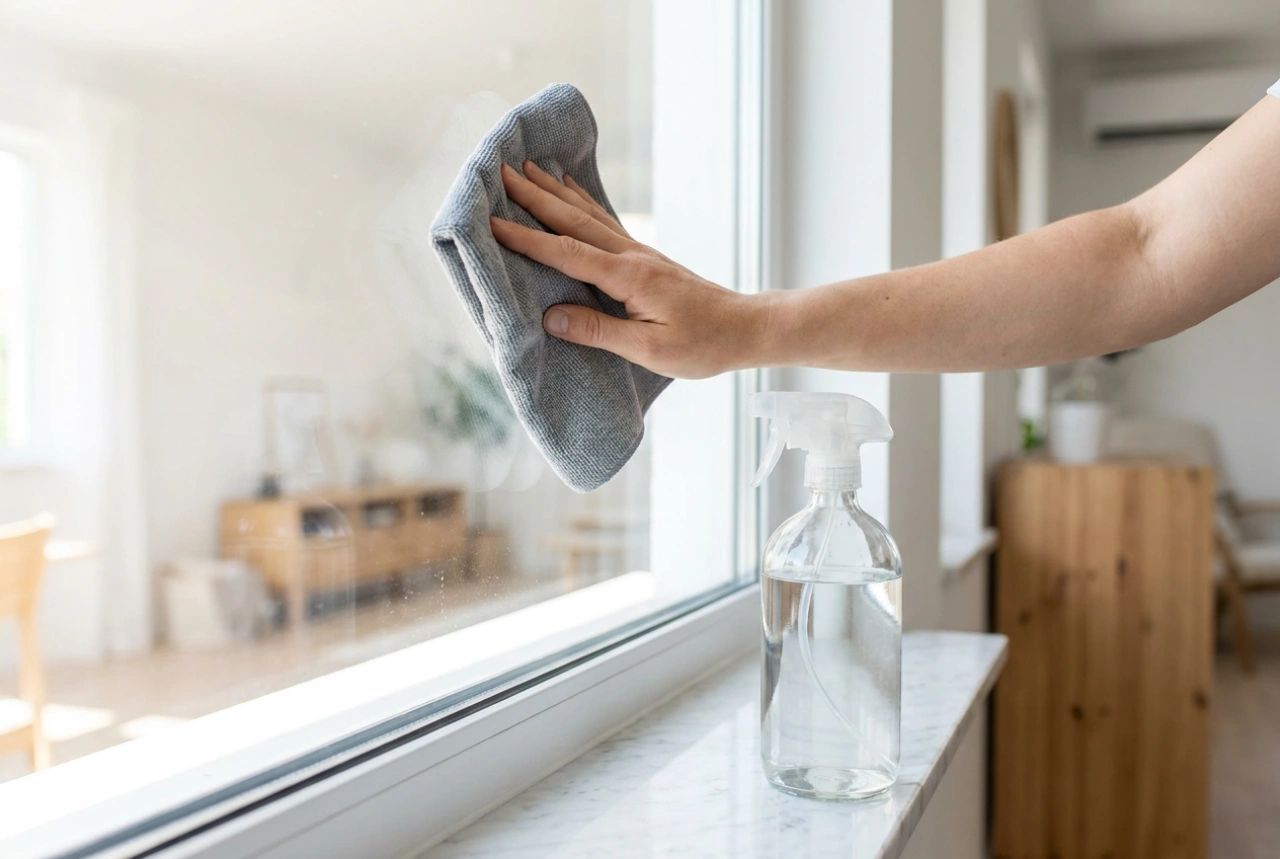
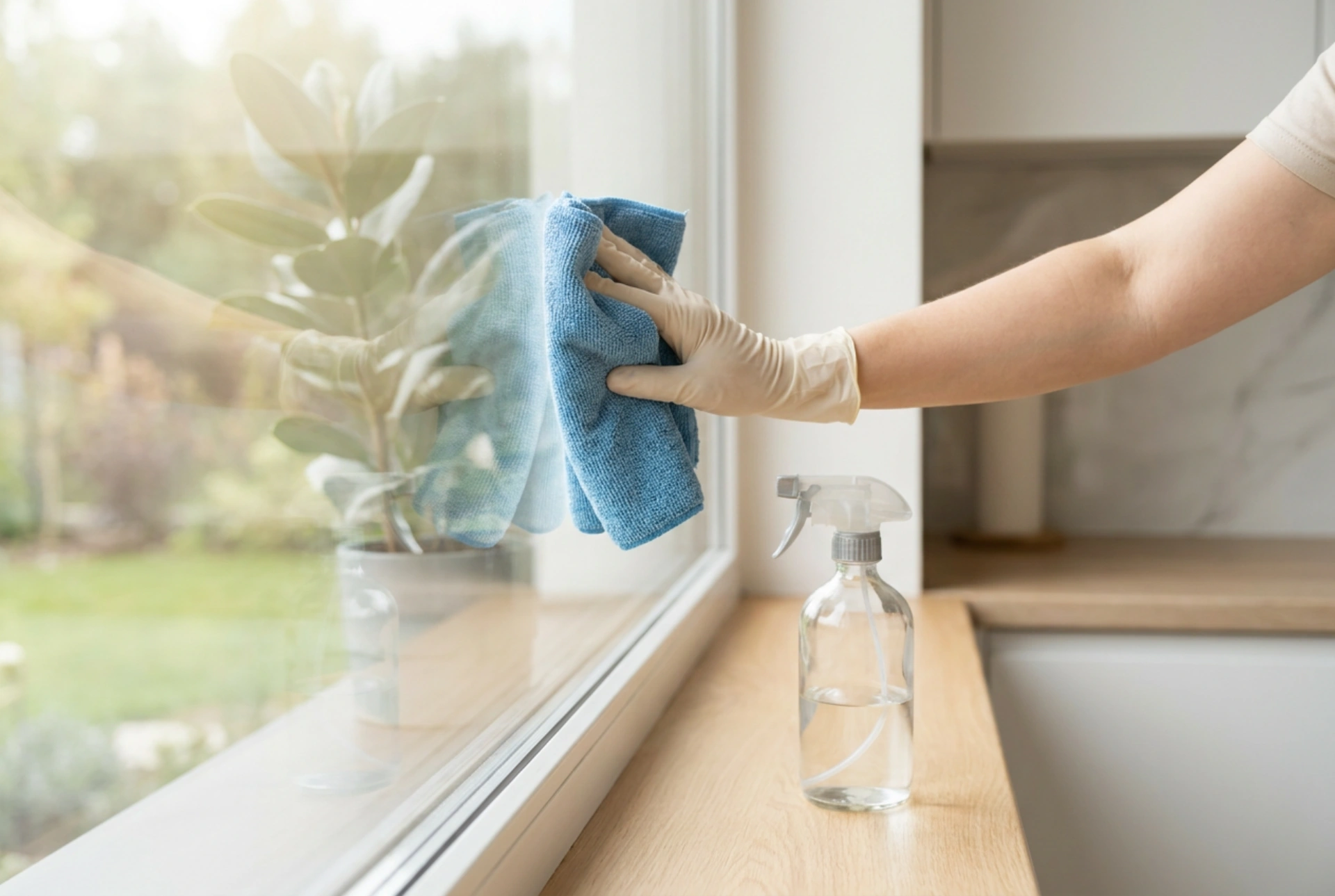
Apply the professional glass cleaner in a fine mist rather than drenching the surface. Over-saturation floods the microfibre cloth, rendering its capillary action ineffective and leaving pooled water that dries into streaks. A light, even mist is sufficient to emulsify the surface dirt.
3. The Mechanical Wipe
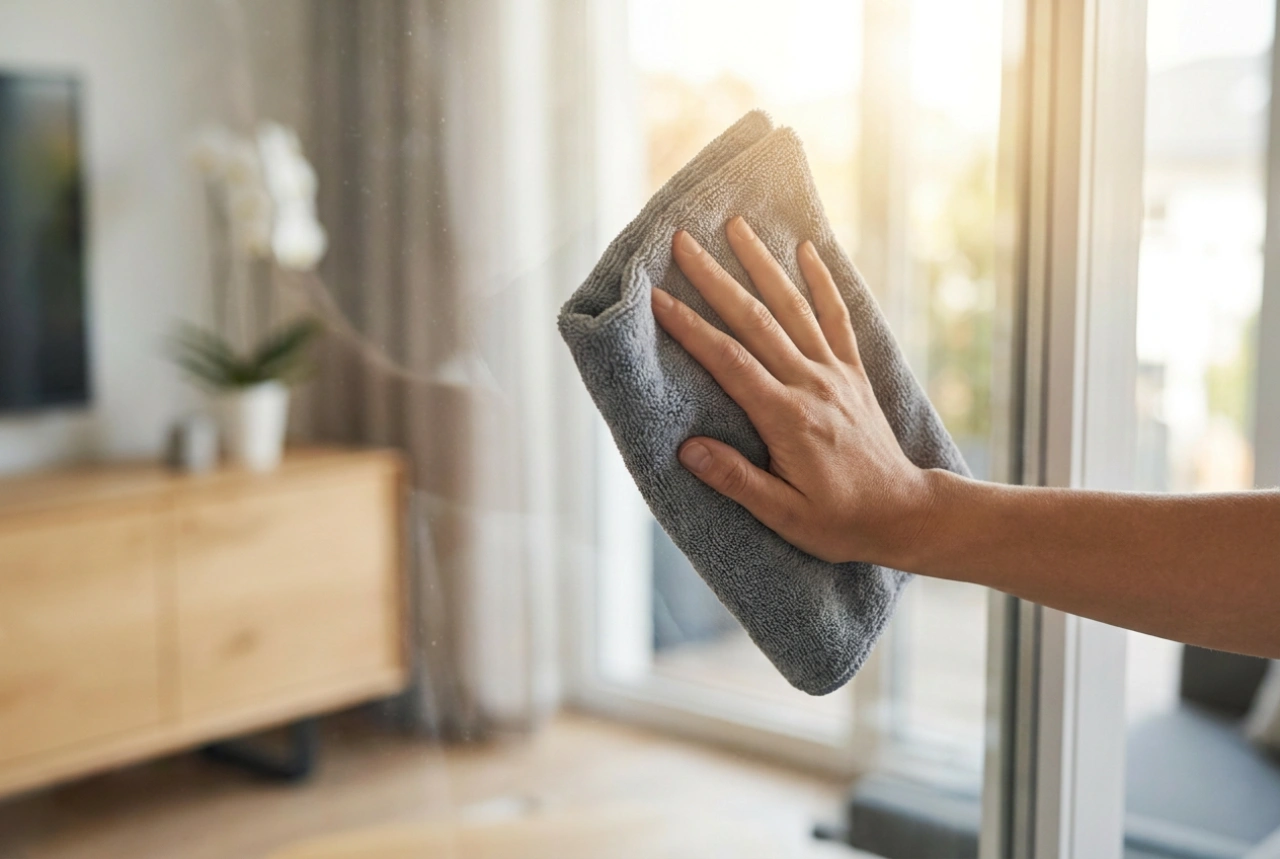
If using microfibre cloths, fold the cloth into quarters to provide eight fresh, flat cleaning surfaces. Wipe the window using a continuous "Z" or "S" pattern, starting from the top-left corner and working your way down. This ensures you do not redistribute lifted dirt back onto clean areas. Never rub in circular motions, as this creates localized heat and static electricity, which pulls dust right back to the glass.
4. Squeegee Technique
For larger panes, a squeegee is highly efficient. Angle the blade at roughly 45 degrees to the glass. Pull the squeegee in single, overlapping vertical or horizontal strokes. Crucially, dry the rubber blade with a lint-free cloth after every single pass to prevent dirty water from leaking onto the clean dry sections.
Environmental Considerations: Temperature and Sunlight
The physical environment dictates your success. Never wash windows in direct sunlight or when the glass is warm to the touch. High temperatures cause the solvent and water in your cleaner to evaporate instantly upon contact. When evaporation occurs too quickly, the dissolved dirt and surfactants dry directly back onto the glass before you can physically wipe them away, resulting in severe streaking. Ideally, clean windows on an overcast day or when the glass is in the shade.