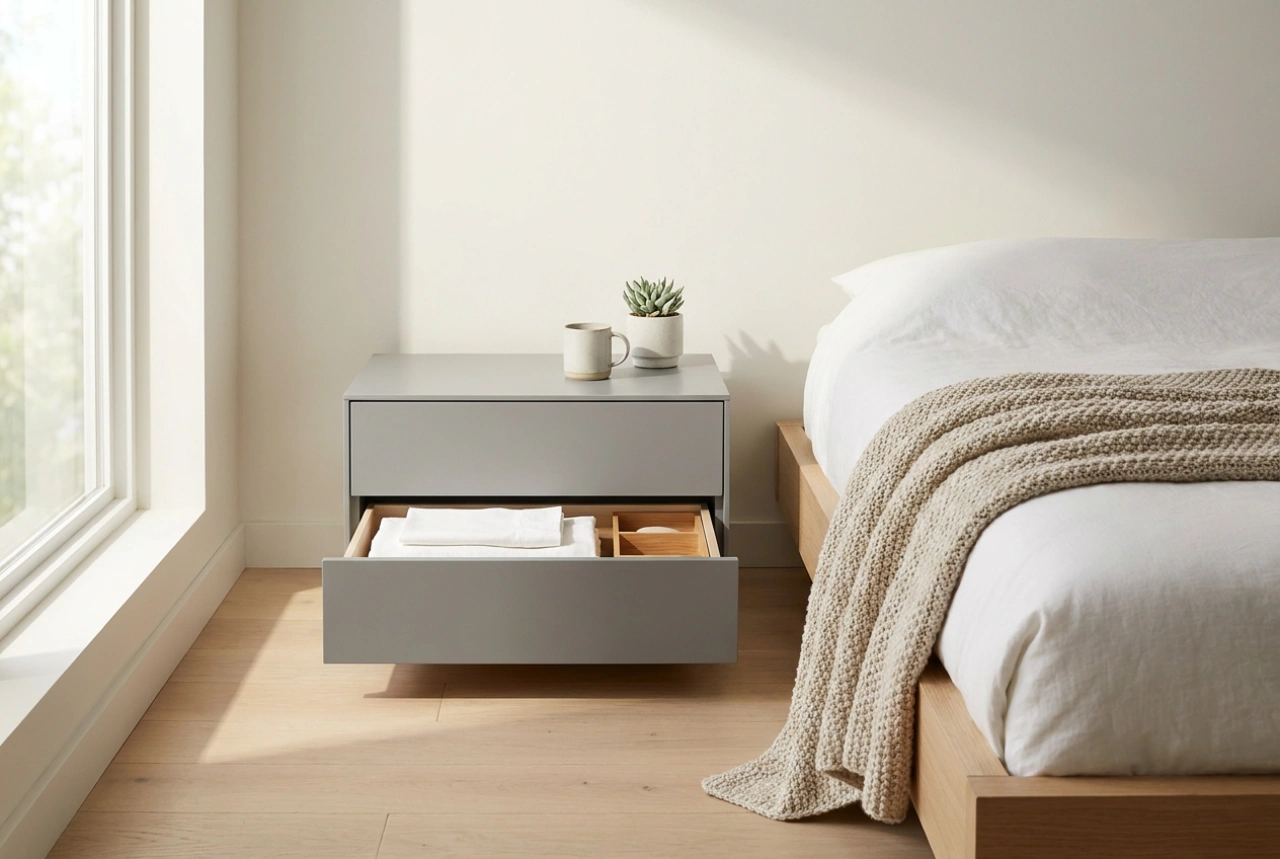


Deciding whether to store children’s clothing in a chest of drawers or hang it in a wardrobe depends on fabric elasticity, structural integrity, and frequency of use. Establishing a systematic division prevents fabric degradation, minimises creasing, and streamlines the daily routine of dressing a growing child.
The Science of Fabrics: What to Hang and What to Fold
The primary factor determining how a garment should be stored is its textile construction. Children's clothing generally falls into two categories: knits (such as jersey cotton, fleece, and wool) and woven fabrics (such as linen, denim, and cotton poplin). Understanding how these materials react to gravity and tension is key to preserving their shape.
- Knitted Fabrics (Fold): Materials like jersey, interlock cotton, and knitwear have looped structures that stretch easily. If hung on hangers, gravity pulls the weight of the garment downwards, distorting the shoulders and lengthening the body. These must always be folded and stored in drawers.
- Woven Fabrics (Hang): Woven materials have a rigid, interlaced structure that resists stretching but creases easily. Items like shirts, structured dresses, and lightweight jackets maintain their shape best when suspended on contoured hangers.
- Heavy Outerwear (Hang with Care): Thick coats and snowsuits require sturdy, wide hangers to distribute the weight across the shoulder seams. Hanging prevents moisture entrapment in thick fillings like down or synthetic loft.
Optimising the Chest of Drawers: Vertical Folding Mechanics
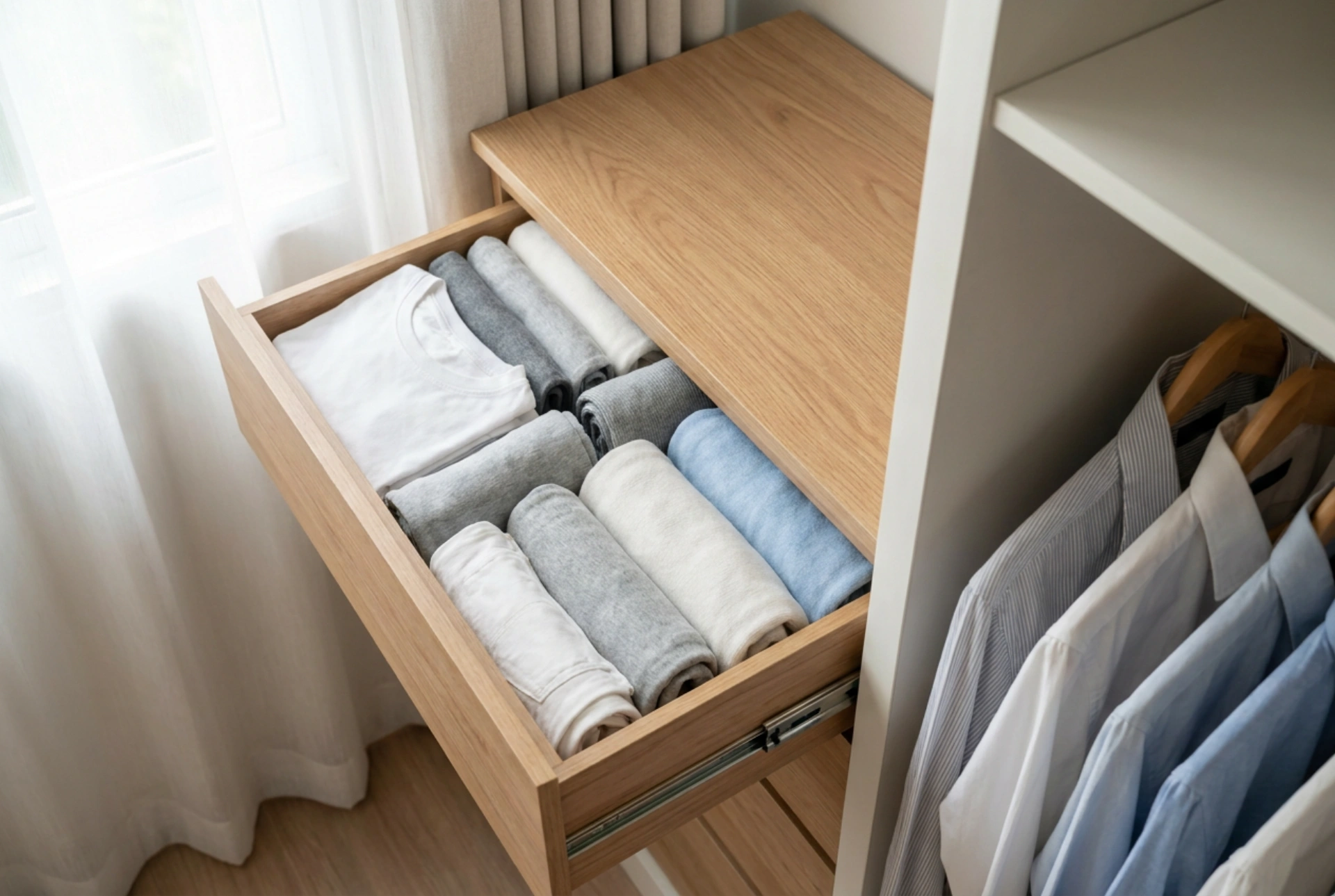
Traditional horizontal stacking in drawers creates compression, which forces air out of the fabrics, flattens soft fibers, and creates deep creases. Instead, utilise vertical folding—often called file folding. This method relies on creating a stable, self-supporting rectangular packet for each garment, which is then placed upright in the drawer, front-to-back.
To execute a stable vertical fold for a child's bodysuit or t-shirt, lay the garment flat on a clean surface. Fold the sleeves and sides inward to form a consistent longitudinal rectangle. Next, fold the garment in half lengthwise, then fold it into thirds. The resulting packet should stand independently on its folded edge. When placed in the drawer, these packets support one another. This vertical arrangement allows you to see every item at a glance, eliminates the friction of pulling items from underneath a heavy stack, and maximises the physical volume of the drawer space by up to thirty percent.
Allocate drawers based on ergonomic accessibility. Use the top drawer for high-frequency small accessories like socks, bibs, and underwear, utilising modular drawer dividers to prevent shifting. Use middle drawers for daily essentials like leggings, t-shirts, and sleepwear. The bottom drawer should contain heavier, less frequently accessed items like spare bedding or seasonal knitwear.
Utilising the Wardrobe: Hangers, Rails, and Shelving
The wardrobe provides a vertical space that should be divided into functional zones. Children's hangers must match the scale of the clothing; using adult-sized hangers stretches the necklines of small garments, while overly small hangers allow clothes to slip off and pool on the floor.
Hang structured garments such as smart trousers, cardigans (if made of tightly woven yarn), dresses, and jackets. Group these items by category and then by length. This creates an open floor space at the bottom of the wardrobe, which can be utilised for modular storage bins or shoe racks.
If your wardrobe features adjustable shelving, use these zones for bulkier items that do not fit well in drawers, such as thick blankets, sleep sacks, or hooded towels. Stacking these items on wide shelves allows for easy extraction without disrupting the entire pile.
Microclimates and Material Preservation
Storage choices also affect the microclimate around the clothing. Drawers are semi-sealed environments that protect garments from dust and light degradation, which can fade delicate pastel dyes. However, they can trap ambient moisture if garments are not completely dry before storage. Residual moisture in a closed wooden drawer encourages the growth of musty odours and mildew.
Conversely, a wardrobe offers better air circulation, which is ideal for woollen items and outer layers that may have absorbed light moisture during outdoor use. When storing seasonal woollens in drawers, ensure they are placed in breathable cotton bags rather than airtight plastic, allowing the natural fibers to respire while remaining protected from pests.
The Rotation System: Managing Sizes and Seasons
Children outgrow clothing rapidly, making active inventory management essential. Divide your storage into active and passive zones. The active zone—the middle drawer of the chest and the main rail of the wardrobe—should only contain garments that currently fit the child and are appropriate for the current season.
Keep a designated outgrown container inside the wardrobe. As soon as a garment becomes too small, wash it, dry it thoroughly to prevent mildew, and place it directly into this box. This simple order of operations keeps the primary storage zones free of clutter, ensuring that every item retrieved during a busy morning is immediately wearable.