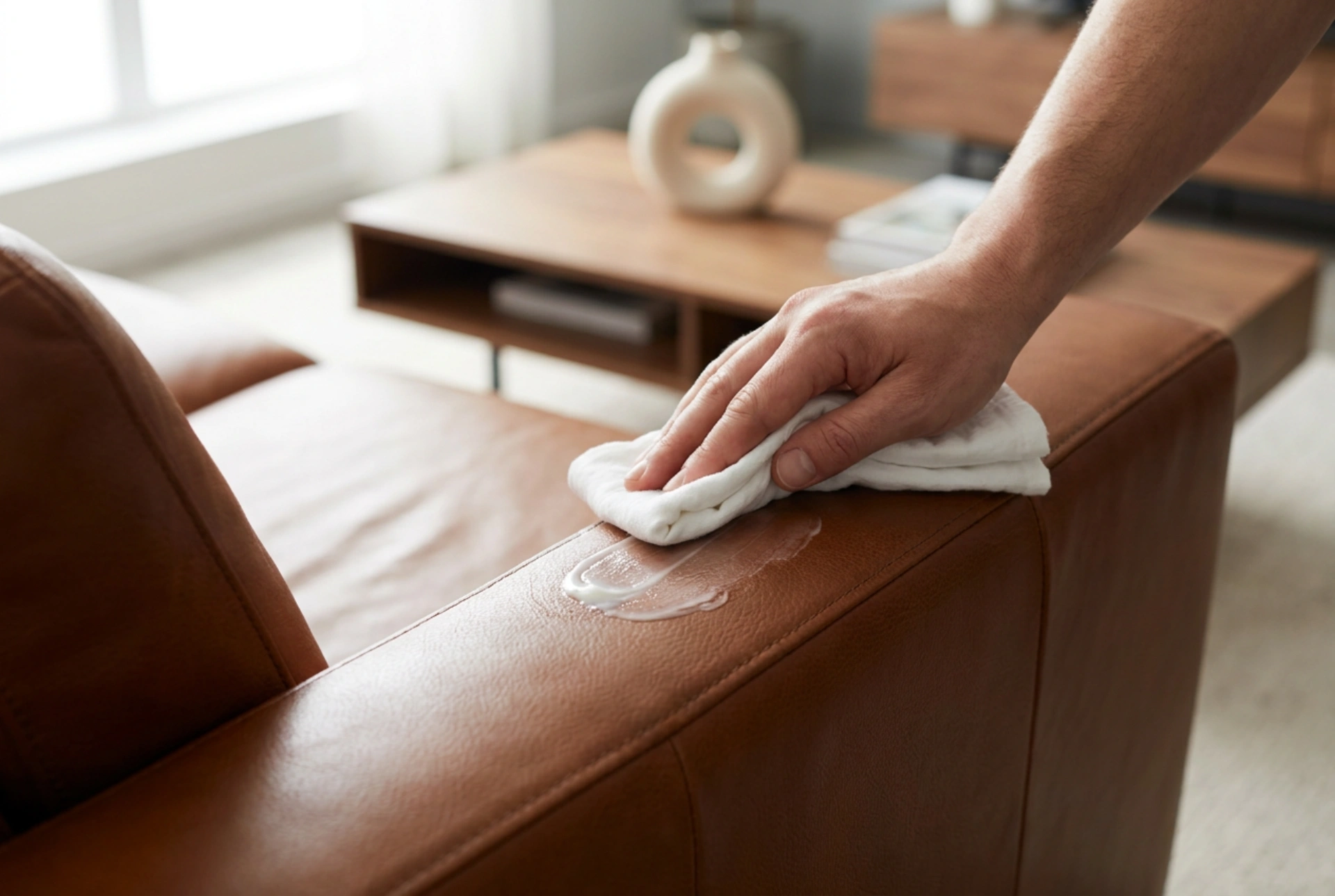


Deep cleaning removes not only surface dirt but also the essential lipids that keep leather supple, leaving its complex collagen fiber network vulnerable to stiffness and cracking. Applying a high-quality conditioner replenishes these vital oils, restoring elasticity and establishing a breathable protective barrier against moisture and wear.
The Science of Leather Dryness and Fiber Friction
Leather is an organic material composed of dense, interwoven collagen fibers preserved through the tanning process. During tanning, natural animal fats are replaced with synthetic or natural oils to keep these fibers lubricated, allowing them to slide over one another smoothly when the material flexes. When you clean leather, surfactants in the cleaning agents emulsify and strip away these protective oils along with the dirt. Without immediate replenishment, the friction between dry collagen fibers increases. Over time, microscopic tears occur within the fiber bundles, manifesting externally as permanent cracks and peeling.
Furthermore, leather is naturally acidic, with a typical pH level ranging between 4.5 and 5.5. Many cleaning agents are slightly alkaline, which can disrupt this delicate chemical balance. A proper conditioning treatment helps stabilize the surface chemistry, sealing the open pores of the grain and preventing moisture from evaporating too quickly or external humidity from oversaturating the structure.
The Importance of the Drying Phase
One of the most common mistakes is applying conditioner to leather that is still damp from cleaning. Water and oil do not mix; if water occupies the capillary pathways within the leather grain, it will physically block the conditioning cream from penetrating the core of the material. Forcing conditioner onto damp leather merely traps moisture inside, which can lead to fiber rot or mold growth under the surface layer.
- Allow the leather to air-dry completely in a well-ventilated room for at least 12 to 24 hours after cleaning.
- Avoid using external heat sources like hair dryers or direct radiators, as rapid moisture evaporation forces the leather fibers to shrink and warp.
- Ensure the ambient temperature is moderate (around 18–22°C) to keep the pores receptive to the conditioning lipids.
How to Apply Conditioner for Optimal Absorption
Effective conditioning relies on precise application techniques that maximize absorption without oversaturating the material. Excess product does not penetrate; instead, it remains on the surface, creating a tacky film that attracts dust and clogs the leather's pores, reducing its natural breathability.
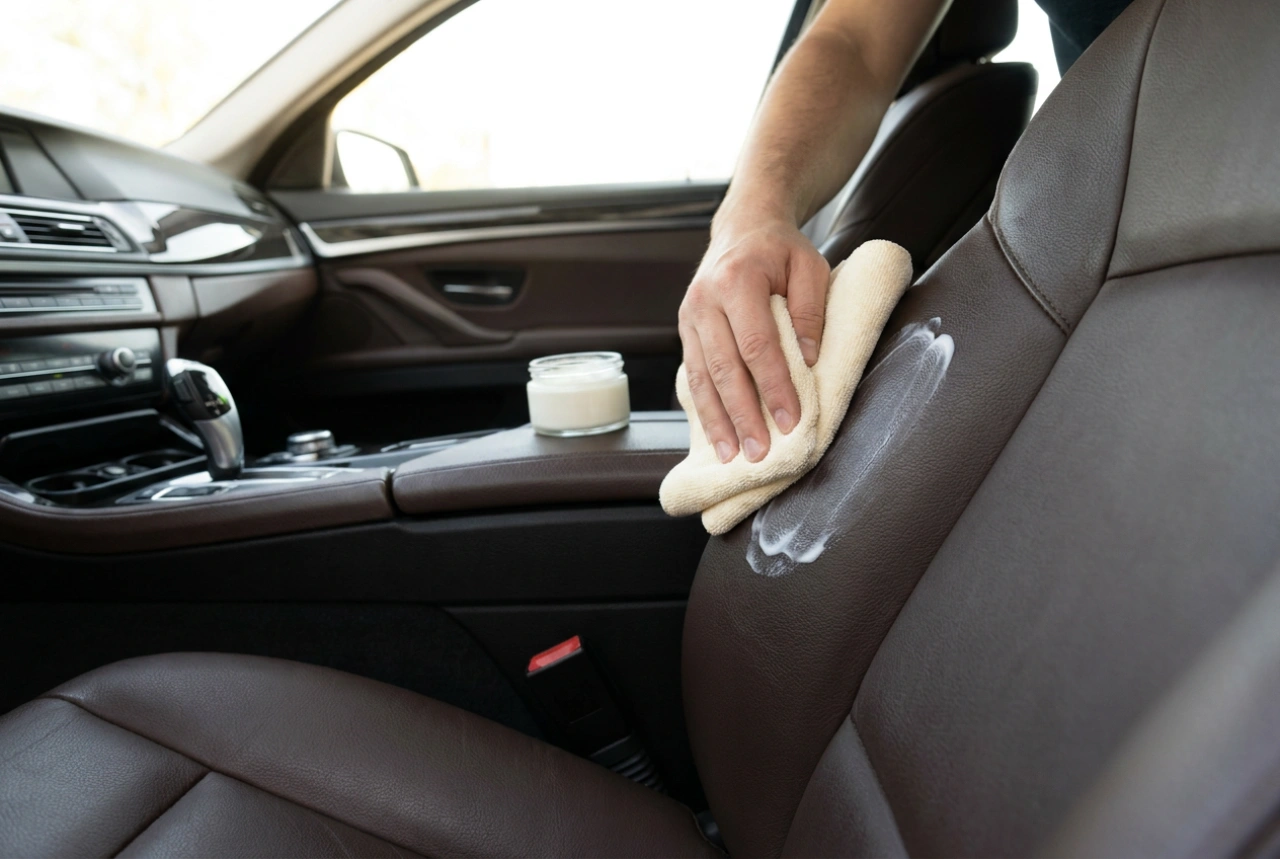
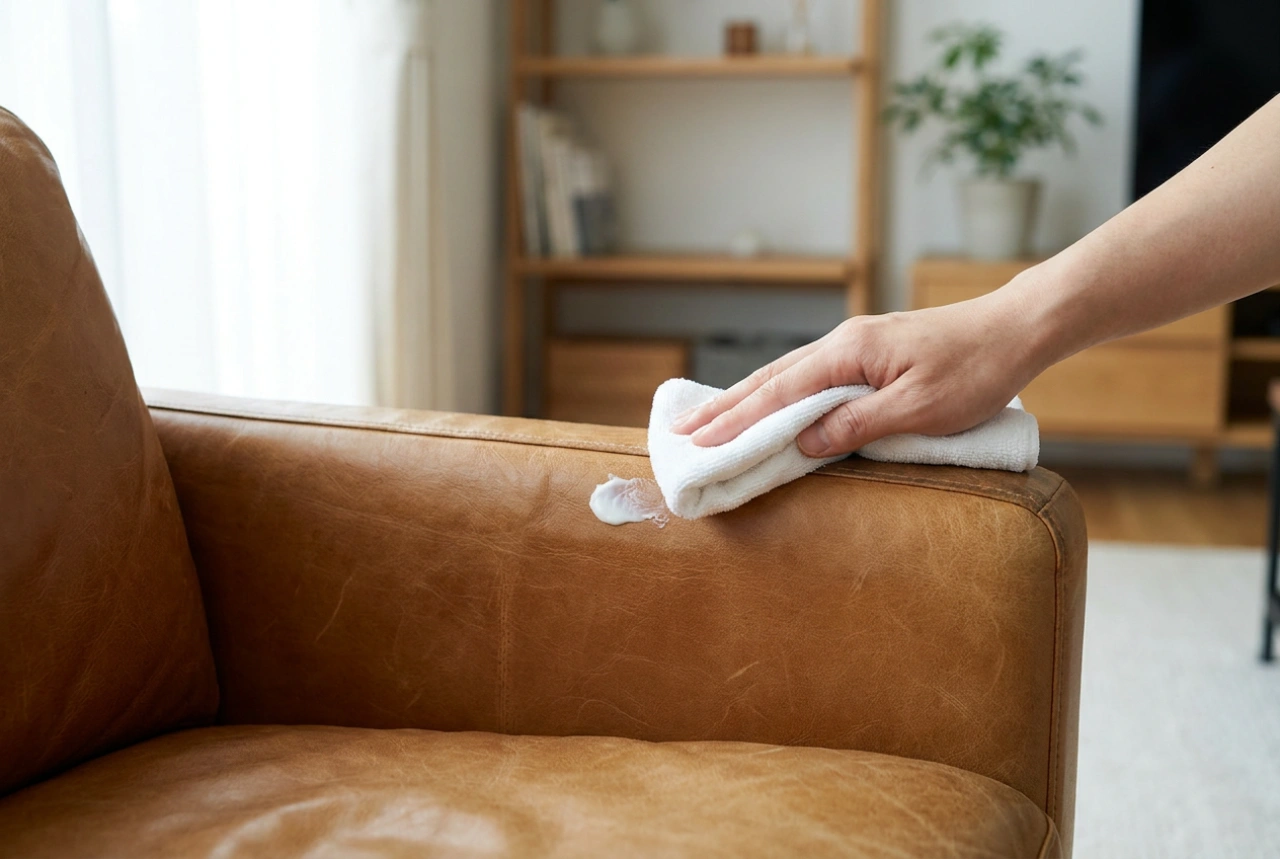
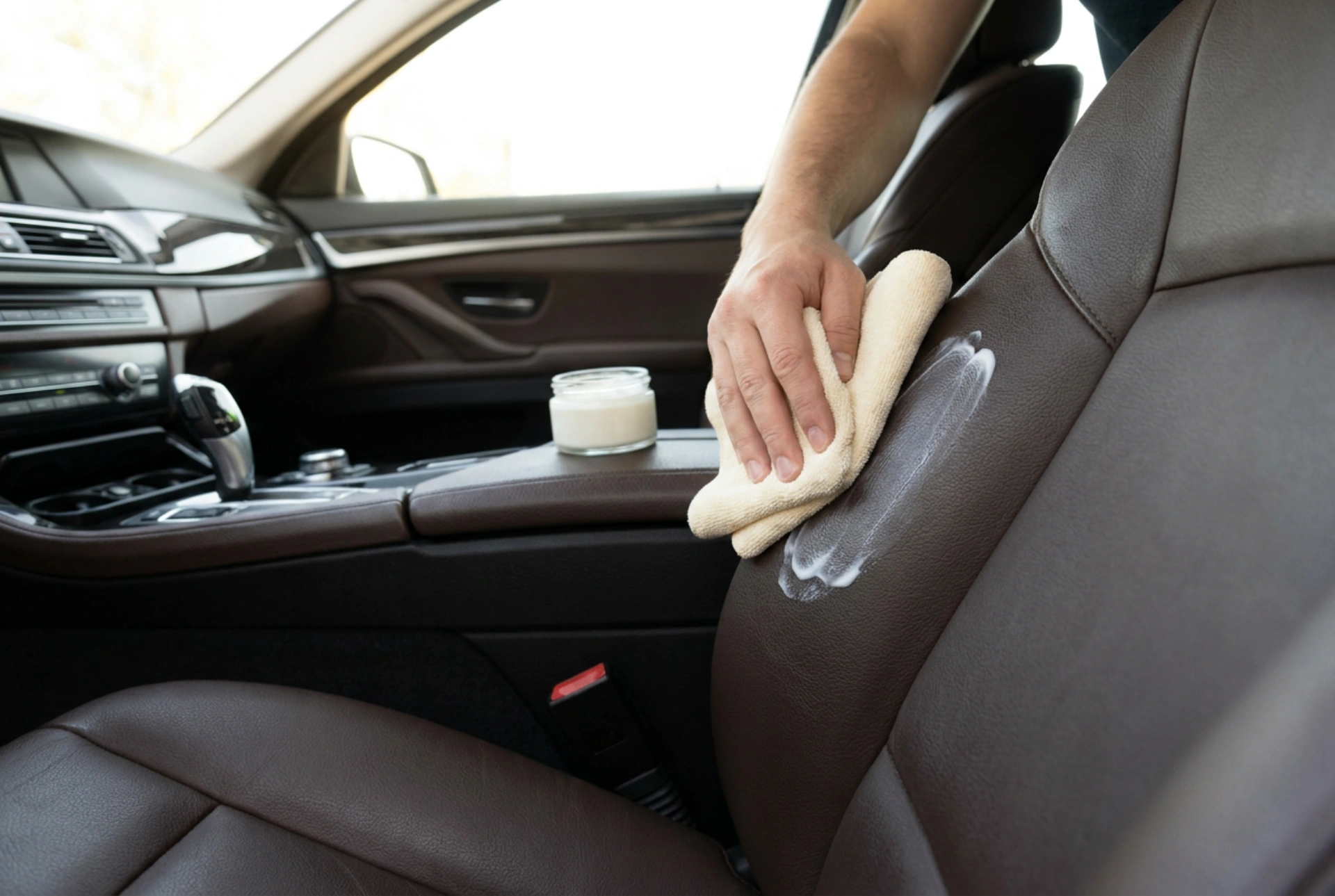
Begin by dispensing a small, coin-sized amount of conditioner onto a clean, lint-free microfiber cloth or a soft cotton applicator pad. Never apply the conditioner directly onto the leather surface, as this can cause localized over-concentration, leading to dark stains or uneven absorption. Work the product into the leather using gentle, overlapping circular motions. This technique ensures that the conditioner enters the porous grain from multiple angles, coating the fibers uniformly.
Pay close attention to high-stress areas such as seams, creases, and armrests, which flex more frequently and lose lipids faster. Apply very thin, consecutive coats rather than one thick layer. Once applied, let the leather rest for at least 30 to 60 minutes. This downtime allows the liquid lipids to migrate deep into the fiber structure and bond with the leather matrix.
Buffing and the Final Seal
After the absorption period, some excess conditioner may remain on the surface. To finish the process, use a clean, dry microfiber cloth to buff the surface gently. Use light, sweeping linear strokes to wipe away unabsorbed fats. Buffing creates friction, which generates a slight heat that helps liquefy and evenly distribute any remaining wax components, resulting in a smooth, satin luster and a dry-to-the-touch finish.