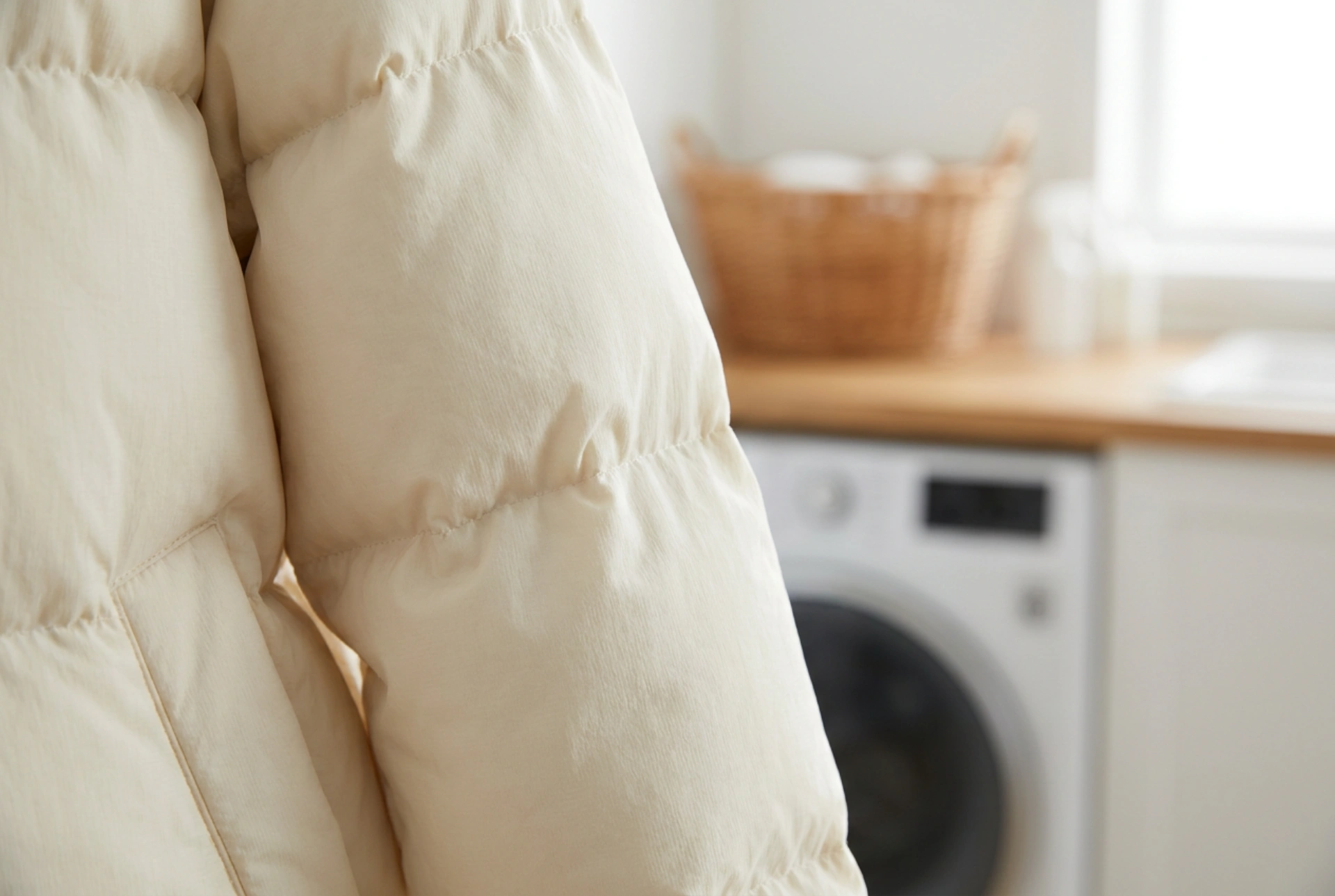


Washing a down jacket at home does not have to result in a flat, ruined garment; understanding the physics of down feathers and applying the correct thermal and mechanical techniques will safely restore its original loft and insulation properties.
The Science of Down: Why Standard Detergents Ruin Loft
Down is an exceptional natural insulator because of its unique three-dimensional structure. Each down cluster consists of thousands of microscopic, interlocking filaments that trap air, creating a thermal barrier. These feathers are naturally coated with a thin layer of protective oils that repel moisture and maintain elasticity. When you wash a down jacket with standard household detergents, the harsh surfactants, optical brighteners, and enzymes strip away these natural lipids. This causes the feathers to become brittle, absorb water more easily, and clump together, permanently reducing the jacket's ability to loft.
To preserve this delicate structure, always avoid standard powder detergents and fabric softeners. Softeners coat the fibers in a chemical film that prevents the feathers from fluffing up. Instead, use a pH-neutral liquid detergent specifically designed for down, or a mild detergent free from enzymes. This keeps the protective lipid barrier intact, ensuring the feathers remain pliable and capable of trapping air after drying.
Pre-Wash Preparation and Washer Settings
Before placing the jacket in the washing machine, preparation is key to protecting both the fabric and the filling. Zip up all main zippers, close pocket zippers, and fasten velcro straps. Loose metal teeth or Velcro can snag the delicate nylon outer shell of the jacket. Turn the jacket inside out to protect the outer technical membrane during the cycle.
Select a gentle cycle, such as a wool or hand-wash setting, with a maximum temperature of 30°C. High temperatures can damage the synthetic outer fabrics and weaken the adhesive seams of the jacket. The spin cycle requires careful adjustment: set it to a maximum of 600 to 800 RPM. A high-speed spin can subject the wet, heavy down clumps to extreme centrifugal force, which risks tearing the internal baffles (the fabric chambers that keep the down evenly distributed).
Crucially, program an extra rinse cycle. Down clusters are highly absorbent and tend to trap soap residue deep within the jacket. Any leftover surfactant will cause the feathers to stick together once dry, flatlining the jacket's volume.
The Drying Phase: Restoring the Air Pockets
Drying is the most critical stage of washing down. If the feathers do not dry completely and evenly, mold can develop, and the filling will remain clumped. The most effective method is using a tumble dryer set to a low-heat, delicate cycle. High heat must be avoided as it can melt the outer synthetic fabrics and shrink the down fibers.
To physically break up the wet clumps of down during the drying process, place three or four clean tennis balls or specialized dryer balls into the drum. As the drum rotates, the balls repeatedly strike the jacket, mechanically separating the wet feathers and forcing air back into the clusters. This physical agitation is what rebuilds the loft.
If you do not have a tumble dryer, air drying is possible but requires active intervention. Lay the jacket completely flat on a drying rack in a well-ventilated room; never hang a wet down jacket, as gravity will pull the wet, heavy feathers to the bottom of the baffles, causing permanent clumping. Every few hours, gently pat and shake the jacket, and manually massage the clumps through the fabric to redistribute the feathers. This process can take several days but ensures the filling dries thoroughly without matting.
A Quick Checklist for Success
- Use the correct cleaning agent: Only pH-neutral down washes; never use standard powder or fabric softeners.
- Protect the shell: Zip all closures and turn the jacket inside out before washing.
- Control the spin: Keep spin speed between 600 and 800 RPM to protect internal baffles.
- Rinse thoroughly: Run at least one extra rinse cycle to eliminate all soap residue.
- Restore loft mechanically: Dry on low heat with dryer balls, or dry flat while manually breaking up clumps.