

Selecting the right clothing hanger is not merely an aesthetic choice; it is a mechanical necessity to preserve the structural integrity of your wardrobe. When garments hang, they are constantly subjected to gravitational pull, which can cause permanent fabric stretching, shoulder dimples, and distorted silhouettes if the load is poorly distributed.
The Physics of Fabric Tension and Shoulder Width
Every textile fiber reacts differently to continuous physical stress. When a garment is placed on a hanger, the weight of the fabric pulls downward, concentrating the tension at the contact points along the hanger's arms. If the hanger is too narrow, the shoulder seams of coats, jackets, or shirts drape over the ends, creating unsightly "shoulder bumps" or dimples. This occurs because the concentrated pressure exceeds the elastic limit of the fibers, leading to permanent deformation.
To prevent this, the length of the hanger must match the shoulder-to-shoulder width of the garment. For heavy structured items like blazers and coats, the hanger should feature flared, contoured ends (ideally 3 to 5 centimetres thick). This mimics the natural human anatomy, distributing the load over a wider surface area and maintaining the natural curve of the shoulder pads and tailoring.
Material Science: Analyzing Wood, Metal, and Plastic
The material of your hanger directly influences friction, structural support, and moisture regulation. Choosing the right material depends entirely on the weight and weave of the fabric:
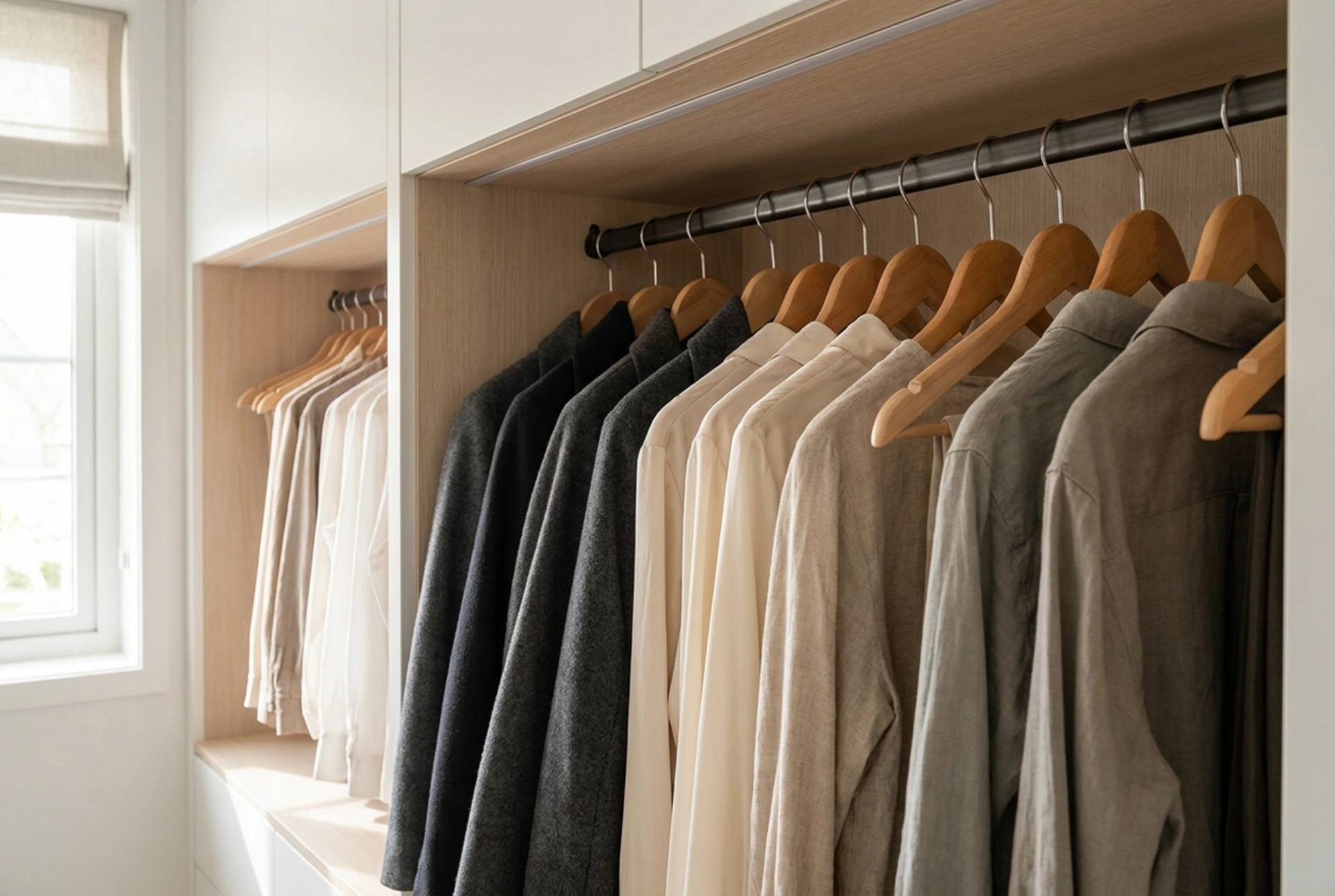
- Wooden Hangers: Typically made from dense hardwoods, these provide maximum structural rigidity. They are essential for heavy garments like winter coats and wool suits, as they will not bend under load. Untreated wood also acts as a natural moisture regulator, absorbing residual humidity from the air.
- Metal Hangers: While thin wire hangers are common, they are highly detrimental to clothing. They lack the necessary surface area to support heavy fabrics, leading to severe creasing and sagging. However, heavy-duty chrome-plated steel hangers with a broad profile are acceptable for trousers and structured skirts.
- Velvet and Flocked Hangers: These hangers utilize a high-friction nylon flocking. This friction coefficient prevents lightweight, slippery fabrics such as silk, satin, and fine synthetics from sliding off. By keeping the garment perfectly centered, they ensure that tension is balanced equally on both sides.
Tailoring Your Choice to Specific Garments
A universal hanger does not exist; different garment types require targeted mechanical support. For trousers, a sturdy bar with a non-slip silicone or rubber sleeve prevents the fabric from sliding and pooling at the bottom of the wardrobe. To avoid a sharp horizontal crease across the mid-thigh, choose hangers with thick, rounded bars that distribute the fold over a larger radius.
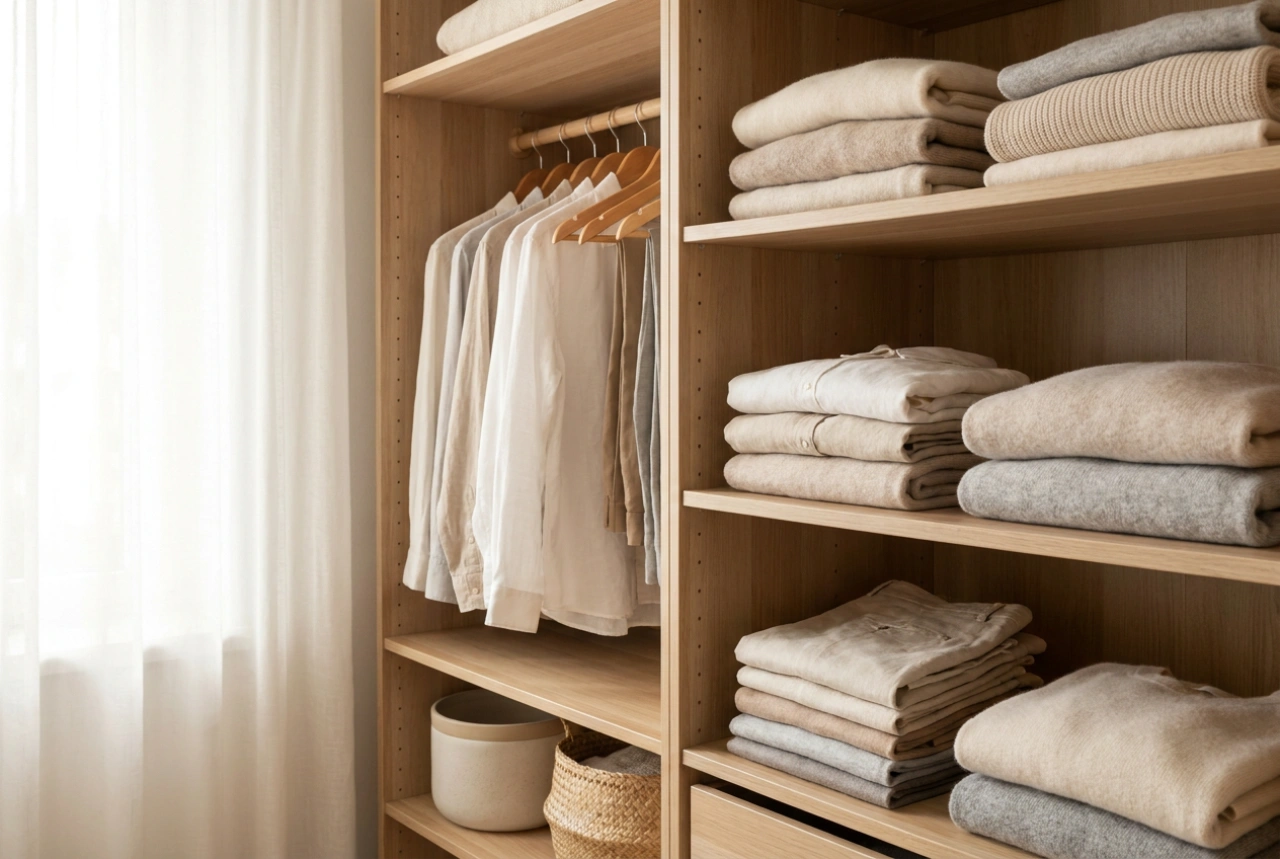
Knitted garments present a unique challenge. Because knits have an open, looped structure, gravity will naturally stretch them lengthwise if they are hung traditionally. If you must hang a knit, use a thickly padded satin hanger to minimize localized pressure, or drape the folded sweater over the horizontal bar of a hanger rather than hanging it by the shoulders.
Optimizing Closet Spacing and Airflow
Correct hanger selection must be paired with proper wardrobe density. Packing clothes too tightly increases lateral friction, which can cause pilling on delicate fibers and compress the natural loft of wool and down. Aim to leave at least one to two centimetres of space between each hanger. This spacing allows air to circulate, preventing the retention of moisture and ensuring that fabrics can "breathe" and recover their natural shape between wears.