

Managing dozens of keys for a large household, outbuildings, and vehicles requires more than just a few random hooks by the door. A systematic, wall-mounted key cabinet engineered for weight distribution and material preservation is essential to prevent daily search friction and key degradation.
1. Structural Mechanics and Wall Anchoring
A large collection of keys possesses surprising cumulative weight. A single standard brass cylinder key weighs approximately 15 to 20 grams. When multiplied by several keyrings containing five or six keys each, along with heavy car fobs, a key cabinet can easily be subjected to a continuous downward pull of several kilograms. This exerts a constant shear force on wall fixings.
To ensure long-term stability, the cabinet must be anchored using appropriate mechanical fasteners. For masonry walls, nylon expansion plugs paired with deep-threaded steel screws are optimal, as they distribute the load evenly across the internal surface of the bore hole. For plasterboard or drywall, toggle bolts or heavy-duty metal self-drilling anchors should be used rather than plastic plugs, which can loosen over time under cyclic loading—the repeated pulling and hanging of keys.
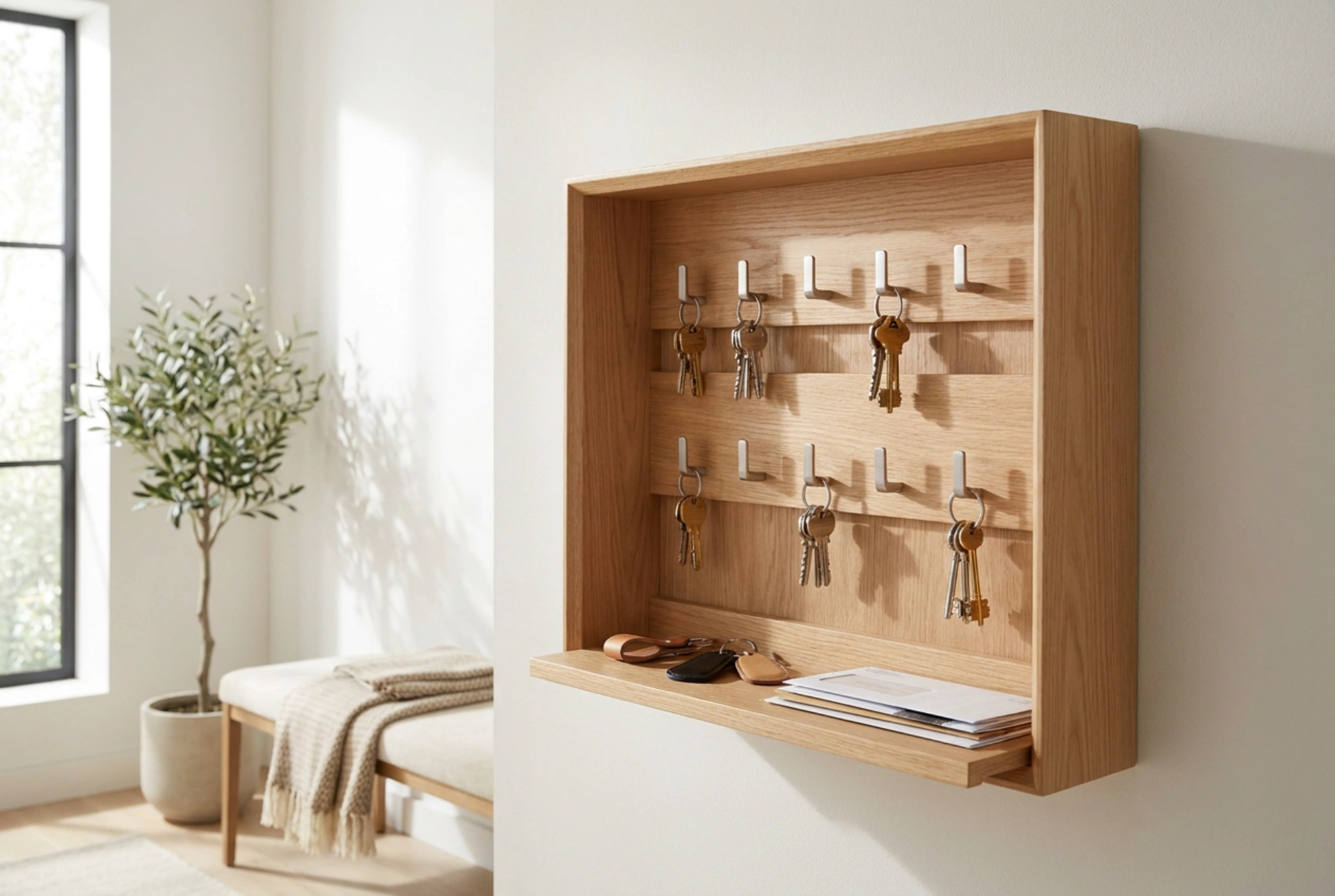
The cabinet frame itself should be constructed from stable materials. Hardwoods like oak or walnut offer high screw-holding capacity and resistance to warping. If selecting a metal cabinet, powder-coated steel prevents rust and resists the abrasive friction of metallic keyrings scraping against the cabinet backplate.
2. Organizing Systems and Friction Prevention
A disorganised cabinet defeats its own purpose. To manage multiple sets efficiently, categorise them by frequency of use and physical access zones. Place high-frequency keys (main entry doors, daily vehicles) at chest level, while low-frequency keys (utility meters, garden sheds, padlocks) sit on lower or deeper hooks.
- Anodised Aluminium Tags: Avoid paper or cheap plastic tags that degrade under skin oils. Anodised aluminium or solid brass tags are chemically stable, highly durable, and can be permanently engraved or stamped.
- Sufficient Hook Spacing: To prevent keyrings from tangling—a physical phenomenon governed by knot theory where loose loops naturally intertwine—hooks should be spaced at least 5 centimetres apart horizontally and 10 centimetres vertically. This allows key sets to hang freely without catching on adjacent rings.
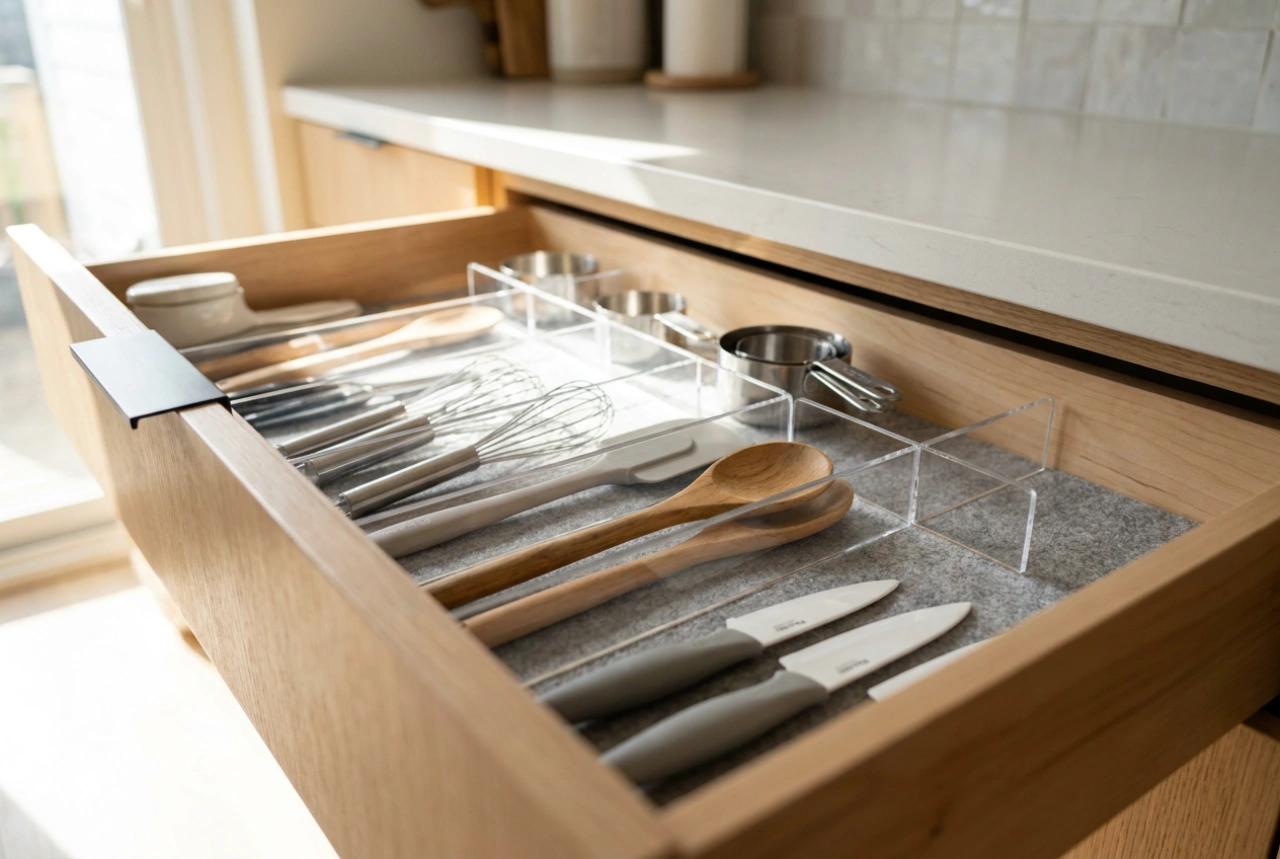
- Silencing and Cushioning: Lining the backboard of the cabinet with dense wool felt or cork sheet dampens the acoustic noise of metal hitting wood or steel, while also protecting the cabinet finish from repetitive impact wear.
3. Managing Metal Oxidation and Moisture
Keys are subject to constant handling, transferring sweat, sebum, and environmental moisture directly onto the metal surfaces. Most keys are composed of brass (a copper-zinc alloy), nickel-plated brass, or steel. When enclosed in a tightly sealed, non-ventilated cabinet, trapped moisture and skin acids can accelerate oxidation, leading to a dull tarnish or, in the case of steel, rust.
To mitigate this chemical degradation, choose a cabinet that allows micro-ventilation, or periodically apply a microscopic barrier. A thin coat of dry PTFE lubricant or mineral oil on the keys protects them from ambient moisture without attracting dust, unlike sticky household oils. Wood cabinets naturally breathe, absorbing and releasing minor moisture fluctuations, which makes them superior to sealed plastic enclosures for regulating internal relative humidity.
4. Practical Workflow and Maintenance
To maintain order in a busy household, establish a clear return protocol. Place a small, open drop bowl or tray directly beneath or inside the cabinet for temporary holding, but enforce a weekly audit where keys are returned to their designated, labeled hooks. This prevents the build-up of clutter and ensures that emergency keys—such as those for gas shut-off valves or water mains—are always instantly accessible in critical moments.