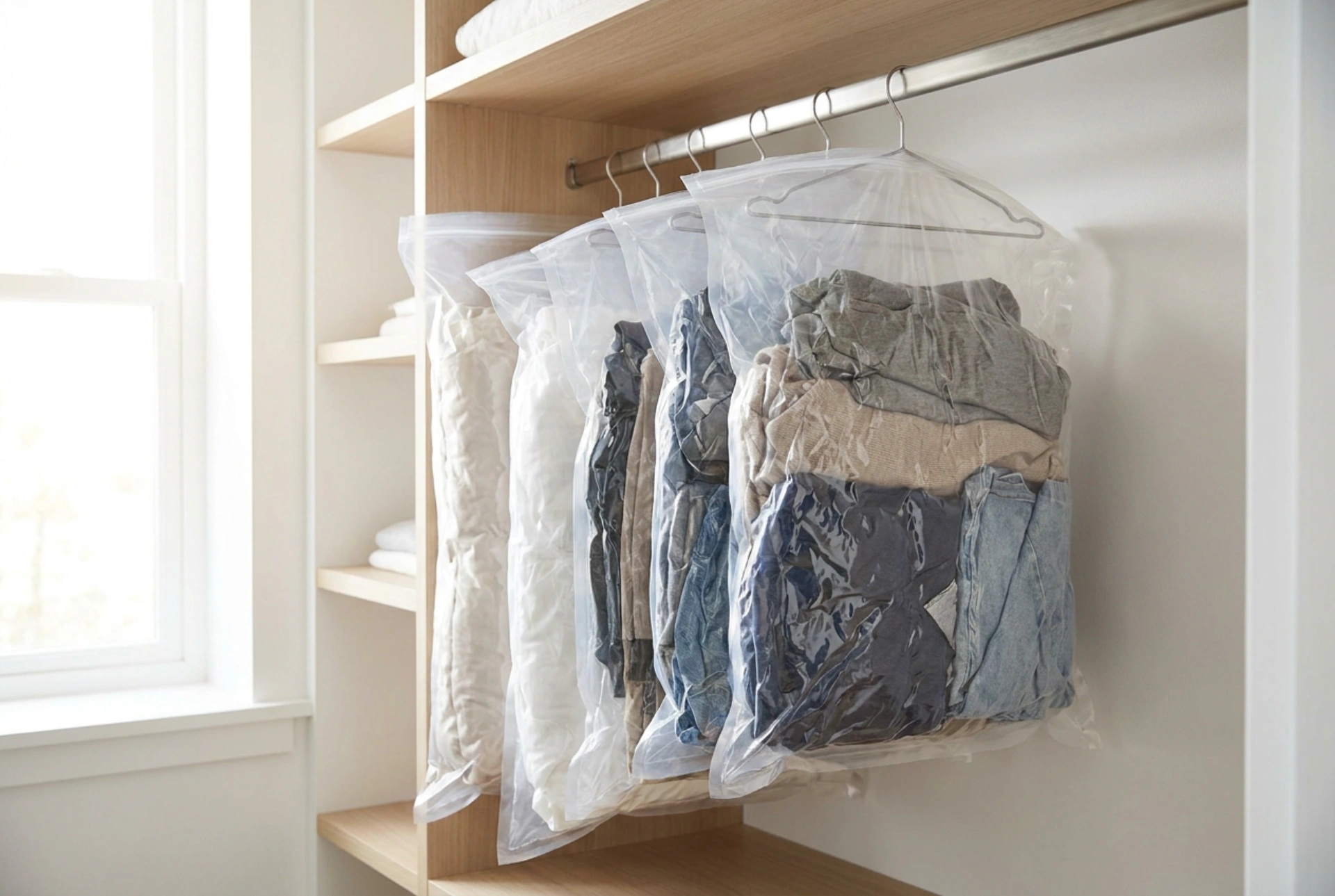


Hanging vacuum bags offer a highly efficient, space-saving solution for seasonal wardrobe management, but protecting your garments from permanent creasing and fiber degradation requires an understanding of material science and atmospheric pressure.
The Science of Vacuum Compression on Textiles
When air is evacuated from a storage bag, external atmospheric pressure exerts force on the contents, compressing the empty spaces between textile fibers. Synthetic polymers, such as polyester and nylon, possess excellent elastic recovery and return to their original shape easily. Natural protein-based fibers, such as wool, and cellulosic fibers, like cotton, require more caution. Wool fibers have a natural physical crimp that gives them elasticity and warmth; if subjected to extreme compression for extended periods, this crimp can be flattened permanently, diminishing the garment's insulation properties. Feather-filled down coats should never be compressed by more than fifty percent. High pressure can snap the delicate mechanical structure of feather quills, permanently destroying the loft that traps warm air.
Preparing Garments for Anaerobic Storage
Before sealing any clothing in a vacuum environment, meticulous preparation is essential to prevent chemical and biological damage. Every garment must be thoroughly cleaned and completely dry.
- Eliminating Organic Residues: Invisible stains, such as skin cells, sebum, perfume, or food oils, will oxidize over months of storage. This chemical reaction leads to yellowing and fabric degradation that is often impossible to reverse.
- Preventing Microbial Growth: Moisture is the catalyst for mold and mildew. A vacuum bag creates an anaerobic (oxygen-depleted) environment, but some anaerobic bacteria and fungal spores can still thrive if moisture is sealed inside. This leads to musty odors and fiber rot.
- Moisture Equilibrium: After washing or dry cleaning, allow garments to air in a low-humidity room for at least twenty-four hours to ensure all latent moisture has evaporated from the deepest layers of the fabric before sealing.
The Mechanics of the Hanging Seal
Hanging vacuum bags feature an integrated internal hook system connected directly to the air-extraction valve. This smart structural design transfers the weight of the garments directly from the hanger to the closet rod, protecting the plastic film from tearing under stress. To maintain an airtight seal, never exceed the weight limit of the bag. Overloading pulls down on the plastic material, creating tension that can warp the dual-groove plastic zip-lock seal, allowing air to slowly leak back in over time. For optimal balance and protection, group garments by similar lengths and weights, placing the heaviest items in the center to maintain an even center of gravity.
The Correct Sealing and Extraction Protocol
Proper execution of the sealing process ensures long-term preservation and prevents atmospheric leakage.
Applying the Dual-Zip Seal
Ensure the sealing track is free of lint or dust fibers, which can act as tiny pathways for air. Use the provided plastic slider clip to press the zipper tracks together. Run the clip across the track at least twice using firm, continuous pressure. Run your fingers along the seam to manually verify that the grooves are completely interlocked.
Gradual Vacuum Extraction
When applying the vacuum nozzle to the one-way valve, extract the air gradually. For structured garments, such as tailored winter coats, wool blazers, or suits, do not extract one hundred percent of the air. Stop the vacuum when the bag becomes firm but still retains a slight degree of flexibility. This partial vacuum prevents deep, sharp creases that can break or distort the internal canvas lining and shoulder pads of structured tailoring.
Post-Storage Fabric Rehabilitation
When retrieving your garments after months of compression, the fibers will naturally be flattened and stiff. To restore their original volume and drape, they must undergo a rehabilitation process. Hang the garments in a high-humidity environment, such as a bathroom during a warm shower. The moisture molecules will penetrate the dry fibers, causing them to swell back to their natural state. For wool coats and down jackets, gentle agitation in a clothes dryer on an air-fluff (no-heat) cycle with a few clean tennis balls will mechanically loft the fibers and restore their original softness.