

Removing ballpoint pen ink from fabric requires immediate, chemically informed action to dissolve the binders before they polymerise and bond permanently with the textile fibres.
Understanding the Chemistry of Ballpoint Ink
To effectively remove an ink stain, one must first understand what ballpoint ink is made of. Unlike water-based fountain pen inks, ballpoint ink is a highly viscous mixture of synthetic pigments or acid dyes suspended in a solvent carrier—typically benzyl alcohol, phenoxyethanol, or glycol. Synthetic resins are added to this carrier to adjust the viscosity and ensure the ink flows smoothly onto paper and dries rapidly. When this mixture contacts fabric, the solvent evaporates, leaving behind the resins and dyes which quickly adhere to the organic or synthetic fibres. If heat is introduced—such as hot water during a wash or the high heat of a tumble dryer—the synthetic resins undergo thermal polymerisation. This process cross-links the polymers, making the pigment virtually insoluble and permanently bonding it to the fabric structure. Therefore, the absolute golden rule of ink removal is to avoid heat and chemical setting agents until the pigment has been fully extracted.
Selecting the Correct Solvent: The Principle of Solubility
In textile chemistry, the fundamental rule is "like dissolves like". Because ballpoint ink relies on organic solvents and resins, water alone is highly ineffective and can actually spread the stain by carrying loose pigment particles into surrounding dry fibres. To break down the polymer matrix of the ink without damaging the textile, you must select an organic solvent with similar polarity:
- Isopropyl Alcohol (Rubbing Alcohol): Boasting a high purity level, isopropyl alcohol is highly effective at dissolving the resin binders in ballpoint ink, liquefying the dried stain so it can be lifted from the fibres.
- Glycerin (Glycerol): A neutral, viscous trihydroxy alcohol that acts as a humectant. It is excellent for older, dried-on stains as it penetrates the hardened resin layer, softening it and preparing the pigments for solvent extraction.
- Oxygen Bleach (Sodium Percarbonate): Useful as a final treatment for white cotton fabrics. When dissolved in cool water, it releases hydrogen peroxide, which oxidises and decolourises residual organic dye molecules without degrading the tensile strength of the fabric fibres.
The Mechanics of Extraction: Capillary Action and Blotting
Mechanical action is just as critical as chemical action. Rubbing or scrubbing a fresh ink stain is a common mistake; the shear force of rubbing pushes the dissolved ink pigments deeper into the weave of the fabric and spreads them laterally. Instead, the process must rely on capillary action and controlled physical transfer:
Step-by-Step Solvent Transfer Method
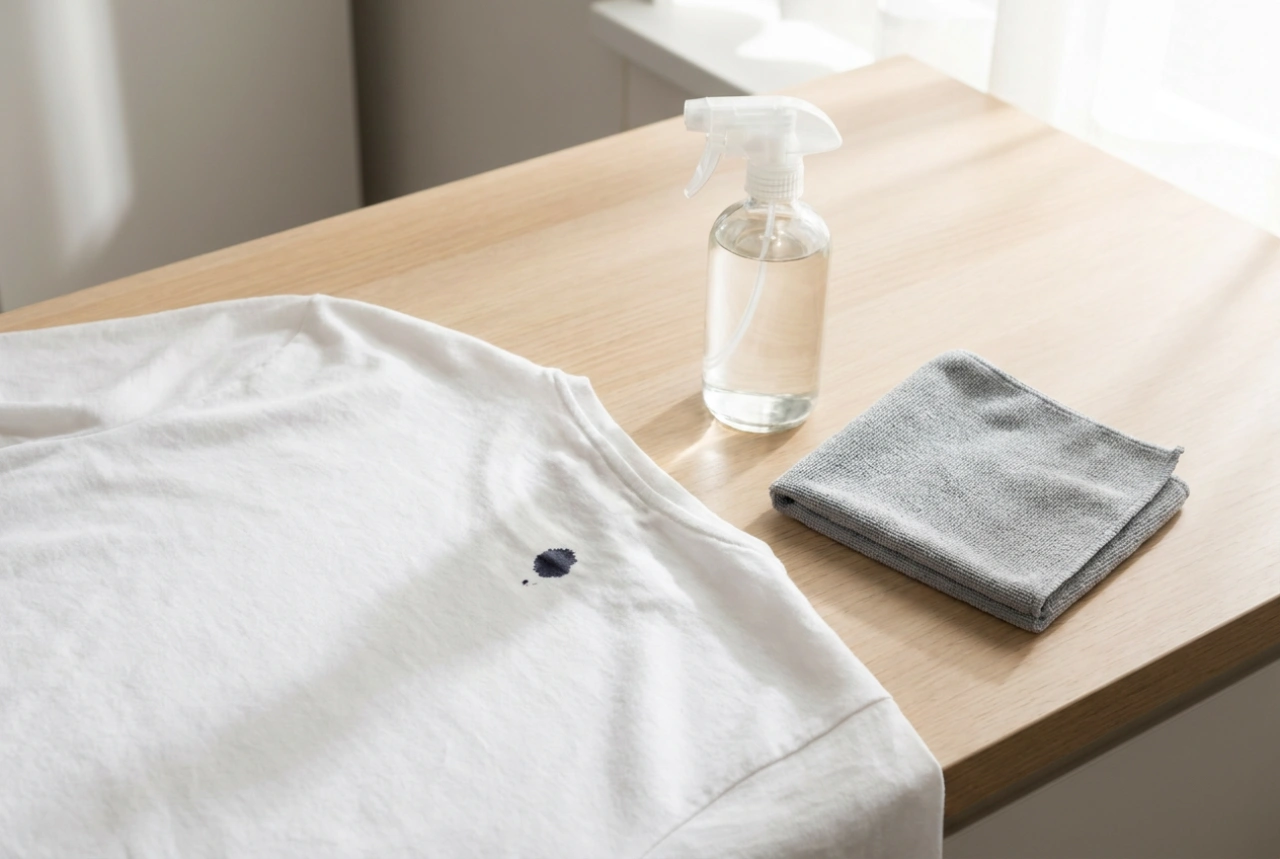
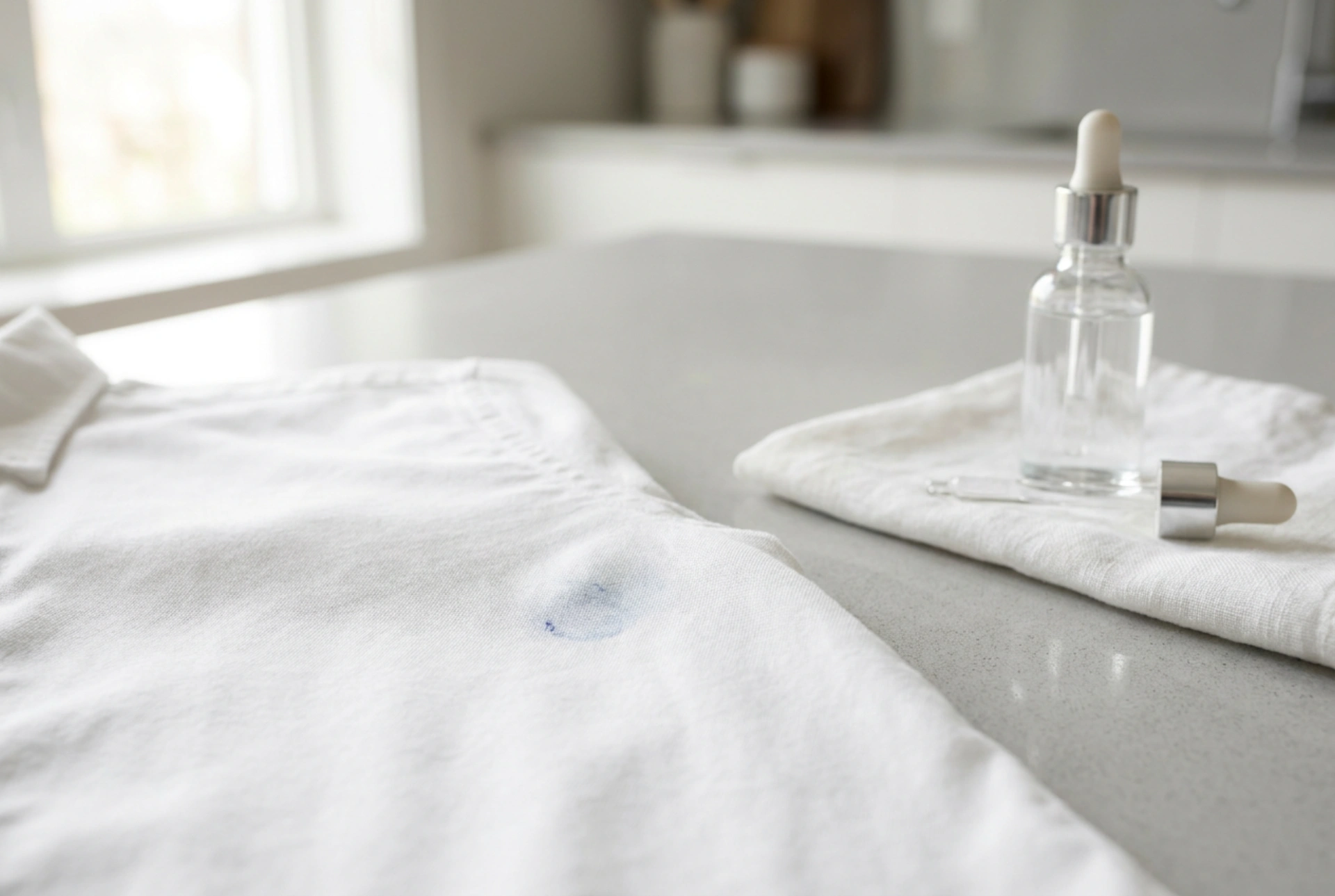
First, place the stained garment flat on a hard, non-porous surface, such as a stone countertop. Position a clean, dry, white cotton cloth or several layers of absorbent paper towel directly beneath the stained section of the fabric. This acts as a receiver layer.
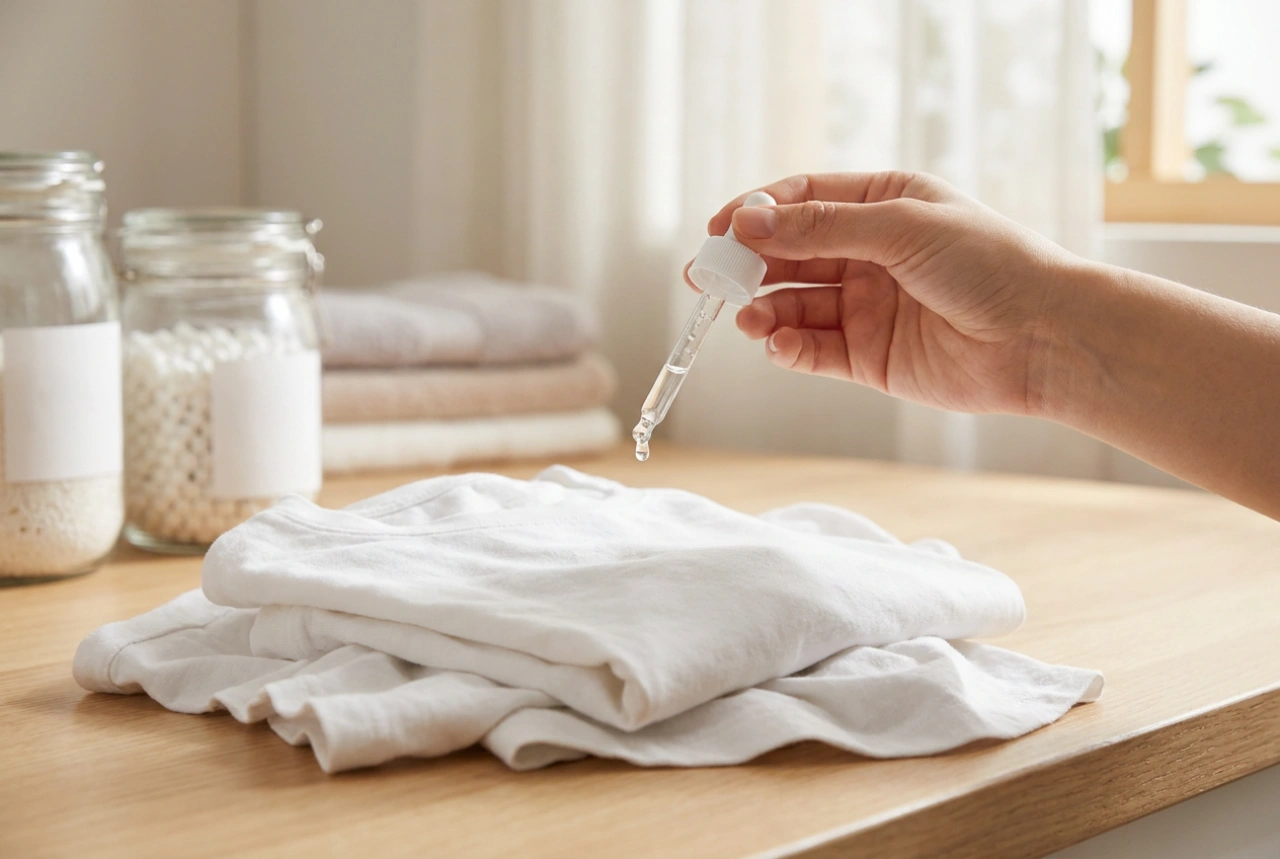
Using a glass dropper, apply a few drops of isopropyl alcohol precisely to the stain. Do not saturate the entire garment; confine the solvent to the boundary of the mark. As the solvent dissolves the resin binder, the liquefied ink will begin to migrate. Use a second clean white cloth to blot the stain firmly from the outside edges moving inward. This prevents the ink from spreading outward. The downward pressure forces the dissolved ink out of the garment's fibres and directly into the receiver cloth below via capillary action. Regularly move the garment to a clean section of the receiver cloth to prevent re-absorption of the dissolved dye.
The Final Wash: Surfactants and Low Temperatures
Once the vast majority of the pigment has been physically transferred to the backing cloth, a residual shadow may remain. To address this, apply a small amount of liquid laundry detergent directly to the area. The surfactants in the detergent contain both hydrophilic (water-attracting) and lipophilic (fat-attracting) ends. These molecules surround the remaining micro-particles of ink resin, encapsulating them in structures called micelles. This emulsification process keeps the pigments suspended in the water, preventing them from redepositing onto the fabric during the wash cycle.
Wash the garment in a washing machine using a cold water cycle (ideally 20°C to 30°C). High temperatures must be strictly avoided, as any microscopic ink residue still present in the fibres will instantly bake and set. After the wash cycle is complete, inspect the garment thoroughly while it is still damp. If any trace of the stain remains, repeat the solvent and surfactant process. Do not place the garment in a tumble dryer or iron it until you are absolutely certain the stain is completely gone.