

Selecting the right grout cleaning tool requires balancing mechanical agitation with material science to protect delicate tile glaze and surface sealants. Understanding how bristle hardness interacts with ceramic, porcelain, and natural stone prevents permanent abrasive wear during routine maintenance.
Understanding Tile Hardness and Bristle Materials
Before selecting a cleaning tool, it is essential to analyze the materials involved. Most household tiles are made of glazed ceramic or porcelain. Glazed ceramic tiles feature a thin, vitrified glass-like layer on their surface, which rates between 5 and 6 on the Mohs hardness scale. While relatively durable, this glaze can be permanently dulled or micro-scratched by abrasive particles or excessively stiff bristles. Natural stone, such as marble or limestone, is significantly softer, often rating only 3 to 4 on the Mohs scale, making it highly susceptible to physical damage.
Grout brushes generally utilize synthetic polymers for their bristles, primarily nylon or polypropylene. Nylon is highly resilient, flexible, and retains its structural integrity when wet. Its flexibility allows the bristles to bend and contour to the uneven surface of grout lines without generating localized friction spikes on the tile edges. Polypropylene bristles are stiffer and offer superior resistance to harsh chemicals, but their rigid nature requires lighter hand pressure to avoid scratching sensitive glazes. Metal bristles, such as brass or steel, must be strictly avoided; their hardness exceeds that of most tile glazes and will cause irreparable gouging.
The Geometry of Effective Grout Brushes
The efficiency of a cleaning brush depends heavily on its design and how it distributes mechanical force. Standard flat-surface brushes are ineffective for grout lines because they contact only the raised edges of the tiles. This forces the user to apply excessive downward pressure, flexing the bristles outward and causing them to scrape the delicate shoulders of the tiles rather than reaching the recessed grout.
To clean effectively without causing damage, look for a brush with a V-cut or tapered bristle profile. This narrow, wedge-shaped arrangement directs the kinetic energy precisely into the grout channel. The longer center bristles reach the lowest point of the grout line, while the shorter outer bristles support the structure without rubbing against the adjacent tile face. An angled handle design is also crucial; it allows the user to apply force parallel to the floor or wall, reducing wrist fatigue and preventing the hard plastic block of the brush from accidentally striking and chipping the tile edges.
Step-by-Step Grout Agitation Technique
Mechanical action should never be the sole cleaning mechanism. Scrubbing dry grout lines causes dirt, sand, and mineral deposits to act as loose abrasives, which will grind against the tile under the pressure of the brush. Follow this chemically-assisted, low-friction method to ensure safe cleaning:
- Pre-soak: Apply a mild surfactant or a warm solution of oxygen bleach to the grout lines. Allow it to sit for 10 to 15 minutes. This chemical dwell time breaks down lipid bonds and loosens mineral deposits, reducing the physical force required.
- Lubrication: Ensure the surface remains wet during the entire process. Water acts as a lubricant, reducing friction between the synthetic bristles and the tile glaze, while suspending dislodged soil particles.
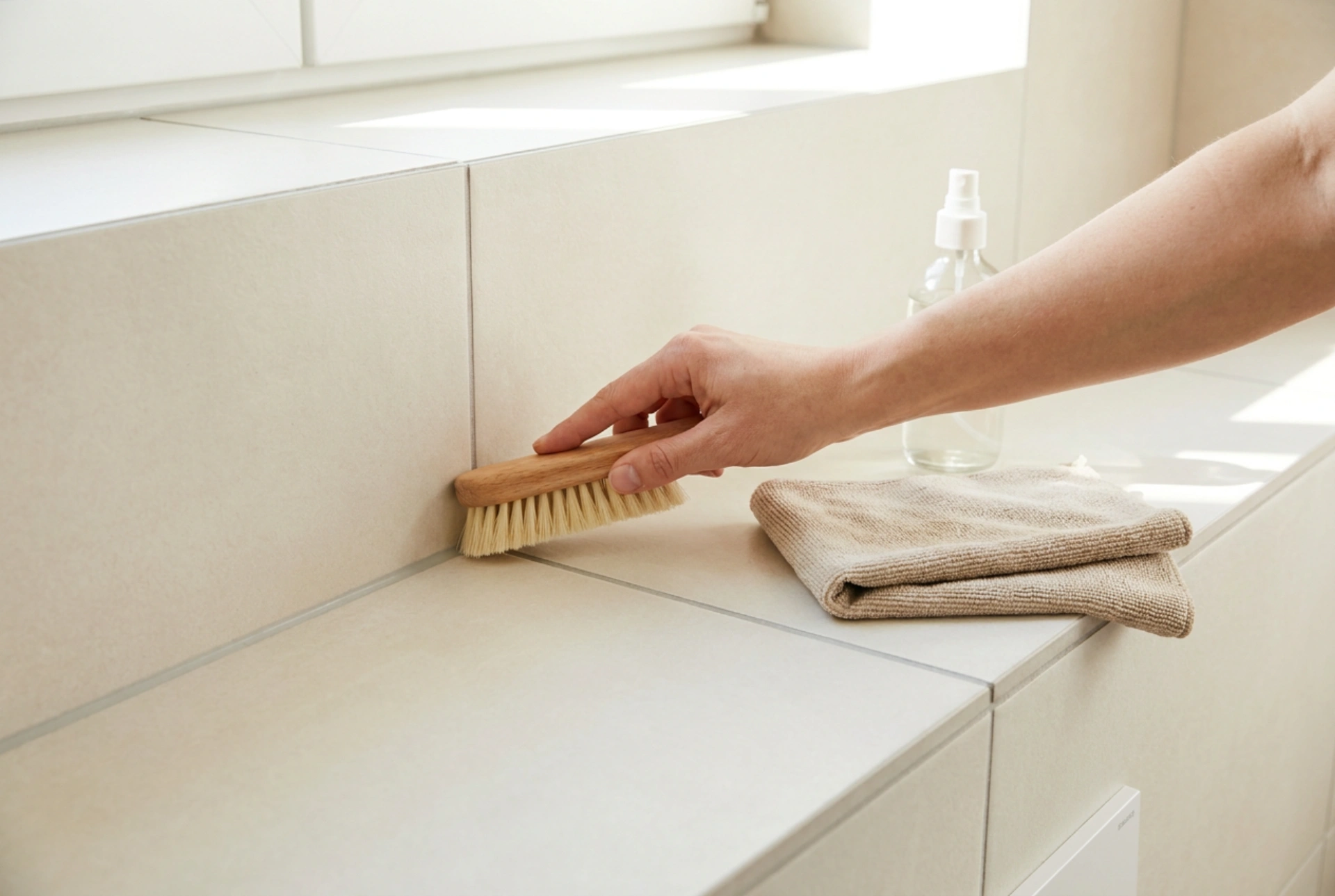
- Linear Agitation: Align the brush with the grout line and scrub back and forth using short, controlled strokes. Avoid circular motions, which can force the bristles to ride up onto the tile surface and increase the risk of scratching.
- Rinse and Dry: Immediately wipe away the suspended dirt slurry using a clean microfibre cloth. Rinse the area with clean water to remove any chemical residue, then dry with a soft towel to prevent water spots.
Material-Specific Care: Ceramic vs. Natural Stone
A universal approach does not work for all tiled surfaces. For glazed ceramic and porcelain, a medium-stiff nylon brush combined with a neutral or slightly alkaline cleaner is ideal. These materials are highly resistant to chemical degradation but can still suffer from dulling if subjected to repetitive, high-pressure mechanical scrubbing.
For natural stone tiles like marble, travertine, or slate, the rules change entirely. These calcium-rich stones are incredibly sensitive to both acids and physical abrasion. For these surfaces, select an ultra-soft nylon brush or even a specialized microfibre-wrapped grout tool. The emphasis must be placed on chemical dissolution using stone-safe, pH-neutral detergents, leaving the soft-bristled brush to perform only the gentlest agitation needed to lift the loosened debris.