

Wet spots and water sputtering during steam ironing are usually caused by condensation pooling in the steam hose or an oversaturated ironing board cover. By understanding the thermodynamics of pressurized steam and adjusting your technique, you can achieve a crisp, moisture-free finish on any fabric.
Understanding why steam turns back to water
A steam generator iron works by heating water in a separate boiler to create high-pressure steam, which travels through a hose to the iron's soleplate. Because the hose is cooler than the boiler, the steam naturally loses energy and begins to condense back into liquid water as it travels. When you press the steam trigger after a brief pause, this accumulated water is pushed out first, resulting in sudden wet spots on your clothes. To prevent this physical reaction, always purge the hose. Point the iron away from your garment and press the steam trigger for two to three seconds over a sink or towel before you begin ironing. This clears the condensed water from the line, ensuring only dry steam reaches the fabric.
The critical role of soleplate temperature
For steam to remain in its gaseous phase, the soleplate must be hot enough to prevent instant cooling at the exit ports. If you set the iron's temperature dial too low while demanding high steam output, the steam will condense immediately upon hitting the cold metal plate. Always match the temperature setting to the fabric type, but remember that high steam output requires higher soleplate temperatures. If you are working with delicate synthetic fabrics that require low heat, reduce the steam rate to its minimum or use dry heat accompanied by a light, external misting of water rather than heavy pressurized steam.
Ironing board ventilation and material physics
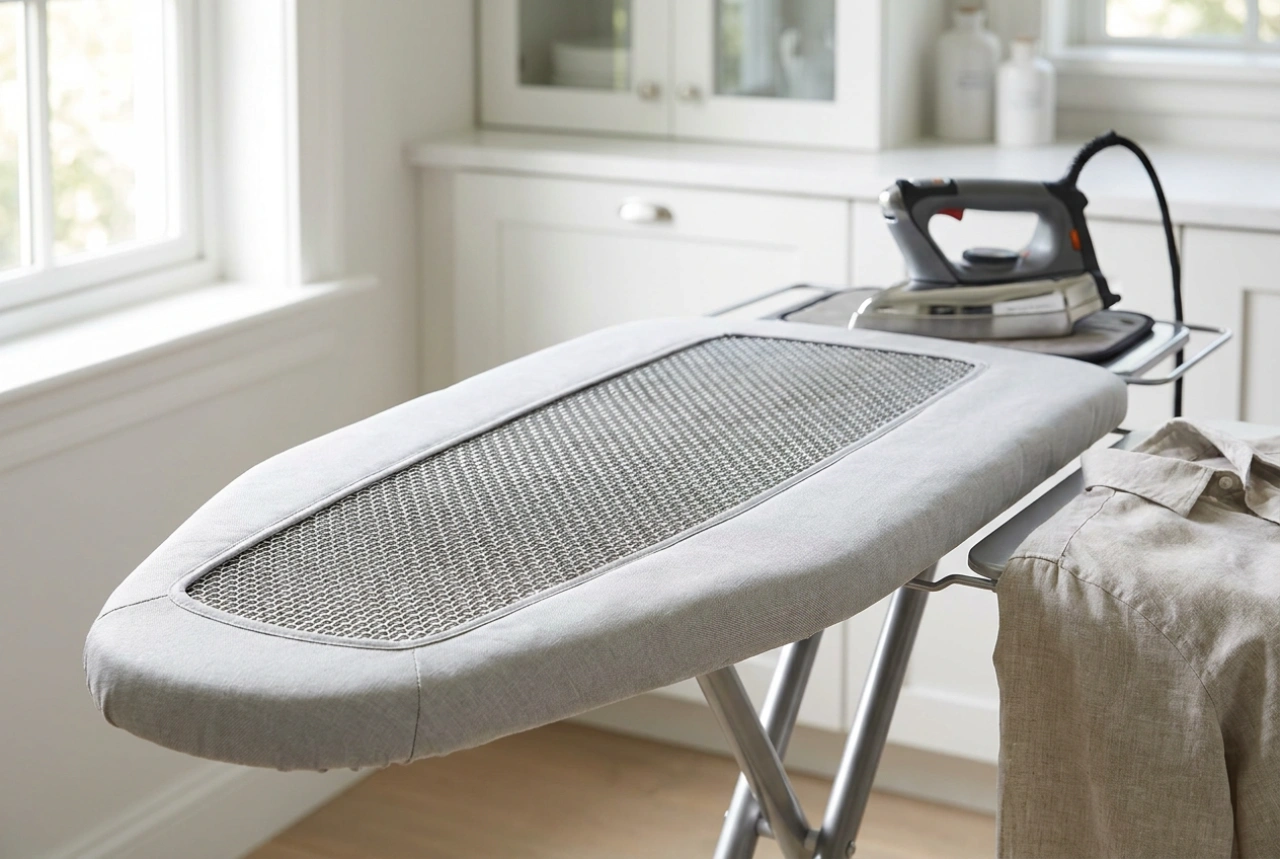
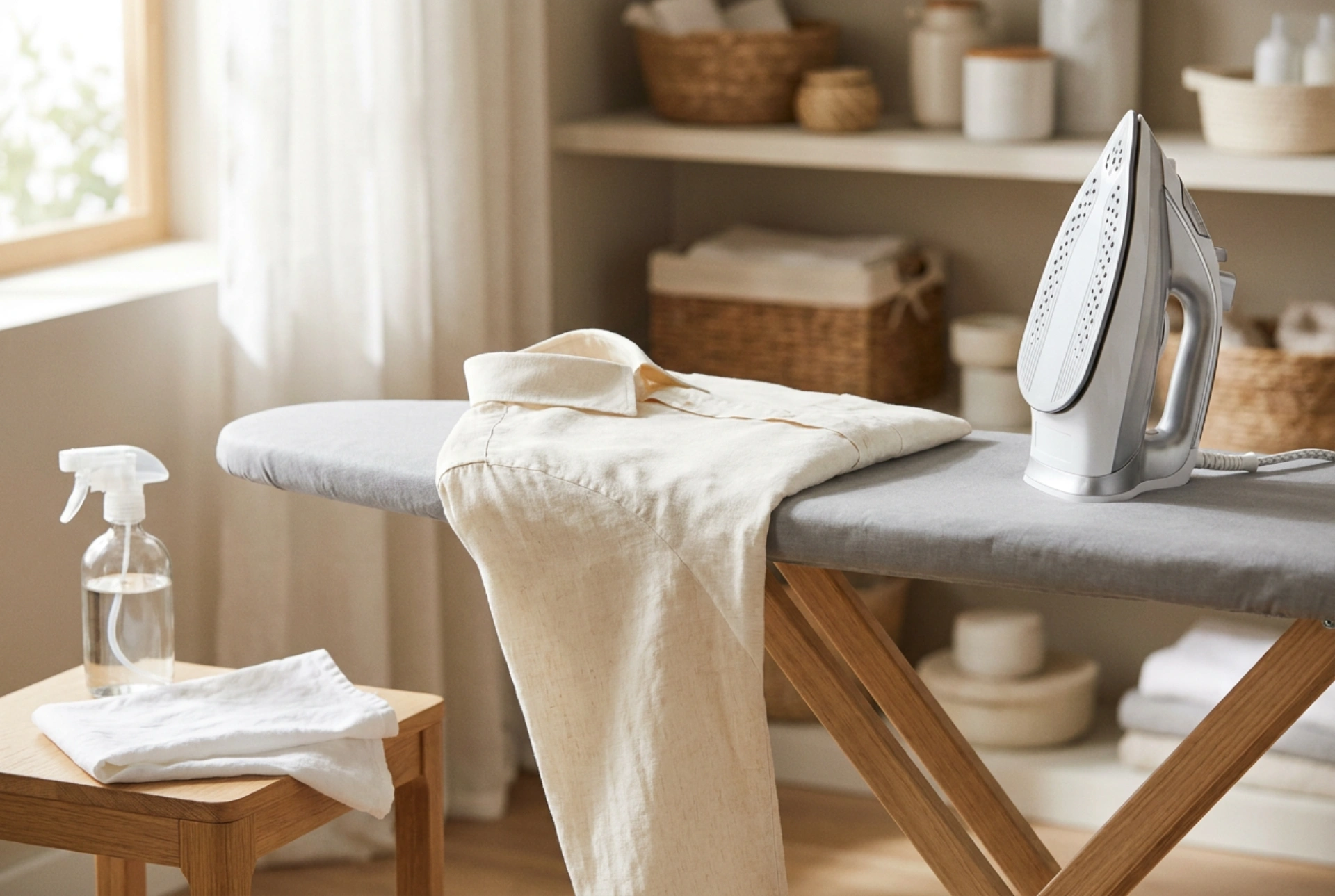
A standard steam iron outputs around 40 grams of steam per minute, whereas a steam generator can output upwards of 120 grams per minute. This massive volume of moisture must go somewhere. If your ironing board has a solid wooden or plastic base, the steam cannot escape downwards; instead, it strikes the solid barrier, condenses, and saturates the cover. This moisture then transfers back to the underside of your garment, creating stubborn wet patches. To solve this, use an ironing board with a perforated metal mesh structure. This design allows steam to pass completely through the board. Additionally, choose a cover with a thick felt underlay rather than cheap foam; felt absorbs excess moisture temporarily and allows it to evaporate efficiently without dampening the fabric face.
The dry-stroke technique
One of the most effective operational habits to prevent damp garments is the dry-stroke method. When you glide the iron across the fabric, press the steam trigger only on the forward stroke. On the return stroke, release the trigger and let the hot soleplate pass over the damp area using only dry heat. This dry pass transfers thermal energy directly into the fabric, instantly evaporating any residual moisture trapped in the fibres. Not only does this eliminate wet spots, but it also "sets" the fabric fibres in their flat, wrinkle-free state, preventing new creases from forming as the garment cools.
Preventing mineral build-up and spitting
Sometimes, what looks like a simple wet spot is actually a mixture of water and dissolved minerals. Over time, calcium carbonate from tap water builds up inside the boiler and soleplate vents. These mineral deposits attract water molecules, creating microscopic dams that trap liquid water. When steam pressure builds, it violently ejects these pools of water, causing sputtering. Regularly flush the boiler according to the manufacturer's physical descaling instructions using distilled water or a gentle, non-corrosive descaling agent. Maintaining clean internal pathways ensures a laminar flow of steam, eliminating erratic water spitting.