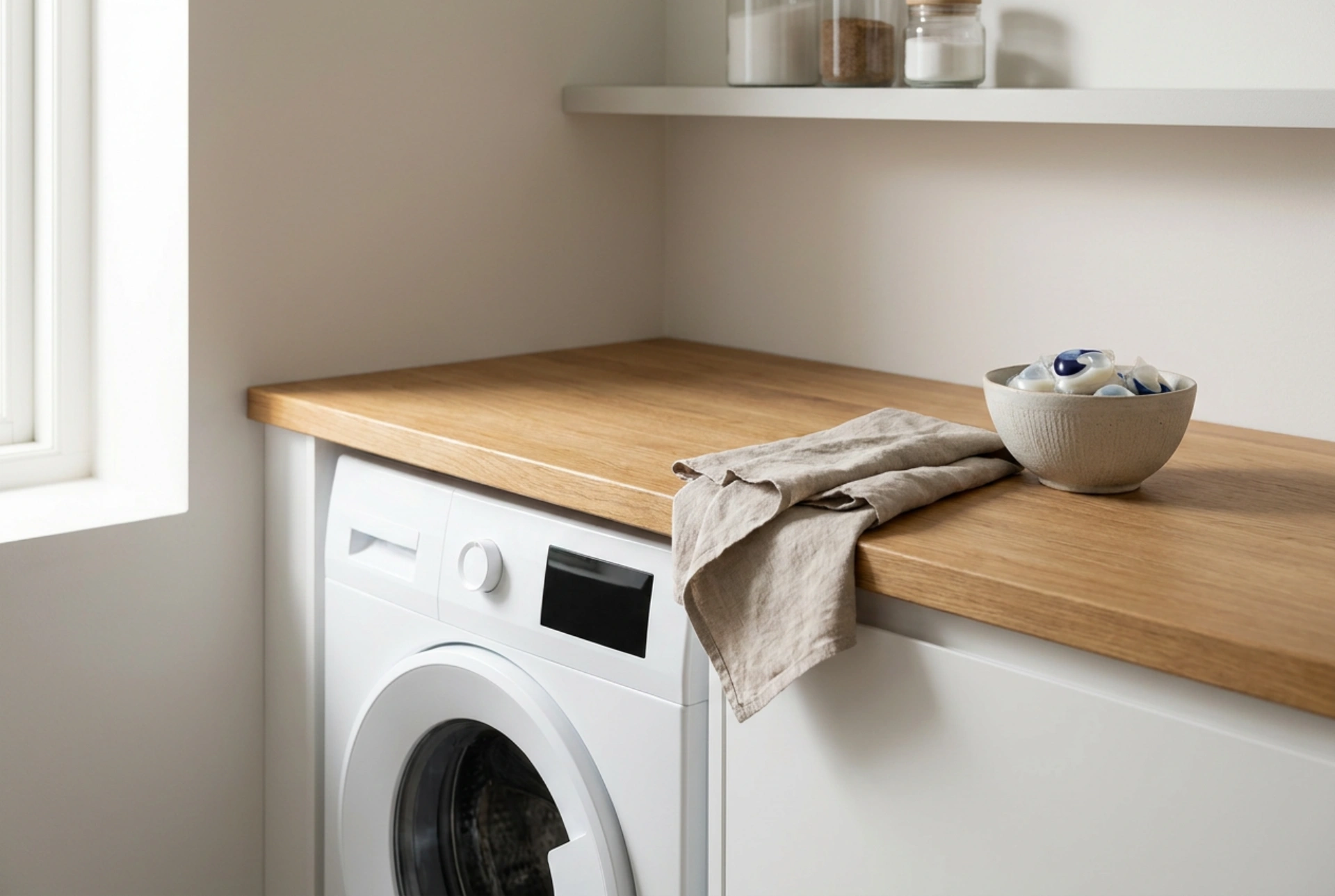


Integrating a washing machine seamlessly under a countertop requires precise structural planning, focusing on vibration mitigation, physical clearances, and easy access to utility shut-offs. Neglecting these mechanical and spatial parameters can lead to excessive noise, structural damage to cabinetry, or catastrophic leaks.
Managing Kinetic Energy and Clearance Margins
Washing machines generate substantial kinetic energy, especially during the high-speed spin cycle, which can exceed 1400 RPM. This rotation creates centrifugal forces that translate into lateral and vertical vibrations. To prevent these vibrations from transferring directly to your cabinetry and countertop, you must maintain strict clearance margins.
- Side Clearances: Always allow a minimum of 10 to 15 millimetres of free space on both sides of the appliance.
- Vertical Clearance: The gap between the top of the machine and the underside of the worktop should be at least 10 millimetres.
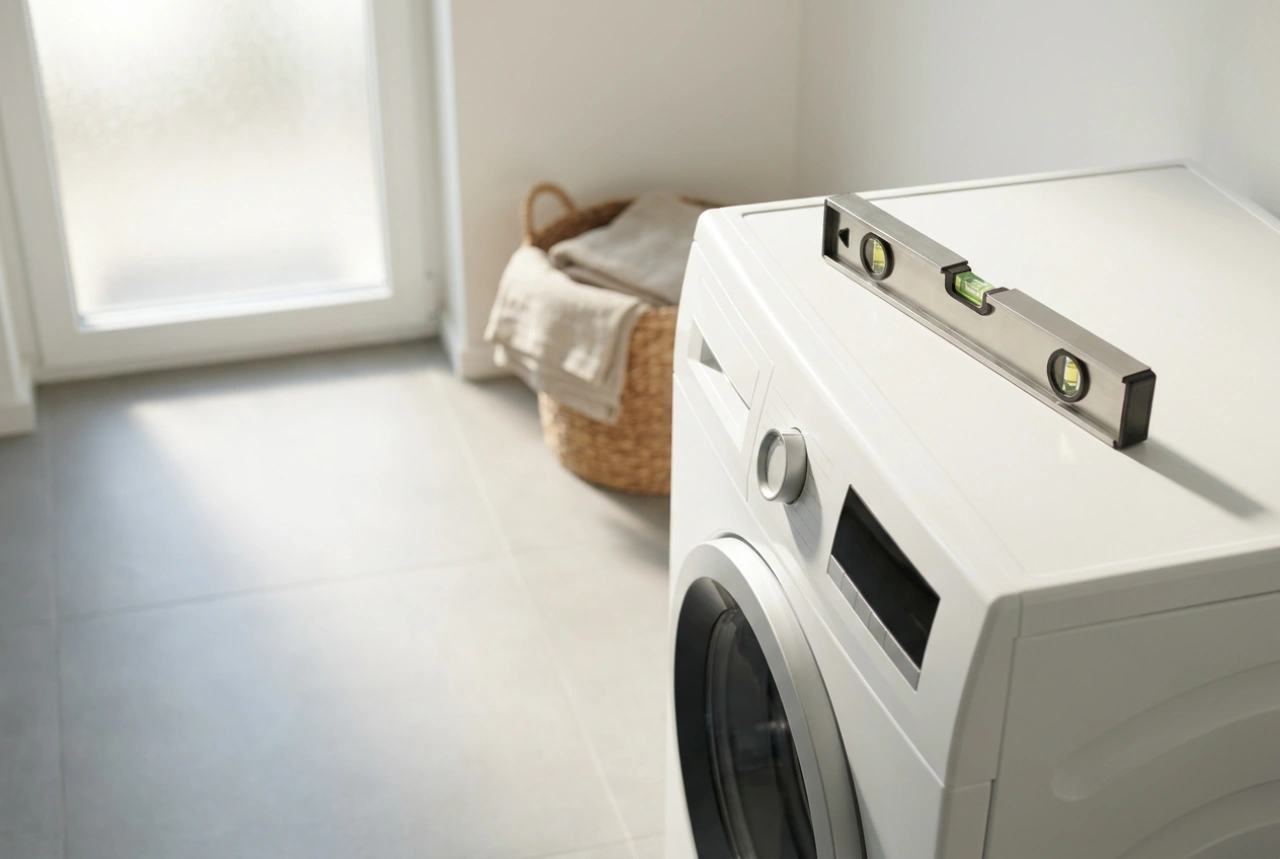
- Subfloor Stability: Ensure the subfloor is perfectly level and structurally rigid. Adjust the appliance's levelling feet using a spirit level and lock them in place with the locknuts to minimise kinetic displacement.
If the machine makes direct contact with the surrounding carcass, the cyclic vibrations will loosen cabinet joints over time and cause annoying acoustic resonance throughout the room.
Utility Alignment and Gravity-Fed Drainage
Placing an appliance under a counter limits immediate access to water inlets, waste outlets, and electrical sockets. It is a critical error to position these utilities directly behind the washing machine, as the depth of the plugs and hoses (typically requiring 50 to 100 millimetres) will push the appliance forward, preventing it from aligning flush with your cabinetry.Instead, utility connections should be located in an adjacent cabinet carcass. This layout allows you to route hoses through pre-drilled side panels while keeping shut-off valves accessible in an emergency. Ensure the waste pipe stands at a height of 60 to 90 centimetres to prevent siphoning issues. The drain hose must loop upwards before connecting to the standpipe or sink trap to prevent wastewater from flowing back into the drum via gravity.
Material Dynamics of the Countertop
The choice of countertop material is paramount due to the microclimate created by a washing machine. During hot washes, moisture and thermal energy rise from the appliance. Standard laminated particle boards can swell and delaminate if exposed to this moisture. If using timber, such as oak, it must be thoroughly sealed with a water-resistant polyurethane or marine-grade oil, and the underside should be lined with a moisture barrier foil.
Natural stone, quartz composite, or solid-surface acrylic materials are ideal choices because they are non-porous and heavy enough to damp structural vibrations. Furthermore, the countertop must not rest directly on the washing machine; it must be fully supported by adjacent cabinet carcasses or heavy-duty steel brackets anchored to the wall.
Thermal Dissipation and Ventilation
Modern washing machines feature internal heating elements that raise water temperatures up to 90 degrees Celsius. This process, combined with motor operation, generates internal heat that must be dissipated to prevent component degradation. When encased under a countertop, heat can build up rapidly.
To facilitate natural convection, avoid sealing the toe kick (plinth) completely if the appliance relies on lower air intake. For fully integrated models with cabinet doors attached to the front, ensure there is a gap of at least 5 millimetres around the door perimeter to allow hot air to escape. This ventilation prevents moisture from condensing on the cold interior walls of the cabinet, reducing the risk of mould growth.