

Integrating a loft-style shoe rack into your entryway requires balancing raw industrial aesthetics with practical organisation to keep dirt and clutter at bay. By understanding the structural materials and the physics of airflow, you can create a highly functional transition zone that maintains its pristine look even during wet British winters.
The Material Science of Loft-Style Furniture
The defining elements of loft design are raw metal and solid wood. When selecting or positioning a shoe rack, understanding how these materials interact with moisture and dirt is crucial. Most industrial frames are crafted from steel. To prevent rust caused by damp soles and road salt, ensure the metal is finished with a thermosetting powder coating. This electrostatic process creates a non-porous, highly durable barrier that resists mechanical scratches and chemical corrosion much better than liquid paint.
If your rack features wooden tiers, the timber must be properly sealed. Untreated wood absorbs ambient moisture, leading to warping, cracking, and mould growth. A high-quality polyurethane sealant or a deep-penetrating hardwax oil provides hydrophobic properties, forcing water to bead on the surface rather than penetrating the grain. This makes wiping away mud and salt deposits straightforward without damaging the organic fibres of the wood.
Airflow Mechanics and Footwear Longevity
An organised hallway does not just look neat; it preserves the condition of your footwear. Loft-style shoe racks often employ open metal mesh or parallel steel bars instead of solid wooden shelves. This design is not merely aesthetic; it is rooted in thermodynamics. Wet shoes require consistent air circulation to facilitate the evaporation of moisture from both the upper materials and the soles.
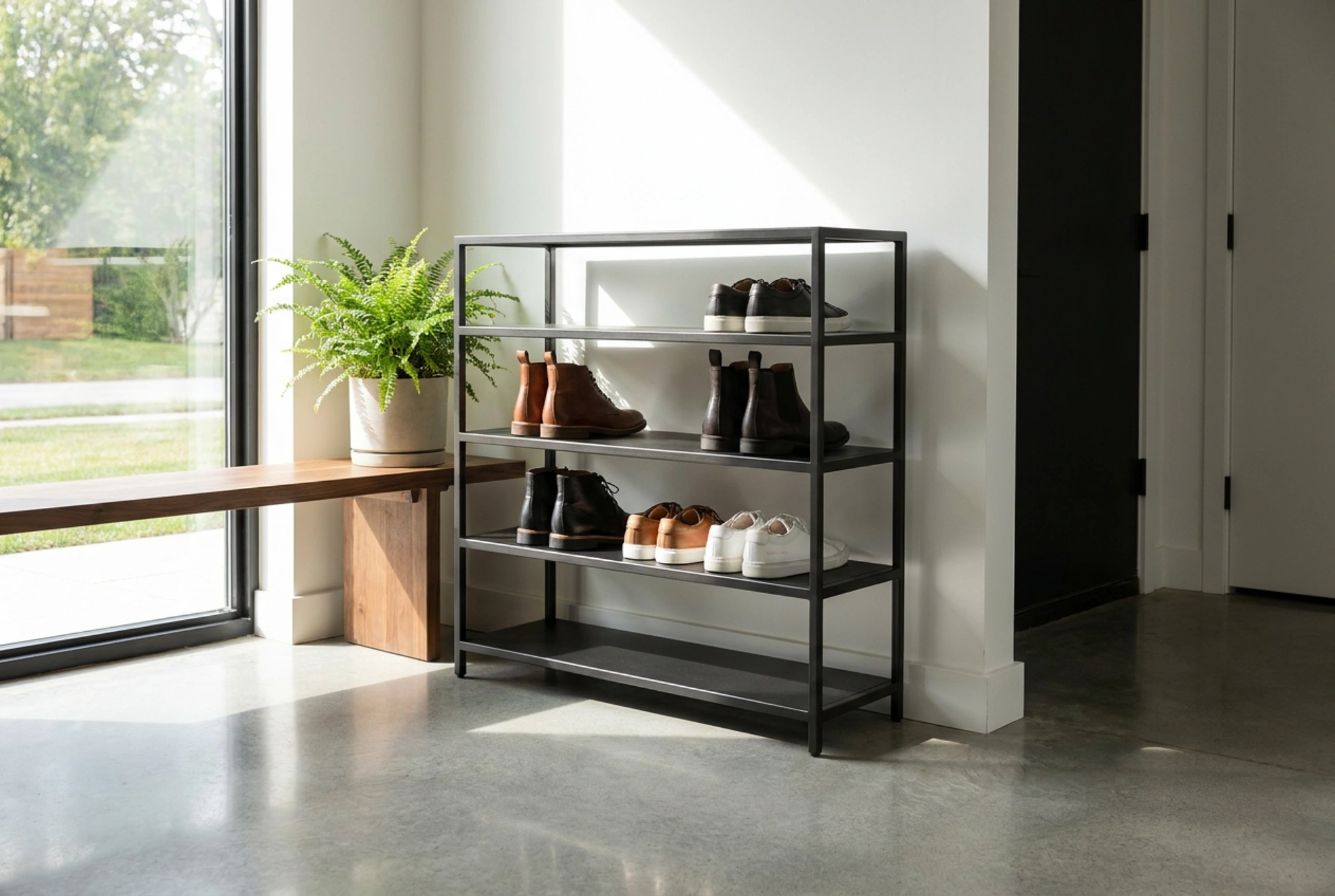
Solid surfaces trap damp air underneath the shoe, creating a microclimate that encourages bacterial proliferation and unpleasant odours. Open-slat shelves allow ambient air to flow freely around the entire shoe, accelerating the drying process. However, to prevent dirt, water, and debris from falling from the upper shelves onto the shoes below, place highly structured footwear like boots on the bottom tier, and lighter, clean shoes like canvas trainers on the upper levels. Alternatively, incorporating a discreet, low-profile rubber drip tray beneath the bottom shelf will capture run-off without disrupting the clean, minimalist lines of the metal frame.
Spatial Zoning and Ergonomic Placement
To maintain an orderly hallway, you must establish a clear boundary between the exterior "dirty zone" and the interior "clean zone." Position your loft shoe rack immediately adjacent to the entrance, but outside the direct sweep of the front door. This placement prevents the door from blowing external dust across your clean footwear and ensures an unobstructed pathway.
Ergonomics play a vital role in keeping the area tidy. If the rack is too low or difficult to access, family members are more likely to kick their shoes off onto the floor rather than placing them on the shelves. A rack with a built-in wooden bench top provides a stable surface to sit on while putting on or removing shoes, naturally directing the user to store their footwear immediately afterwards. Ensure there is at least 15 to 20 centimetres of clearance beneath the lowest shelf; this allows robotic vacuums or manual flat mops to slide underneath easily, preventing the accumulation of dust bunnies and grit in the hard-to-reach areas.
Visual Harmony in a Modern Entryway
Loft furniture can sometimes feel visually heavy due to its dark metal components. To integrate it harmoniously into a bright, modern hallway, use the principle of contrast. Position the rack against a neutral, light-reflective wall—such as off-white, pale grey, or soft plaster tones. The stark contrast highlights the geometric lines of the steel frame, turning a utilitarian storage item into a structural design feature. To soften the industrial edge, place the rack near natural light sources or introduce a small potted plant nearby; the organic green foliage creates a pleasant juxtaposition with the cold, dark metal, completing a balanced and welcoming entrance.