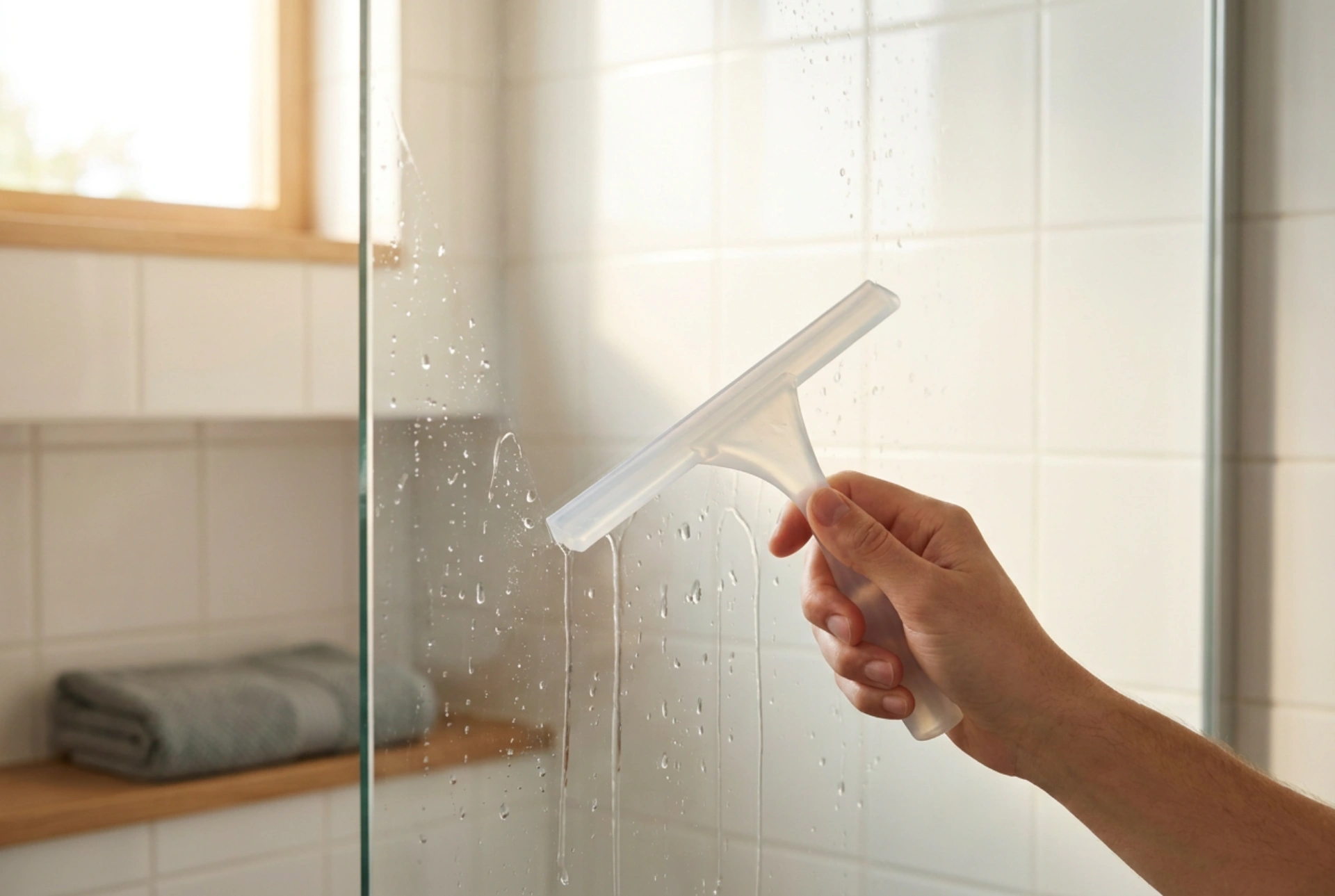


Eliminating water spots, soap scum, and limescale on glass shower enclosures does not require harsh chemical detergents or hours of scrub labor. By understanding the chemical nature of mineral deposits and mastering the physics of physical displacement with a shower squeegee, you can maintain a crystal-clear glass surface with just a few seconds of daily effort.
The Science of Bathroom Deposits: Limescale and Soap Scum
To effectively prevent mineral buildup, it is essential to understand what occurs on your shower screen after the water is turned off. Tap water contains dissolved minerals, primarily calcium and magnesium ions. When water droplets are left to air-dry on glass, the liquid water evaporates, leaving these inorganic minerals behind. Over time, these minerals crystallise into calcium carbonate, commonly known as limescale, which bonds chemically to the silica in the glass.
Soap scum represents a different chemical challenge. When traditional soaps—which are sodium or potassium salts of fatty acids—come into contact with the calcium and magnesium ions in hard water, a precipitation reaction occurs. This reaction replaces the soluble sodium ions with insoluble calcium or magnesium, forming a sticky, water-insoluble film. This film adheres tenaciously to glass, tiles, and grout lines, trapping skin cells, hair oils, and dust, which eventually hardens into a matte, greyish layer.
How a Squeegee Works: The Physics of Water Displacement
The shower squeegee is an incredibly efficient tool because it relies on the mechanical displacement of liquid before chemical bonding can take place. Rather than chemical dissolution, a squeegee uses fluid dynamics and surface tension. A flexible blade—typically made from silicone or vulcanised rubber—deforms slightly under manual pressure to conform perfectly to the microscopic contours of the glass.
As the blade moves across the wet glass, it breaks the surface tension of the water sheet. The sharp, straight edge of the blade acts as a barrier, gathering the water molecules and pushing them downward under gravity. By removing more than 95% of the standing water from the glass surface, you eliminate the medium in which minerals are dissolved. Without water to evaporate, mineral crystallization and soap precipitation cannot occur.
The Perfect Squeegeeing Technique
Using a squeegee effectively requires a specific sequence of movements, correct blade angles, and pressure control. Randomly wiping the glass will leave streaks and miss key areas where water accumulates.
- The Preparation: Ensure the glass is wet. Running a squeegee over dry or semi-dry spots increases friction, which can damage the blade edge and leave rubber marks on the glass.
- The Angle of Attack: Hold the squeegee handle so that the blade meets the glass at approximately a 45-degree angle. Holding it too flat causes the blade to skip; holding it too steep reduces the surface contact area.
- The Vertical Pull: Start at the top-left corner of the glass panel. Pull the squeegee down in a smooth, continuous, vertical motion all the way to the bottom. Apply consistent, moderate pressure. Avoid changing speed mid-stroke.
- The Overlap: For the next stroke, overlap the previous clean path by approximately two centimetres. This ensures that no thin lines of water are left behind at the edges of the blade.
- The Blade Wipe: After every single stroke, wipe the rubber or silicone blade dry with a clean microfibre cloth. This simple step prevents you from dragging water back onto the clean glass surface during the next pass.
Addressing Existing Buildup
If limescale and soap scum have already bonded to the glass, a squeegee alone will not remove them. Physical scraping can scratch the glass surface permanently. Instead, you must reverse the chemical reaction using mild, safe household acids.
An aqueous solution of citric acid (about 5-10% concentration) or white vinegar (acetic acid) is ideal for dissolving calcium carbonate. The acid reacts with the insoluble calcium carbonate to produce water-soluble calcium citrate or calcium acetate, along with carbon dioxide gas. Spray the acidic solution onto the scale, allow it to sit for five minutes to break the ionic bonds, and then gently agitate the surface with a non-abrasive sponge. Rinse thoroughly with clean water, and immediately use your squeegee to remove the water. Once the glass is clean, daily squeegeeing will prevent the scale from returning.