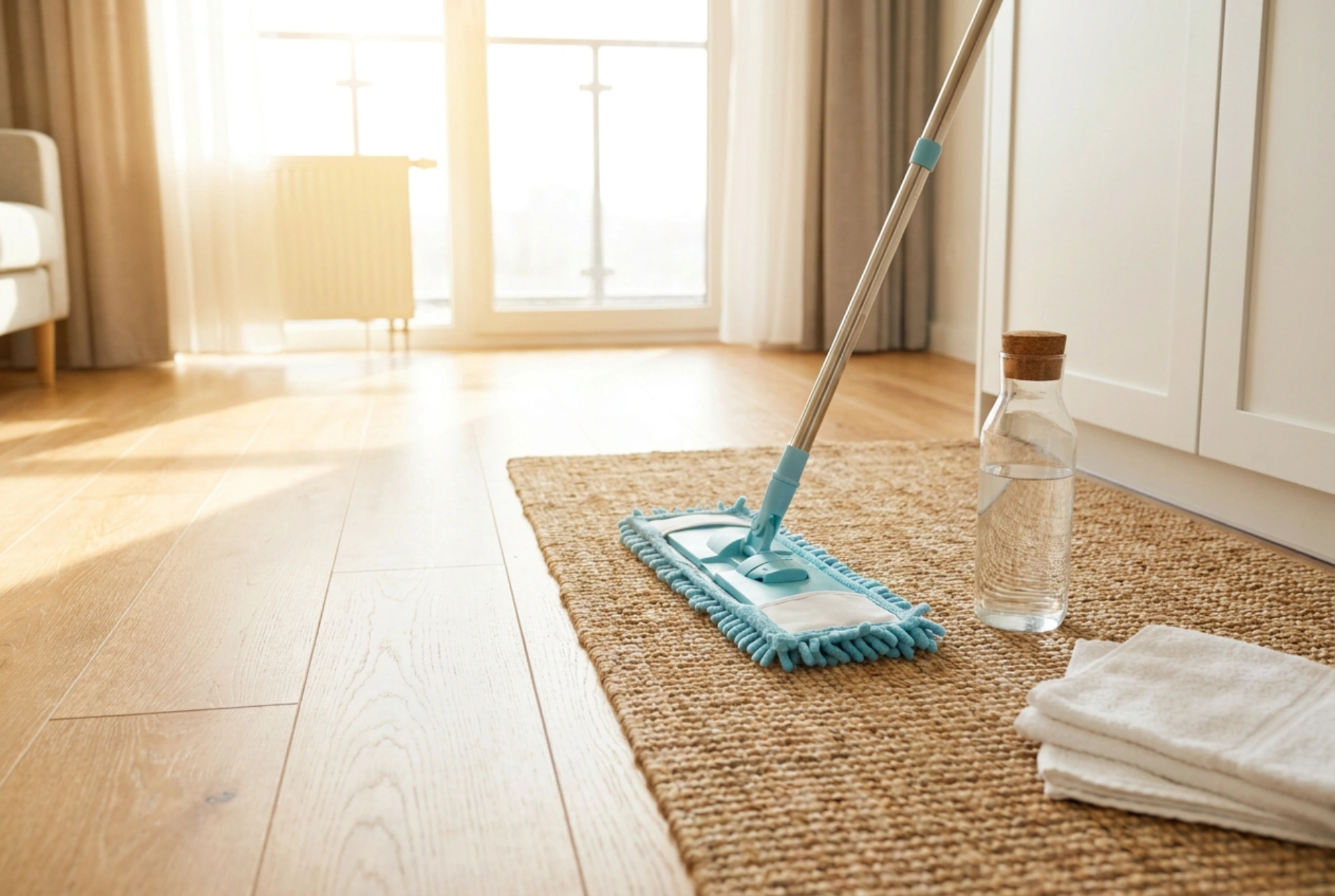


Professional floor cleaning formulas are engineered for high-efficiency soil suspension, but transferring these concentrated solutions to domestic environments requires a firm grasp of surface chemistry and precise application techniques. Without proper knowledge, these potent solutions can leave sticky residues, strip protective coatings, or permanently dull your floors.
Understanding the Chemistry: pH and Surfactants
Professional cleaners rely on targeted chemical reactions rather than simple friction to lift dirt. At the core of these solutions are surfactants—compounds with a dual-nature molecule containing both a hydrophilic (water-attracting) head and a lipophilic (fat-attracting) tail. When applied to a surface, these molecules align at the interface of dirt and water, encapsulating lipid-based soils in spherical structures called micelles. This process suspends the grease in water, allowing it to be easily wiped away. However, the effectiveness of this mechanism depends heavily on the pH scale of the cleaner.
For domestic use, selecting the correct pH is critical. Neutral cleaners (pH 7 to 8) are the safest choice for delicate surfaces like oiled hardwood, laminate, and natural stone (marble or limestone). Alkaline cleaners (pH 9 to 11) excel at breaking down fatty acids, oils, and organic proteins, making them ideal for heavy-traffic tiled areas like kitchens. Acidic cleaners (pH 2 to 5) dissolve inorganic minerals, calcium deposits, and soap scum, but they should be restricted to ceramic tiles and must never be used on acid-sensitive natural stones or concrete, as they will cause chemical etching.
The Art of Dilution and Temperature Control
One of the most common mistakes when adopting professional-grade concentrates at home is over-concentration. More product does not equal cleaner floors. When you exceed the manufacturer's recommended dilution ratio, the excess surfactant molecules cannot find dirt to bind to. Instead, they remain on the floor surface, forming a microscopic, tacky film. This film acts like a magnet for airborne dust and shoe soles, leading to rapid re-soiling and a cloudy appearance.
Water temperature also plays a pivotal role in chemical performance. Most professional surfactants are formulated to work optimally in lukewarm water (around 30°C to 40°C). While hot water is an excellent solvent, excessively high temperatures can destabilise the surfactant blend, cause rapid evaporation that leaves streak-prone residues before you can dry the floor, and even damage the protective polyurethane sealants on modern wooden floors. Always measure your solution precisely using a syringe or measuring cup rather than free-pouring.
Microfibre Dynamics and Mopping Mechanics
The physical removal of suspended dirt is just as important as the chemical breakdown. Traditional cotton string mops are highly inefficient; their thick fibres merely push dirty water around and deposit it back into grout lines. Instead, professional cleaning relies on split microfibre technology. These synthetic fibres are split during manufacturing, creating microscopic hooks that trap dirt and moisture via capillary action, holding them securely within the pad rather than releasing them back onto the floor.
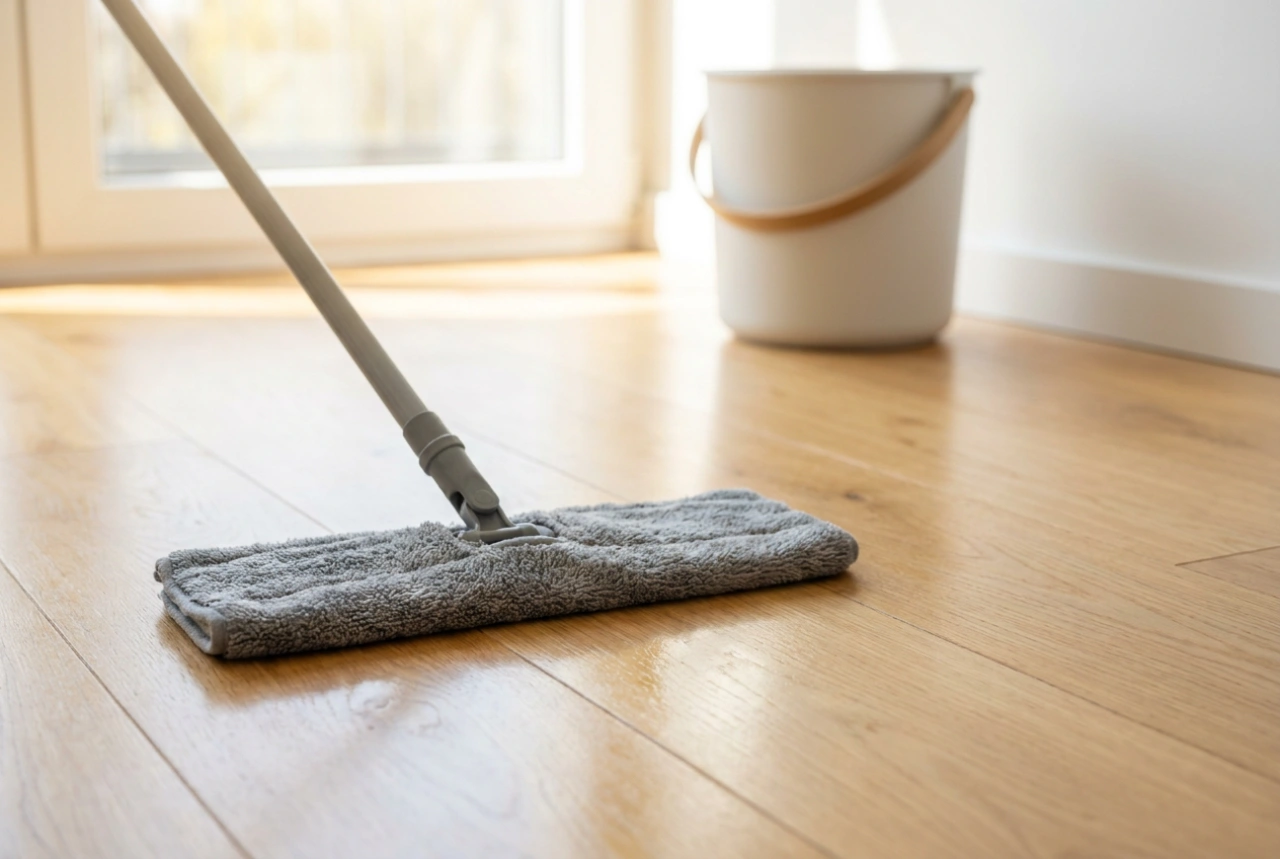
To maximise efficiency and prevent cross-contamination, use the figure-eight mopping technique. Dragging a flat microfibre mop in straight, back-and-forth lines simply redistributes soil at the turn of each stroke. Moving the mop in a continuous figure-eight pattern ensures that the leading edge of the mop head always faces forward, collecting the dirt in a single, manageable line that can be swept up at the end of the process. Always change the microfibre pad as soon as it becomes saturated to prevent soil redeposition.
Surface-Specific Guidelines
Before applying any professional agent, understand the material properties of your flooring:
- Hardwood and Laminate: These materials are highly susceptible to moisture damage. Water can penetrate the joints, causing wood fibres to swell and laminate edges to buckle. Use a neutral pH cleaner and damp-mop only—the floor should dry completely within two minutes of application.
- Ceramic and Porcelain Tiles: Highly durable and non-porous, these tiles can tolerate mild alkaline solutions. Focus your efforts on grout lines, which are porous and trap dirt easily. Avoid acidic cleaners on cement-based grout unless specifically neutralising a calcium buildup, as acids degrade grout integrity over time.
- Vinyl and LVT (Luxury Vinyl Tile): While highly moisture-resistant, vinyl can be dulled by harsh solvents or highly alkaline cleaners. Stick to neutral, rinse-free professional formulas to preserve the wear layer.