

Large plastic storage bins with lids are invaluable tools for home organisation, but improper use can trap moisture, degrade delicate fabrics, and damage the container itself. Mastering the physics of microclimates and the structural properties of polymer storage ensures your belongings remain pristine and your space remains functional.
The Microclimate Inside Plastic Containers
Most domestic storage bins are manufactured from polypropylene (PP) or high-density polyethylene (HDPE). These polymers are highly impermeable to water vapour and air, which is excellent for keeping external dust and pests out, but can create a sealed microclimate inside. If you seal items inside a bin during high humidity, the trapped air contains moisture. When the ambient temperature drops, this moisture condenses on the cold inner walls of the plastic container, creating a high-humidity environment that promotes mould growth.
To counteract this physical process, ensure that all items are completely dry before storage. You can actively manage the interior humidity by introducing desiccant packets, such as silica gel (silicon dioxide). These packets physically adsorb water molecules onto their highly porous surface area, preventing them from condensing on your belongings. For large bins (60 to 100 litres), placing two or three 10-gram silica packets at the bottom and top corners will significantly reduce relative humidity levels.
Preparing and Packing Textiles for Long-Term Preservation
Before packing linen, wool, or cotton into a large plastic bin, they must undergo thorough cleaning. Unwashed fabrics contain microscopic skin cells, sebum (body oils), and sweat residues. Over time, these organic substances undergo oxidation, turning yellow and emitting acidic byproducts that degrade natural fibers. Furthermore, these residues act as food sources for pests like silverfish and moths.
When packing, the physical arrangement of items is crucial for preserving fabric elasticity and structural integrity:
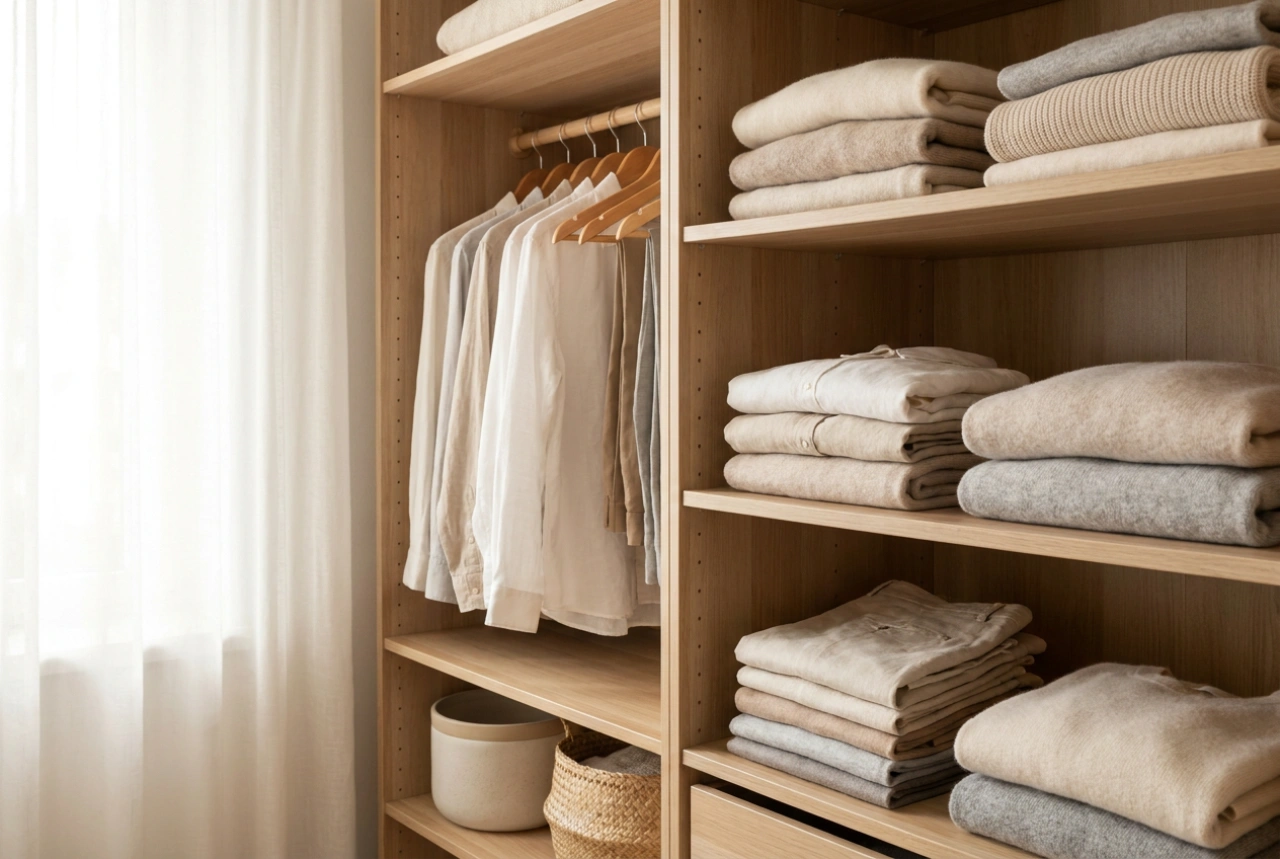
- Weight Distribution: Always place dense, heavy textiles such as heavy wool blankets, winter coats, or denim jeans at the bottom of the container. Lightweight items like linen sheets and silk scarves must go on top to prevent their fibers from being crushed under sustained pressure.
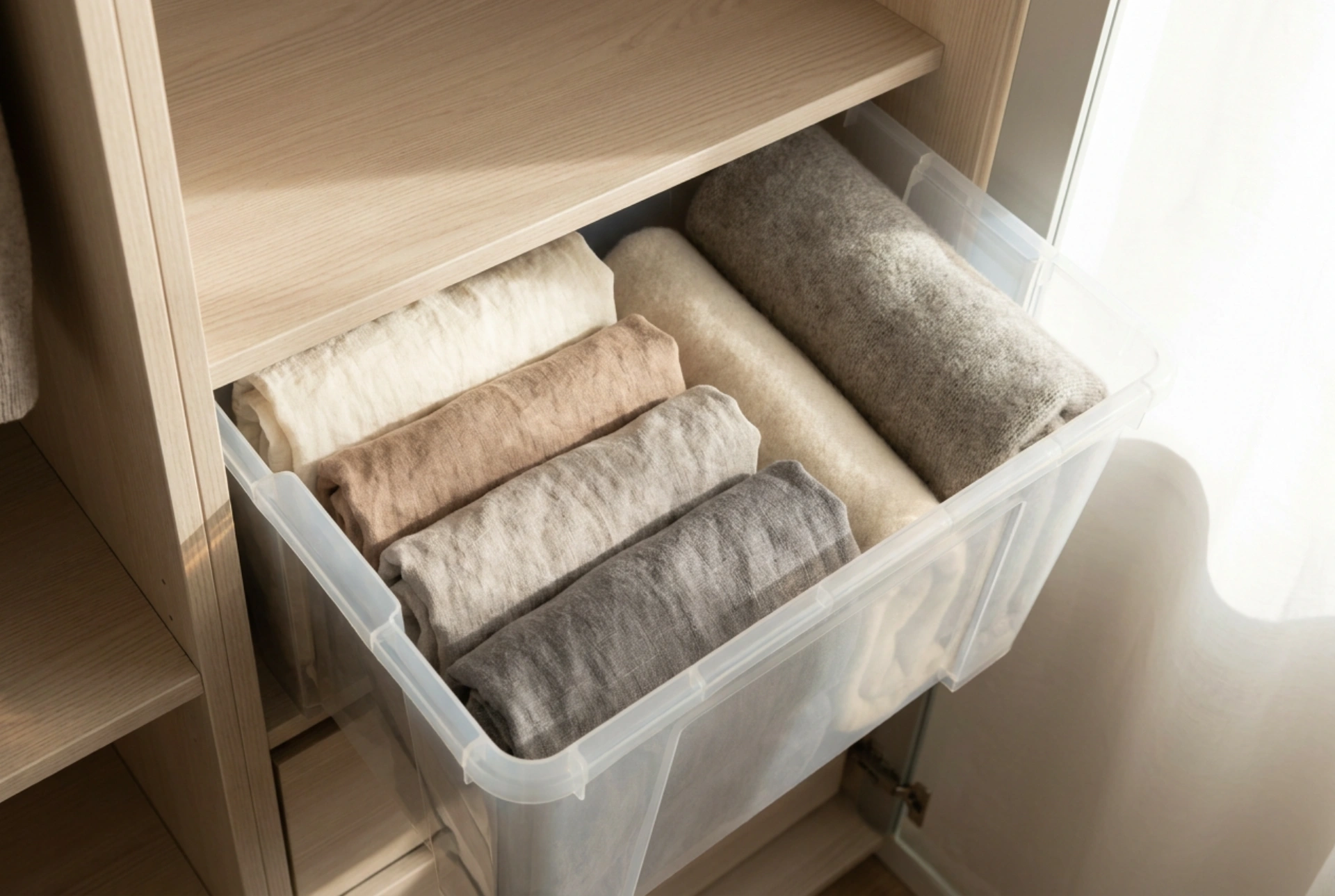
- Folding Dynamics: Avoid tight folding, which creates permanent creases and stresses the weave of the fabric. Instead, utilise a loose rolling technique or file-fold items vertically. Vertical filing allows you to retrieve individual items without disturbing the structural arrangement of the rest of the bin.
- Compression Limits: Do not pack the container to the absolute brim. Compressing fabrics prevents air circulation and can distort the shape of the plastic lid, compromising the container's structural integrity.
Structural Integrity and Stacking Mechanics
Large plastic bins are designed to be stacked, but they are subject to physical load limits. Polypropylene exhibits creep—a slow, progressive deformation under constant mechanical stress. If a bin is overloaded, the weight will cause the plastic to bow, especially around the base and the lid hinges, eventually leading to stress fractures.
To stack bins safely, always place the heaviest containers on the lowest level, directly on the floor or a reinforced shelf. Ensure the weight of the upper bin rests on the reinforced corners and rim of the lower bin, rather than the centre of the lid, which is the weakest point. If the lid of a lower bin begins to bow downwards, the load must be redistributed immediately to prevent catastrophic failure of the polymer structure.
Odour Neutralisation and Chemical Safety
Confined spaces often develop a musty smell due to the slow off-gassing of polymers or the decomposition of organic residues. Avoid using synthetic air fresheners, scented sprays, or traditional mothballs containing naphthalene. These chemicals release strong volatile organic compounds (VOCs) that can chemically react with the plastic container, softening the polymer or permanently binding to your stored fabrics.
Instead, employ passive chemical adsorption. Activated charcoal (carbon) is highly effective because of its vast surface area and porous structure, which physically traps odour-causing molecules through van der Waals forces. Alternatively, placing a breathable linen sachet filled with sodium bicarbonate (baking soda) inside the bin will chemically neutralise acidic odour compounds, keeping the air inside neutral and odour-free.