

Wiping a black jewelry box often feels like an endless loop, where the physical act of cleaning generates static electricity that instantly pulls new dust back to the dark surface. Achieving a pristine, lint-free finish on dark matte, leatherette, or lacquered materials requires understanding static charges and using the right physical techniques rather than relying on heavy chemical polishes.
Why Black Surfaces Attract and Reveal Dust
The primary culprit behind persistent dust on dark surfaces is the triboelectric effect. When dry fabrics rub against synthetic, wooden, or leatherette surfaces, a transfer of electrons occurs, leaving a net electrostatic charge on the jewelry box. Because dust particles in the air carry their own micro-charges, they are physically pulled toward the charged surface. Furthermore, dark pigments absorb the majority of visible light, meaning any light-colored dust particle reflects light in high contrast, making even microscopic debris highly visible to the naked eye. To break this cycle, you must minimize friction and neutralize the surface charge during the cleaning process.
The Science of Your Cleaning Tools
Standard cotton cloths or paper towels are highly abrasive at a microscopic level and shed cellulose fibers, leaving behind more lint than they remove. To clean dark surfaces effectively, you must use high-quality, split microfiber. The individual fibers of split microfiber are split during manufacturing, creating wedge-shaped polyester and nylon filaments. These wedges physically trap dust and micro-particles via capillary action rather than simply pushing them across the surface. Additionally, water choice is critical. Tap water contains dissolved minerals such as calcium carbonate and magnesium. When tap water evaporates, it leaves behind microscopic white crystalline deposits that look identical to dust. Always use distilled or demineralized water for cleaning dark surfaces to prevent these mineral rings.
Step-by-Step Outer Cleaning Technique
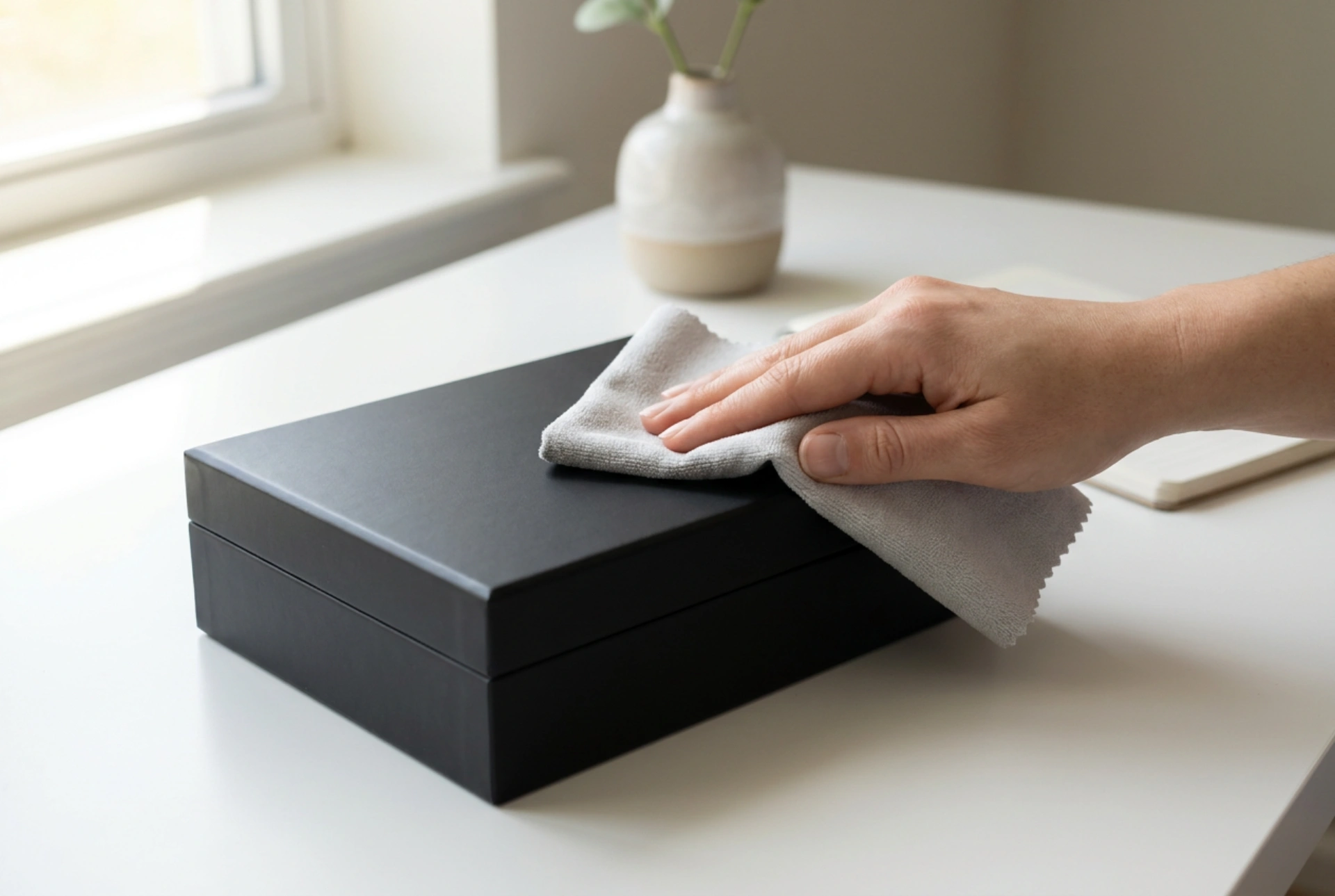
Before wiping, use a manual air blower (such as a camera lens bulb) to dislodge loose grit. Wiping dry dust can drag hard quartz particles across the surface, causing microscopic scratches. Once loose debris is cleared, lightly mist your split microfiber cloth with distilled water until it is barely damp to the touch. Do not spray the jewelry box directly, as excess moisture can seep into joints and degrade adhesives. Wipe the surface using straight, single-directional strokes. Avoid circular motions, which concentrate electrostatic charges in the center of the movement and swirl dust particles around. Fold the cloth frequently to expose a clean, unused section for each pass, ensuring you lift the dust off the surface rather than transferring it back.
Treating Matte vs. Glossy Finishes
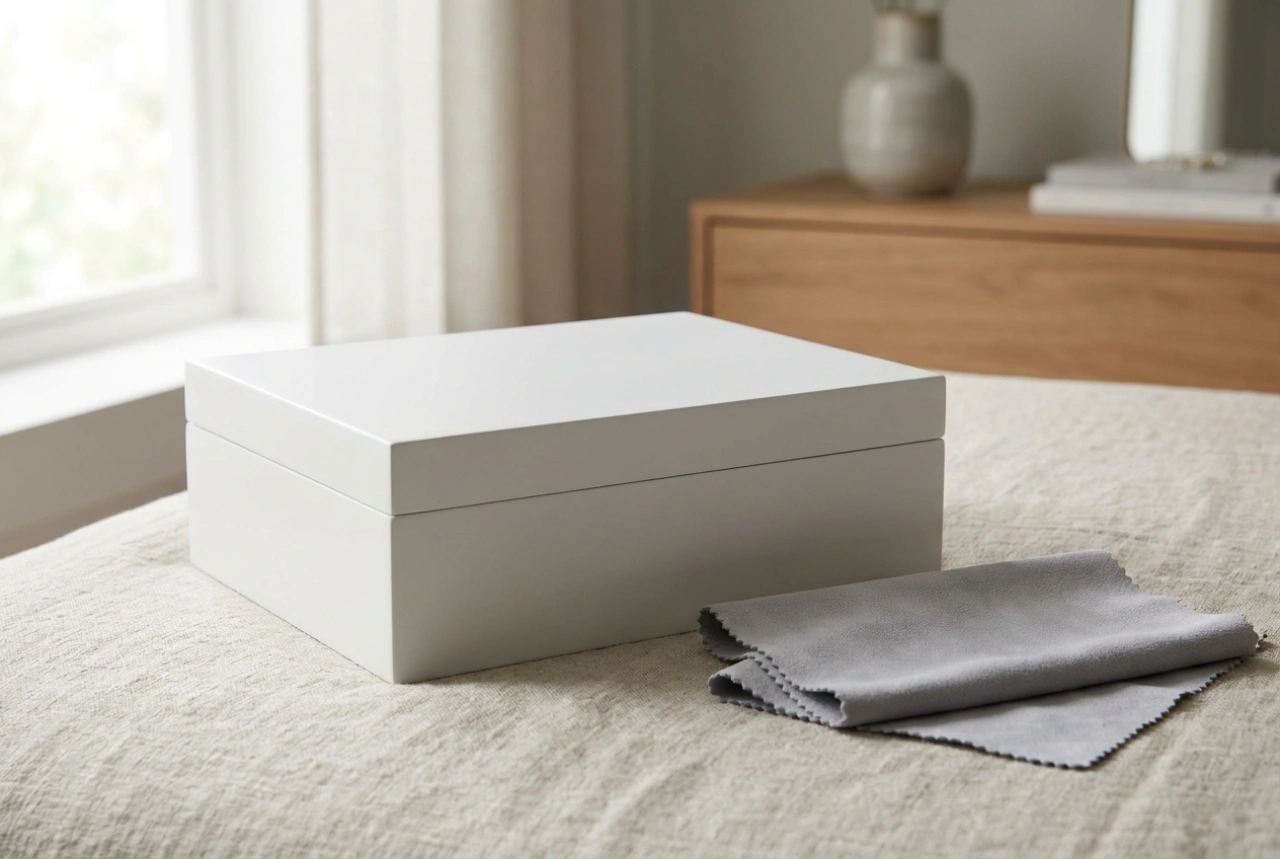
Matte black finishes have a textured microstructure designed to scatter light. This texture easily traps sebum and oils from your fingers, creating shiny spots. Rubbing a matte surface aggressively will permanently flatten this microstructure, leaving a permanent shiny patch. To clean matte black surfaces, use a highly diluted mixture of distilled water and a drop of neutral surfactant (such as mild dish soap). The surfactant molecules break down the oils without damaging the matte texture. Gently blot and wipe with light pressure. For glossy or lacquered black finishes, which scratch with the slightest friction, use an ultra-soft, suede-style microfiber cloth and absolute minimum pressure, drying the surface immediately with a dry section of the cloth to prevent water spots.
Restoring the Interior Velvet or Felt
The internal lining of a jewelry box is highly susceptible to accumulating lint, dead skin cells, and microscopic fibers. Never use liquid cleaners or water on velvet or felt linings, as moisture will dissolve the water-soluble glues holding the fabric to the structural frame, causing the lining to bubble or peel. Instead, use a clean piece of low-tack painters tape wrapped around your fingers with the sticky side facing outward. Gently press the tape onto the fabric and lift it straight up without dragging. The adhesive will pull away lint and dust without disturbing the delicate nap of the velvet. For deep corners, a clean, dry, soft-bristled makeup brush can be used to sweep particles toward the center where they can be lifted or vacuumed out using a micro-attachment at the lowest suction setting.