

Tomato sauce stains are among the most persistent household challenges because they combine hydrophobic lipids with highly pigmented carotenoids, specifically lycopene. Swift, scientifically grounded pre-treatment before laundering is essential to prevent these compounds from permanently bonding with textile fibres.
The Chemistry of a Tomato Stain
To effectively remove a tomato-based stain, one must understand its composition. Tomato sauces consist of two distinct staining agents: organic oils (lipids) and lycopene, the natural pigment responsible for the deep red colour. Lycopene is a lipophilic (fat-soluble) carotenoid, meaning it does not dissolve in water but readily dissolves in oils. When a spill occurs, the oil acts as a carrier, dragging the pigment deep into the microscopic pores of the fabric fibres. If you apply heat or the wrong chemical agent, the lycopene can polymerise or bind permanently, particularly on synthetic materials like polyester, which are chemically similar to lipids. Therefore, the goal of pre-treatment is to emulsify the lipid carrier and break down the chromophore—the part of the lycopene molecule that absorbs light and creates colour.
Step 1: Mechanical Isolation and Reverse Flushing
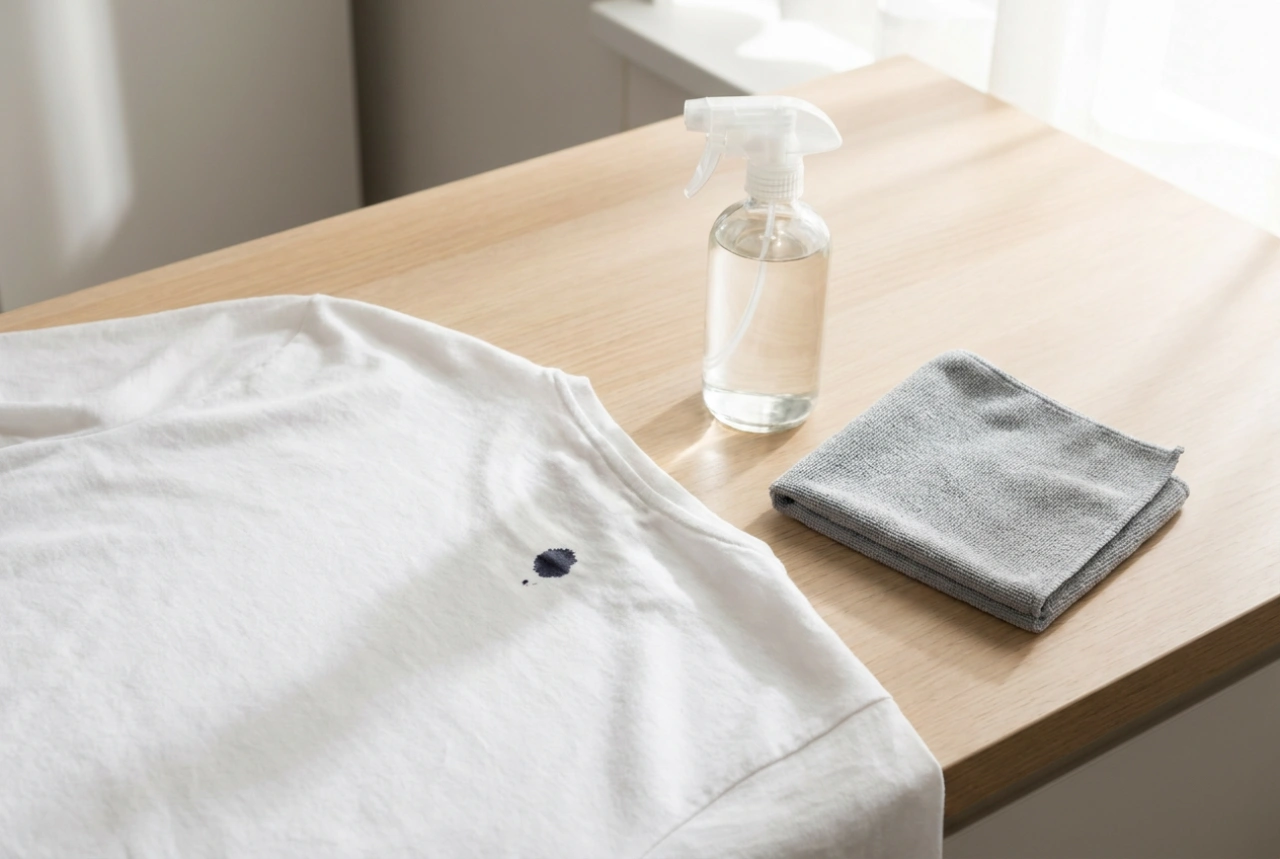
The first physical action determines the success of the chemical treatments that follow. Never rub or press a fresh tomato stain, as this forces the oil-pigment emulsion deeper into the weave of the fabric and spreads it horizontally. Instead, use a blunt edge, such as a spoon, to gently lift any excess sauce off the surface. Once the excess is removed, turn the garment inside out. Flush the stain from the reverse side with a high-velocity stream of cold, running water. This physical force pushes the tomato particles back out through the path they entered, rather than driving them deeper through the fabric structure. Cold water is vital here; hot water can denature any proteins present in the sauce, effectively gluing them to the fibres.
Step 2: Emulsifying the Lipids with Surfactants
Since lycopene is bound inside an oily matrix, you must break down the fat barrier before you can target the pigment. To do this, apply a concentrated surfactant, such as a clear, fragrance-free liquid dish detergent or a heavy-duty liquid laundry detergent, directly to the damp stain. Surfactants possess dual polarity: a hydrophilic (water-attracting) head and a lipophilic (fat-attracting) tail. The lipophilic tails attach to the tomato oil droplets, encapsulating them into structures called micelles. Gently massage the detergent into the fabric using a soft-bristled brush or your fingertips in a circular motion, working from the outer edges of the stain toward the centre to prevent spreading. Allow the surfactant to sit for ten minutes, giving it sufficient time to lift the oil from the textile fibres.
Step 3: Oxidising the Lycopene Pigment
If a yellow or orange shadow remains after rinsing out the surfactant, you are dealing with stubborn residual lycopene. Because lycopene contains a long chain of conjugated double bonds, it can be neutralised through oxidation. Applying a mild oxidising agent, such as a 3% hydrogen peroxide solution or an oxygen-based bleach powder mixed into a paste with cold water, will break these double bonds. This reaction alters the molecular structure of the pigment, turning it into a colorless compound. Apply the oxidising agent directly to the stain and let it react for five to ten minutes. Always perform a spot test on an inconspicuous area first, especially on dark or delicate fabrics like silk and wool, which can be damaged by oxidative reactions.
Step 4: Laundering and the Power of UV Light
After completing the pre-treatment steps, wash the garment in the washing machine using the highest temperature recommended on the fabric care label, accompanied by an enzyme-rich laundry detergent. Enzymes like lipases are highly effective at breaking down any remaining microscopic fat molecules. Crucially, inspect the garment before placing it in the tumble dryer. The high, dry heat of a clothes dryer will bake any remaining pigment into the fibres, making it nearly impossible to remove later. If a faint trace of colour persists after washing, hang the damp garment in direct sunlight. Solar ultraviolet (UV) radiation naturally breaks down the remaining conjugated double bonds of lycopene, fading the residual pigment without damaging the fabric structure.