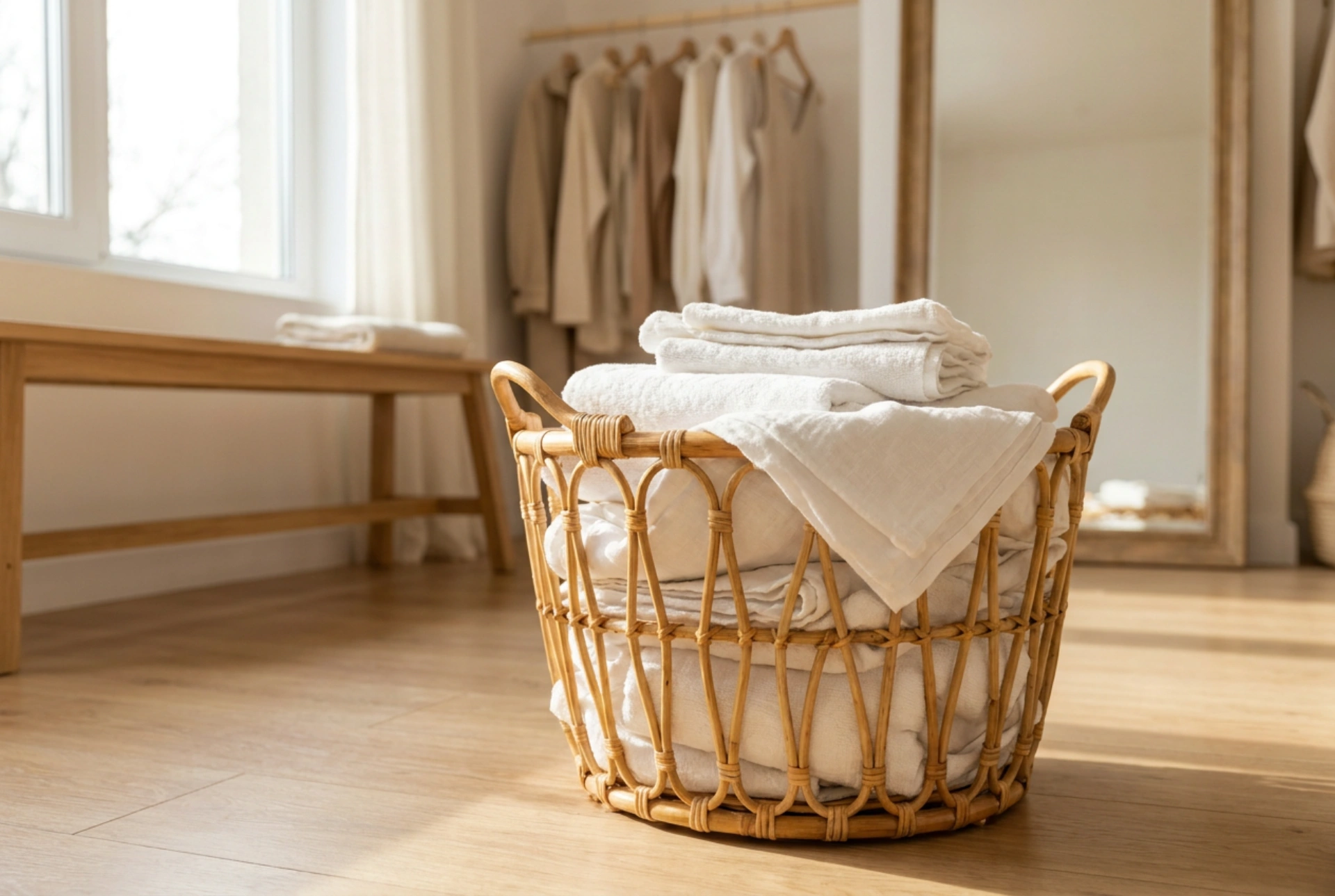


Proper ventilation is the most overlooked factor in maintaining fabric integrity and preventing musty odours in stored textiles. Natural woven materials like wicker and rattan offer a passive ventilation system that actively mitigates humidity build-up in dirty laundry and seasonal clothing.
The Physics of Airflow and Moisture Regulation
When damp or worn clothing is placed in an airtight container, such as a solid plastic bin, any residual moisture from sweat, atmospheric humidity, or ambient dampness becomes trapped. This creates a high relative humidity microclimate inside the container. When the temperature fluctuates, this trapped moisture can reach its dew point, condensing on the interior walls of the container and directly onto the fabrics.
Natural woven structures, such as willow wicker or rattan, solve this issue through passive diffusion. The gaps between the woven fibers allow continuous air exchange, enabling moisture to evaporate into the surrounding room rather than settling back onto the textiles. Furthermore, natural plant fibers are hygroscopic. They possess a cellular structure made of cellulose and lignin, which can absorb small amounts of ambient moisture during high-humidity periods and release it when the air dries out, acting as a natural buffer for your clothing.
Preventing Microbial Colonisation and Odour Development
Soiled laundry is rarely completely dry; it carries moisture, dead skin cells, sebum, and environmental dust. When stored in stagnant, dark, and humid environments, this combination becomes an ideal breeding ground for bacteria and fungal spores. Anaerobic bacteria break down organic compounds in sweat, producing volatile organic compounds that manifest as pungent, sour odours. Mold and mildew spores, which are omnipresent in the air, require a relative humidity of 70% or higher to germinate and feed on natural fibers like cotton, wool, and linen.
By utilising a woven laundry basket, you maintain an aerobic environment. Constant airflow prevents the localized humidity spikes required for spore germination. It also accelerates the evaporation of residual perspiration, drying the garments before bacteria can multiply significantly, which keeps your laundry area smelling fresh and prevents permanent mildew stains on fabrics.
Chemical and Physical Maintenance of Natural Weaves
To ensure a wicker or rattan basket remains a hygienic storage medium, it requires proper care. Because of its textured, porous surface, dust and micro-particles can settle in the joints. Regular maintenance should begin with dry-cleaning techniques: vacuuming the weave with a soft brush attachment to dislodge dust without scratching the fibers.
For sanitisation, aggressive chemical detergents or chlorine bleach should be avoided, as they break down the natural binding lignins, causing the wicker to become brittle and crack. Instead, use a dilute solution of white vinegar (acetic acid) or a mild oxygen bleach (sodium percarbonate) dissolved in warm water. Acetic acid alters the pH level, neutralising bacteria and fungal spores without harming the woody fibers. Apply the solution sparingly with a soft cloth or a soft-bristled brush, ensuring you do not soak the material. Always dry the basket thoroughly in a warm, well-ventilated space, as prolonged saturation can lead to wood rot or warp the structural frame.
Best Practices for Airy Seasonal Storage
Transitioning garments to seasonal storage in woven containers requires specific steps to ensure long-term preservation. First, always insert a breathable lining—such as an unbleached cotton or linen bag—into the basket. This serves a dual purpose: it prevents delicate fibers like silk, cashmere, and lace from snagging on the rough edges of the weave, and it acts as a secondary barrier against dust while remaining fully permeable to air.
When packing garments, avoid compressing them tightly. Packing clothes under high pressure restricts internal airflow and crushes fiber structures, making them susceptible to permanent creasing and localized moisture retention. Place the baskets in elevated areas of closets or dressing rooms where air currents can circulate around all sides of the container, keeping your wardrobe in pristine condition for the seasons to come.