

Non-slip bath mats are essential for bathroom safety, but their textured surfaces and suction cups create the perfect microclimate for mould and mildew growth. Preventing fungal colonisation requires understanding the relationship between moisture retention, organic residue, and material science.
The Science Behind Bath Mat Mould
Mould spores thrive in warm, humid environments with poor airflow, making the underside of a bath mat an ideal breeding ground. The primary culprit is the suction cups. When the mat is pressed against the tub, water becomes trapped underneath. Lacking evaporation paths, this stagnant water remains humid for days.
Furthermore, bath mats constantly come into contact with body oils, dead skin cells, and soap residues. This mixture forms a sticky biofilm known as soap scum. This biofilm acts as an abundant food source for fungal spores. Without regular disruption of this organic layer, mould hyphae quickly penetrate the porous surfaces of plastic, PVC, or rubber mats, making them incredibly difficult to restore once stained.
Choosing the Right Cleaning Chemistry
To effectively sanitise a bath mat, you must break down both the organic biofilm and the mineral deposits that anchor it to the surface. Traditional soap is insufficient because it cannot kill fungal spores or dissolve mineral scale.
- Oxygen Bleach (Sodium Percarbonate): This is an excellent, environmentally friendly choice for regular maintenance. When dissolved in warm water, it releases hydrogen peroxide and sodium carbonate. The active oxygen physically bubbles away organic matter and oxidises fungal cell walls without damaging the mat's material.
- Chlorine Bleach (Sodium Hypochlorite): For severe mould infestations, diluted chlorine bleach is highly effective. It acts as a powerful disinfectant by denaturing proteins in microbial cells. However, it must be used sparingly on natural rubber mats, as repeated exposure can degrade the polymer chains, causing the material to become brittle.
- Acids (Citric Acid or White Vinegar): Soap scum is often bound together by calcium minerals from hard water. Mild acids dissolve these mineral bonds, releasing the trapped dirt and skin cells so they can be easily rinsed away. Never mix acids with chlorine bleach, as this produces toxic gas.
A Step-by-Step Deep Cleaning Protocol
To thoroughly clean your non-slip mat, perform this deep-cleaning routine bi-weekly using basic physical chemistry principles.
1. The Pre-Soak
Fill a large basin or your bathtub with warm water (around 40°C). Avoid boiling water, as high heat can warp PVC and synthetic rubber, destroying the suction cups' structural integrity. Add half a cup of oxygen bleach powder or a mild chlorine bleach solution. Submerge the mat completely, ensuring it is face down so the suction cups are fully exposed to the active solution. Let it soak for 30 to 60 minutes to loosen the biofilm.
2. Mechanical Agitation
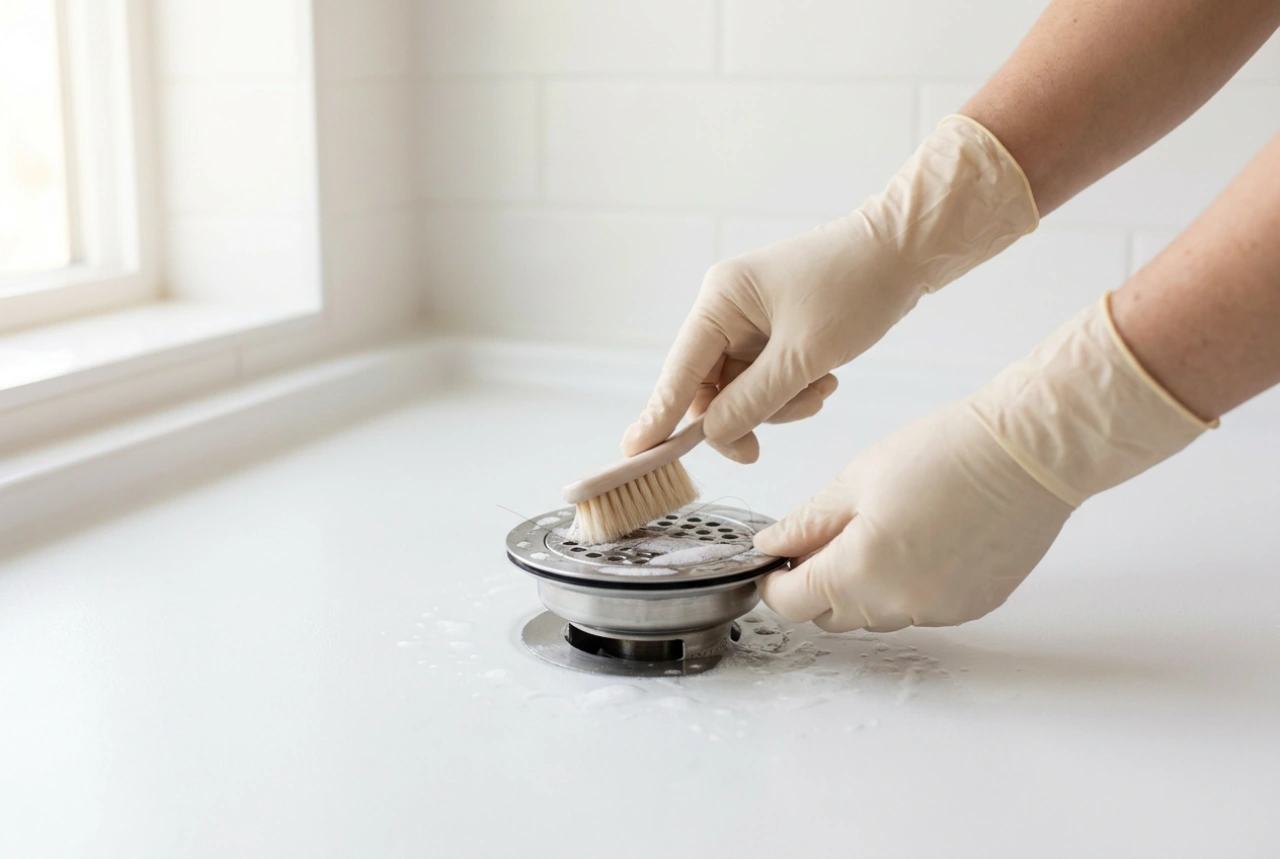
Soaking loosens the grime, but mechanical force is required to detach it. Use a stiff-bristled utility brush to scrub the underside of the mat. Focus specifically on the interior of each suction cup, where water sits. Scrub in circular motions to lift the disrupted biofilm from the textured surfaces.
3. Rinsing and Neutralisation
Rinse the mat thoroughly with clean, cold water. If hard water deposits are visible, spray the mat with a diluted citric acid solution, let it sit for five minutes, scrub lightly, and rinse again. This removes any remaining mineral scale that could attract future organic buildup.
Preventative Habits to Stop Mould Re-Growth
The most effective way to keep your bath mat mould-free is to alter its environment immediately after use. Mould cannot grow without sustained moisture.
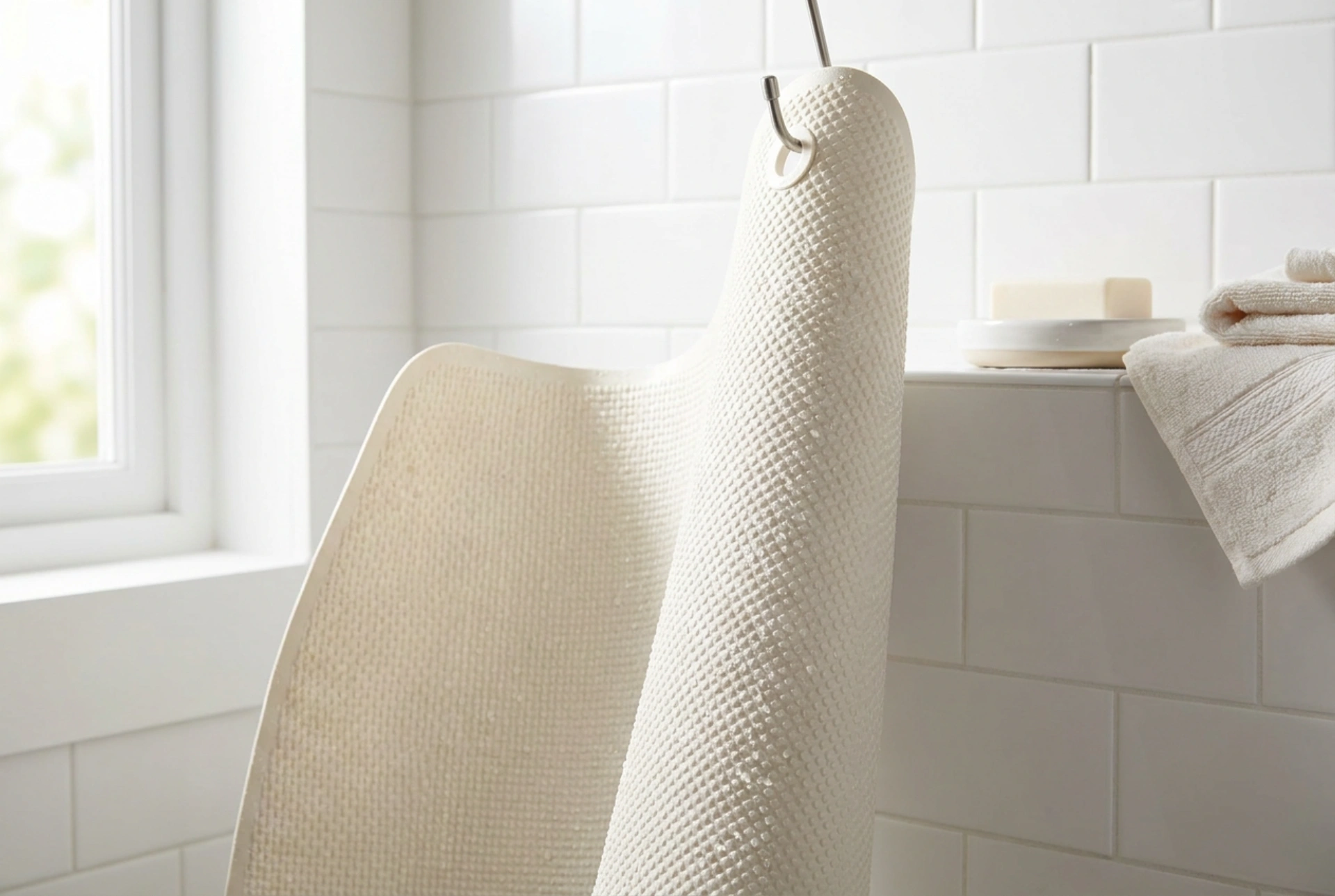
After every bath or shower, peel the mat completely off the tub surface. Rinse away any leftover soap or hair with clean water. Hang the mat over the edge of the tub, a shower rod, or a dedicated drying rack. Ensure the suction cups face outward, away from any solid surface, to maximise airflow and allow gravity to pull water droplets down. This simple action breaks the surface tension of the water and promotes rapid evaporation, denying mould spores the moisture required for germination.