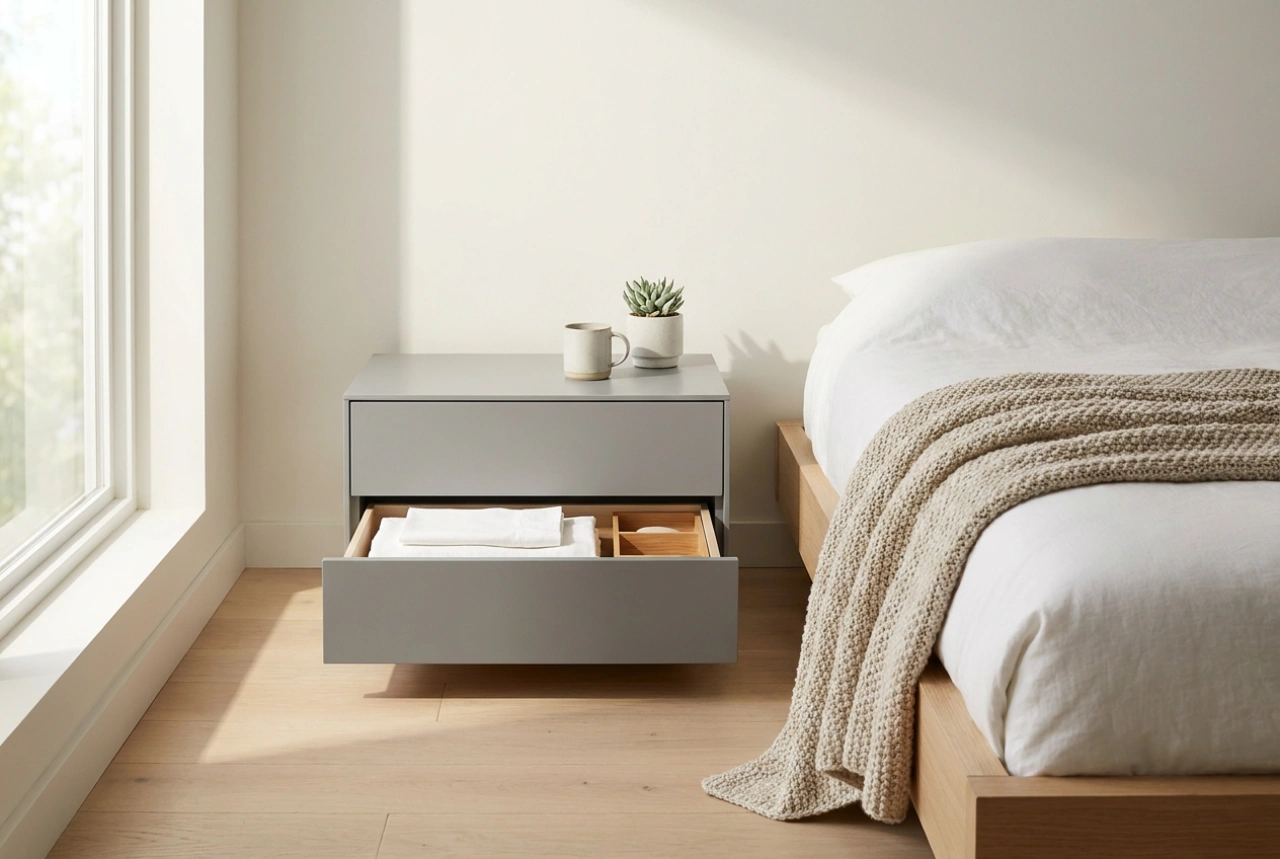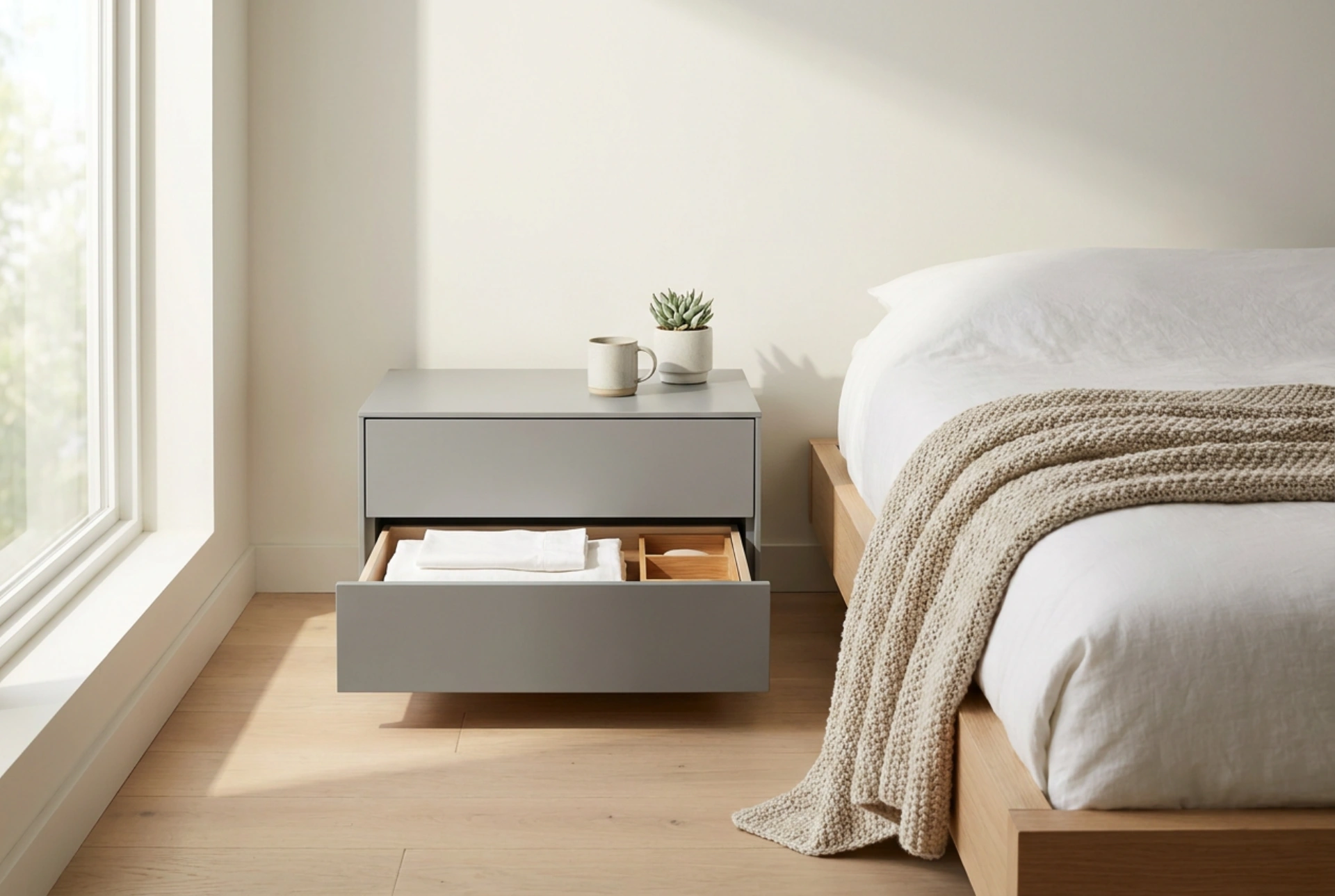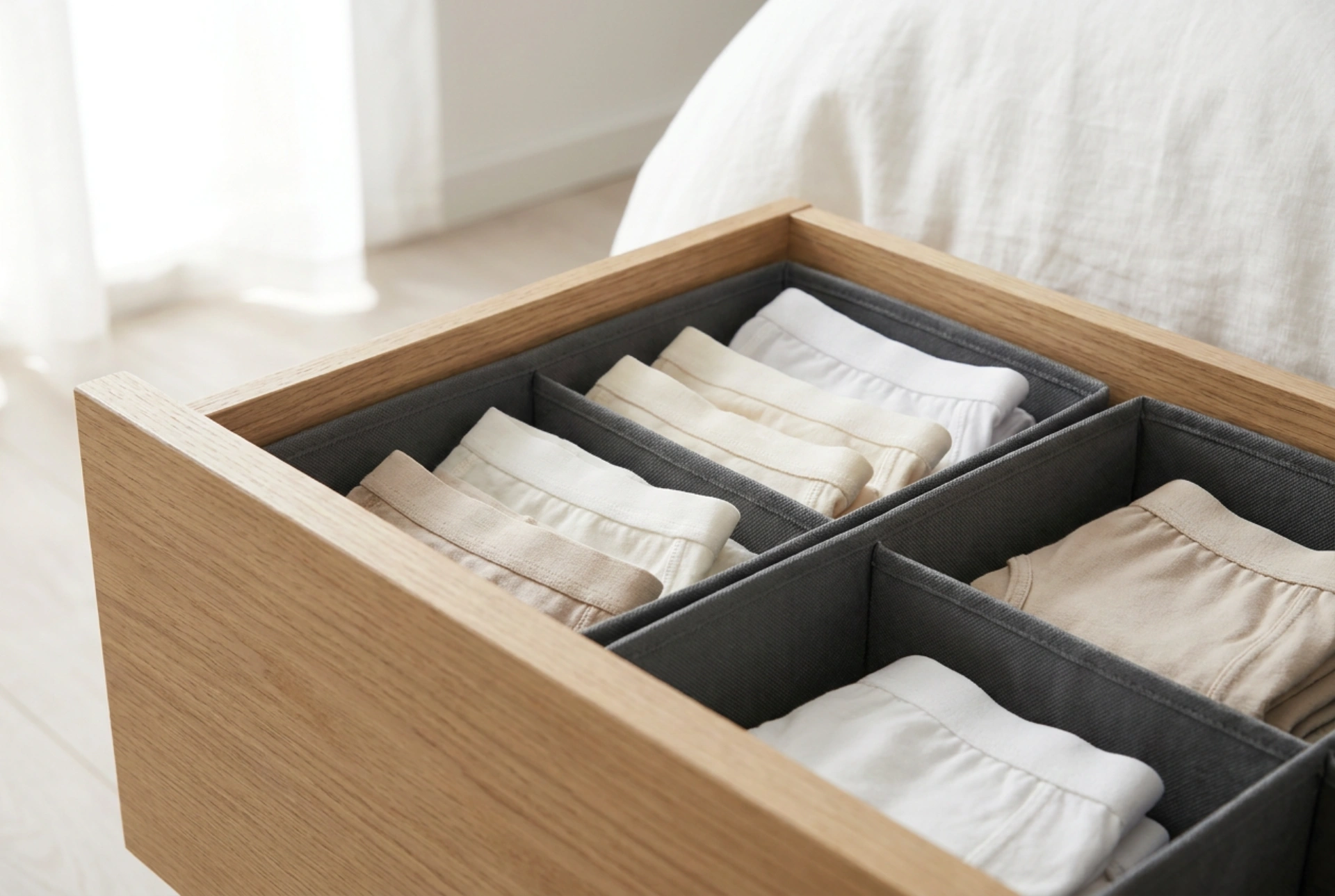


Structuring an underwear drawer with custom compartments prevents the inevitable friction and displacement caused by daily acceleration forces when opening and closing the unit. By applying simple physical principles of textile folding and material categorisation, you can maintain a highly functional system that preserves fabric integrity.
The Friction and Force Dynamics of Messy Drawers
Underwear drawers quickly descend into chaos due to kinetic energy. Each time a drawer is pulled open or pushed closed, the items inside slide. Low-friction fabrics like silk, satin, and synthetic microfibres slide easily over one another, while high-friction materials like ribbed cotton clump together. When loose garments are piled horizontally, the bottom layers are subjected to static compression, hiding them from view and causing you to rummage, which disrupts the entire system. Inserting rigid vertical boundaries restricts this movement, neutralising the kinetic energy of opening the drawer and keeping each item in its designated coordinates.
Selecting Divider Materials Based on Material Science
Not all drawer dividers are created equal. The choice of material impacts both the microclimate of your drawer and the protection of delicate fabrics. Consider these chemical and physical properties when selecting organizers:
- Untreated or Sealed Wood: Naturally regulates moisture by absorbing minor ambient humidity. However, ensure the wood is perfectly sanded or sealed with a non-off-gassing lacquer to prevent splinters from snagging fine lace or silk.
- Polystyrene and Acrylic: Completely inert materials that do not absorb moisture or odours. They provide rigid structural support and are ideal for high-humidity environments, though they can build up static charge which attracts lint.
- Fabric-Wrapped Cardboard: Offers a soft buffer for delicate lingerie. Opt for breathable woven fabrics like non-dyed cotton or polyester, which do not trap stagnant air, and ensure they are treated without volatile organic compounds (VOCs) that could transfer onto undergarments.
The Mechanics of the Vertical Fold
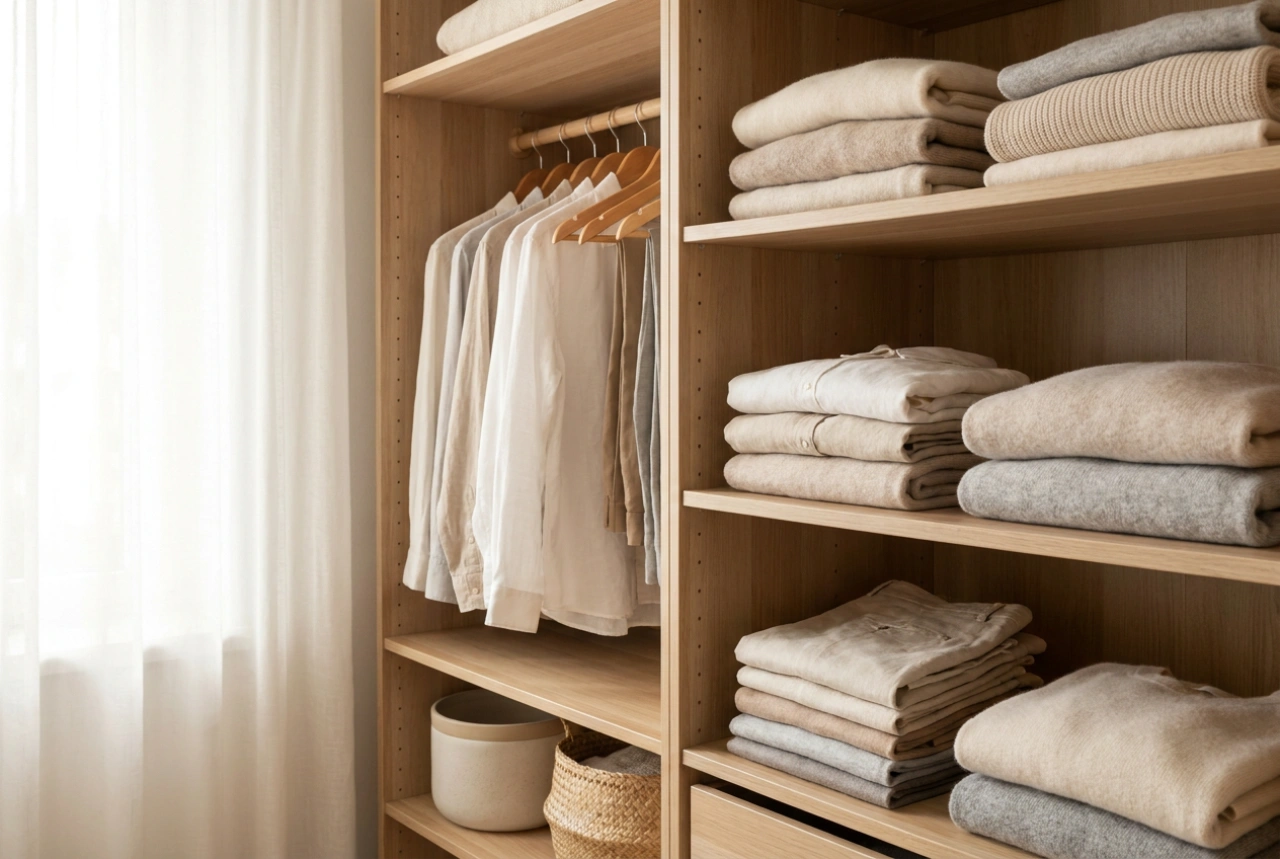
To maximise spatial efficiency and visibility, transition from horizontal stacking to vertical filing. This technique relies on creating a self-supporting geometric structure for each garment. When folded into uniform rectangular packets that stand upright, you eliminate the weight pressure on bottom layers and gain immediate visual access.
To fold briefs and boxers, lay the garment flat and fold it into thirds vertically to create a neat rectangle. Next, fold the waistband down halfway, then fold the crotch up to meet or tuck into the waistband, creating a secure, self-contained packet. For socks, avoid balling them together, as this stretches the elastane fibres in the cuffs, leading to premature loss of elasticity. Instead, lay one sock flat on top of the other and fold them together in halves or thirds depending on the length, placing them heel-to-toe to maintain a uniform thickness.
Ergonomic Zoning and Order of Operations
An organised drawer relies on a logical workflow based on human ergonomics and frequency of use. When configuring your dividers, divide your drawer space into three distinct zones:
- Primary Zone (Front-Centre): This is the most accessible area. Reserve this for daily essentials like standard cotton briefs and everyday socks.
- Secondary Zone (Sides): Slightly harder to reach when the drawer is not fully extended. Use this for specialised undergarments, thermal layers, or activewear.
- Tertiary Zone (Back): The least accessible area. Store seasonal items, spares, or infrequently worn delicate items here.
When arranging the dividers, ensure the compartments match the specific dimensions of your folded garments rather than forcing the garments to fit the slots. Leave a microscopic amount of wiggle room (approximately two to three millimetres per slot) to allow easy extraction without pulling neighbouring items out of alignment.