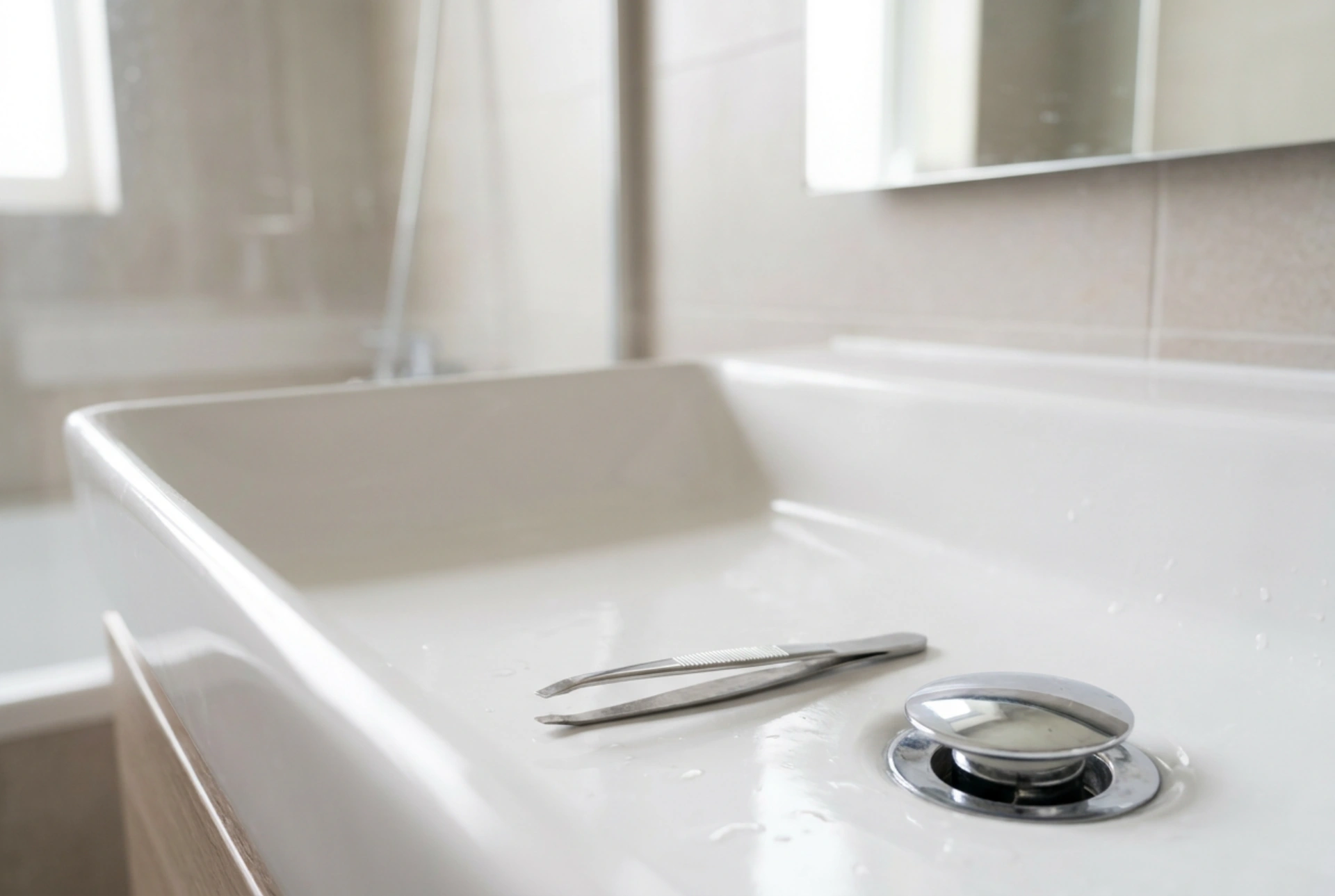


A sluggish bathroom sink is almost always caused by an accumulation of hair, organic matter, and limescale binding together around the drain plug mechanism. Understanding the chemistry behind this buildup allows you to clear the obstruction and restore smooth drainage without resorting to harsh, pipe-damaging chemicals.
The Anatomy of Drain Buildup: Why It Clogs
Bathroom drain blockages are not just loose piles of hair; they are complex, semi-solid structures held together by chemical bonds. When you wash your hands or brush your teeth, soap fats (containing sodium or potassium salts of fatty acids) react with the dissolved calcium and magnesium ions present in municipal hard water. This reaction creates an insoluble precipitate known as calcium stearate, or soap scum.
This sticky soap scum coats the metal and plastic surfaces of the drain plug. As hair shed during daily grooming enters the drain, the individual strands get caught in this adhesive layer. The keratin structure of hair has microscopic scales that lock together, forming a dense physical matrix. This mesh traps more soap scum, dead skin cells, and toothpaste residue, eventually restricting water flow and harbouring bacteria that cause unpleasant odours.
Safe Disassembly of Pop-Up and Click-Clack Plugs
To clean a drain plug thoroughly, you must first remove it. Most modern sinks utilize a click-clack (spring-loaded) or a rod-operated pop-up mechanism. Removing these requires basic mechanical understanding rather than heavy tools.
- Click-Clack Plugs: In most designs, the decorative metal cap can be unscrewed counterclockwise from the spring cartridge beneath it. If the entire cartridge spins, hold the base steady with your fingers while turning the cap.
- Rod-Operated Plugs: These are secured by a horizontal pivot rod under the sink. To release the plug, you may need to loosen the retaining nut on the pivot rod behind the waste pipe, pull the rod back slightly, and lift the plug straight out of the basin.
Always place a soft cloth over the basin drain hole once the plug is out to prevent small screws or debris from falling into the trap during cleaning.
Mechanical Removal: Clearing the Hair Matrix
Once the plug is removed, you will expose the hair matrix wrapped around the central spindle and the guide fins. Because hair is highly resistant to chemical breakdown, mechanical extraction is the most efficient first step.
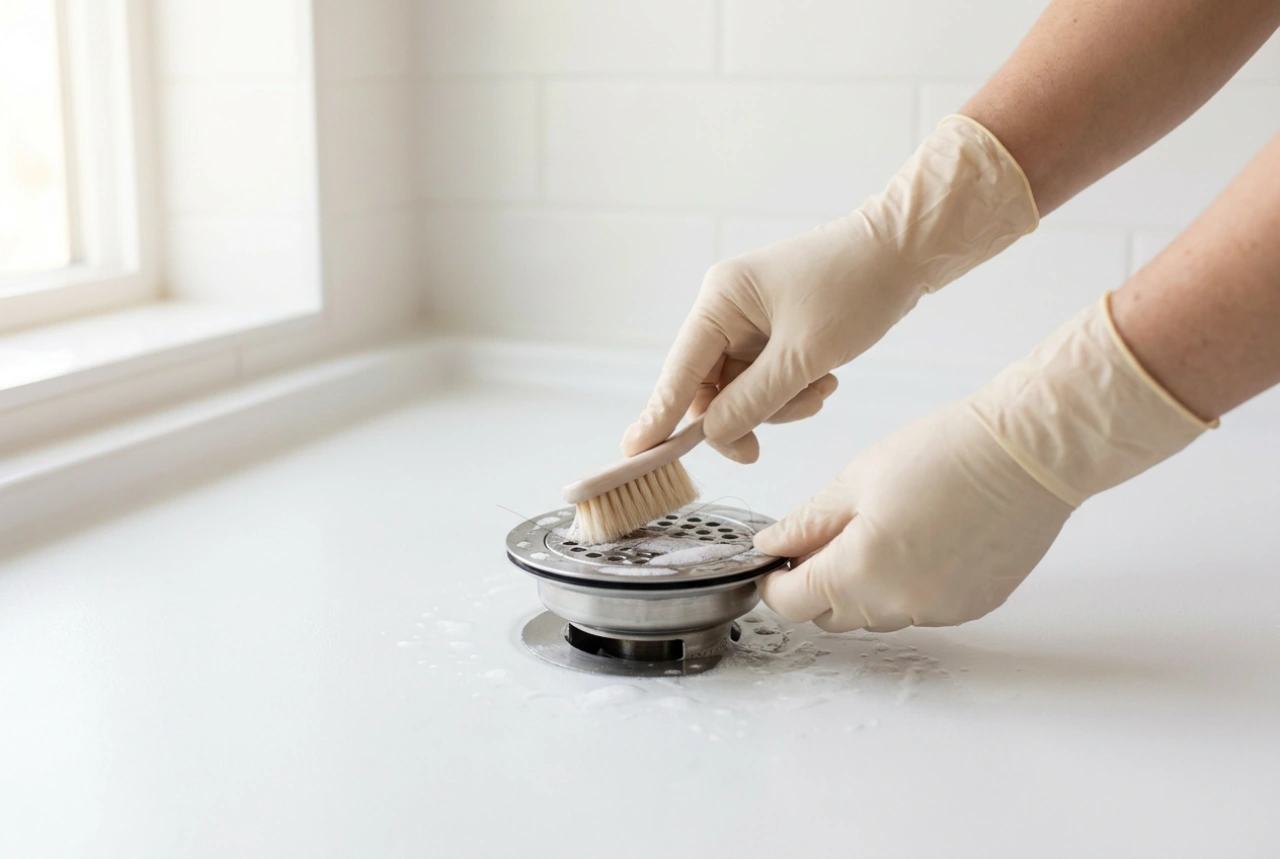
Use a pair of long-nosed tweezers or a small wire brush to pull the hair bundles upward and out of the drain opening. Work systematically around the crossbar or guide rails of the waste fitting. Avoid using sharp knives or metal screwdrivers directly against the chrome plating, as scratches will compromise the protective oxide layer of the metal, leading to corrosion and accelerated dirt accumulation in the future.
Chemical Dissolution: Breaking Down Limescale and Soap Scum
After removing the physical hair blockages, you must address the mineral and organic binder remaining on the plug and inside the drain neck. Gentle, targeted chemical reactions are safer for your plumbing and the environment than commercial sodium hydroxide-based drain openers.
To dissolve the calcium carbonate (limescale) and break up the soap scum, utilize a mild acid solution. Mix equal parts white vinegar (acetic acid) and warm water, or dissolve two tablespoons of citric acid powder in a cup of hot water. Submerge the disassembled plug components in this solution for 15 to 30 minutes.
The acid reacts with the calcium carbonate, converting it into soluble calcium acetate (or calcium citrate) and releasing carbon dioxide gas. This reaction weakens the structural integrity of the buildup, allowing you to easily wipe away the remaining residue with an old toothbrush. For the drain pipe itself, pouring a cup of sodium bicarbonate (baking soda) down the opening, followed by warm vinegar, creates an effervescent reaction. The physical agitation of the foaming carbon dioxide bubbles helps scrub the interior walls of the pipe.
Maintaining Seals and Finishes
Most drain plugs feature a rubber or silicone gasket (elastomer) that ensures a watertight seal when closed. Exposure to acidic cleaners should be limited to prevent these elastomers from drying out or losing their elasticity. Rinse all components thoroughly with clean, lukewarm water after chemical treatment.
Inspect the rubber seal for cracking or deformation. If the seal is intact but dry, applying a microscopic film of pure silicone grease will protect the elastomer from degradation and maintain a perfect seal. Reassemble the mechanism in the reverse order of disassembly, ensuring the thread alignment is straight to avoid cross-threading plastic components.