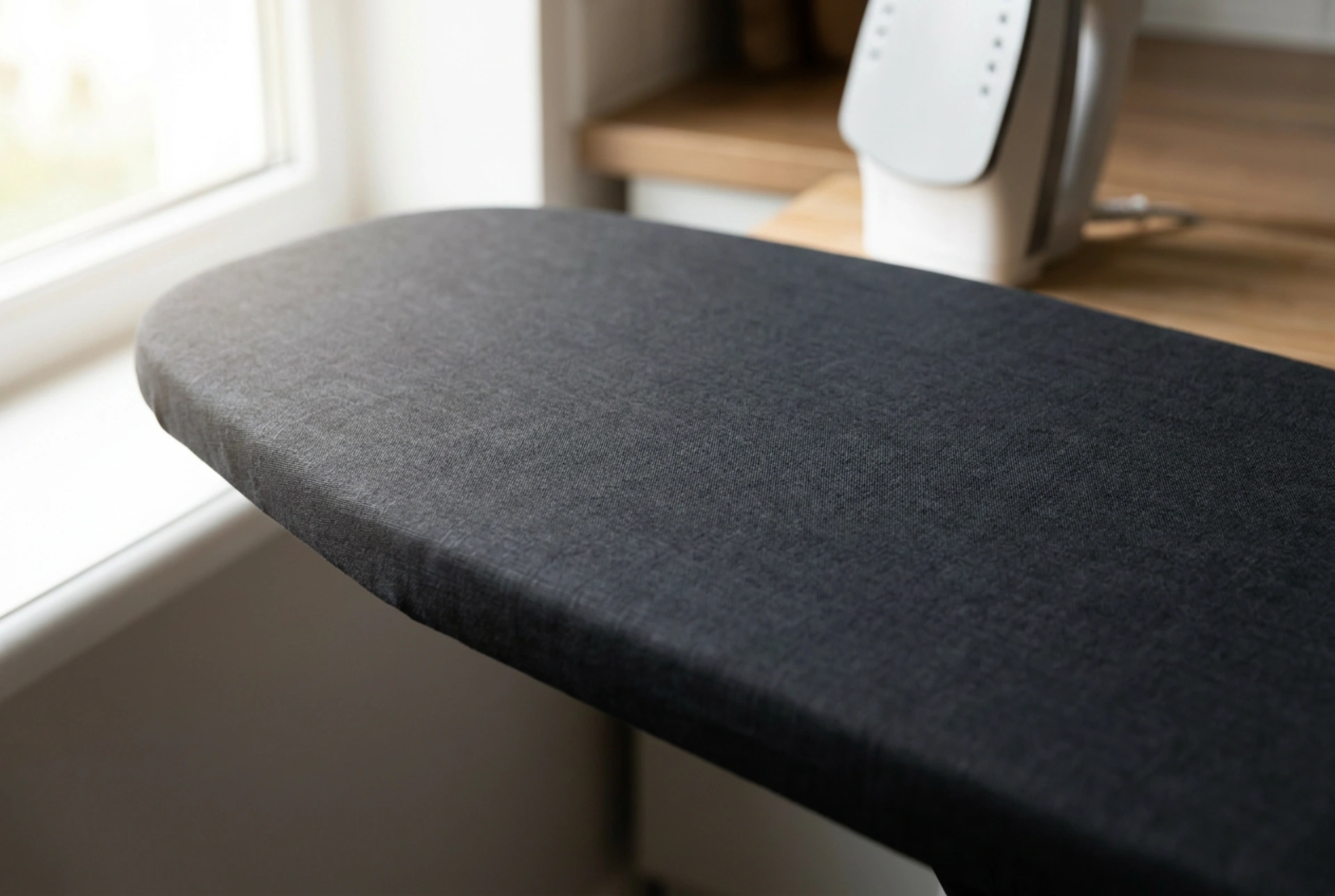


Black ironing board covers offer a sleek, modern aesthetic, but they require specific maintenance to prevent the mineral buildup and fabric degradation caused by high-temperature steam ironing. Managing residual moisture and understanding how heat interacts with dark textiles is essential for preserving both the cover's structural integrity and its deep charcoal appearance.
The Chemistry of Steam and White Mineral Buildup
During steam ironing, water is heated past its boiling point to create vapour, which penetrates fabric fibres to relax their molecular bonds. However, as this steam cools and condenses within the layers of a black ironing board cover, it leaves behind dissolved minerals, primarily calcium carbonate and magnesium. On light-coloured covers, these deposits remain virtually invisible, but on dark or black fabrics, they manifest as unsightly white streaks and powdery patches.
To prevent these minerals from bonding permanently with the synthetic or cotton fibres of your cover, you must address the chemistry of the water used. Hard tap water accelerates this buildup. Applying a mild acid, such as a highly diluted citric acid solution, helps dissolve these basic mineral salts without stripping the dark textile dyes. Avoid harsh alkaline detergents, which can weaken the fibres and cause the black pigment to bleed or fade over time.
Preventing Oxidation and Mildew Through Physics
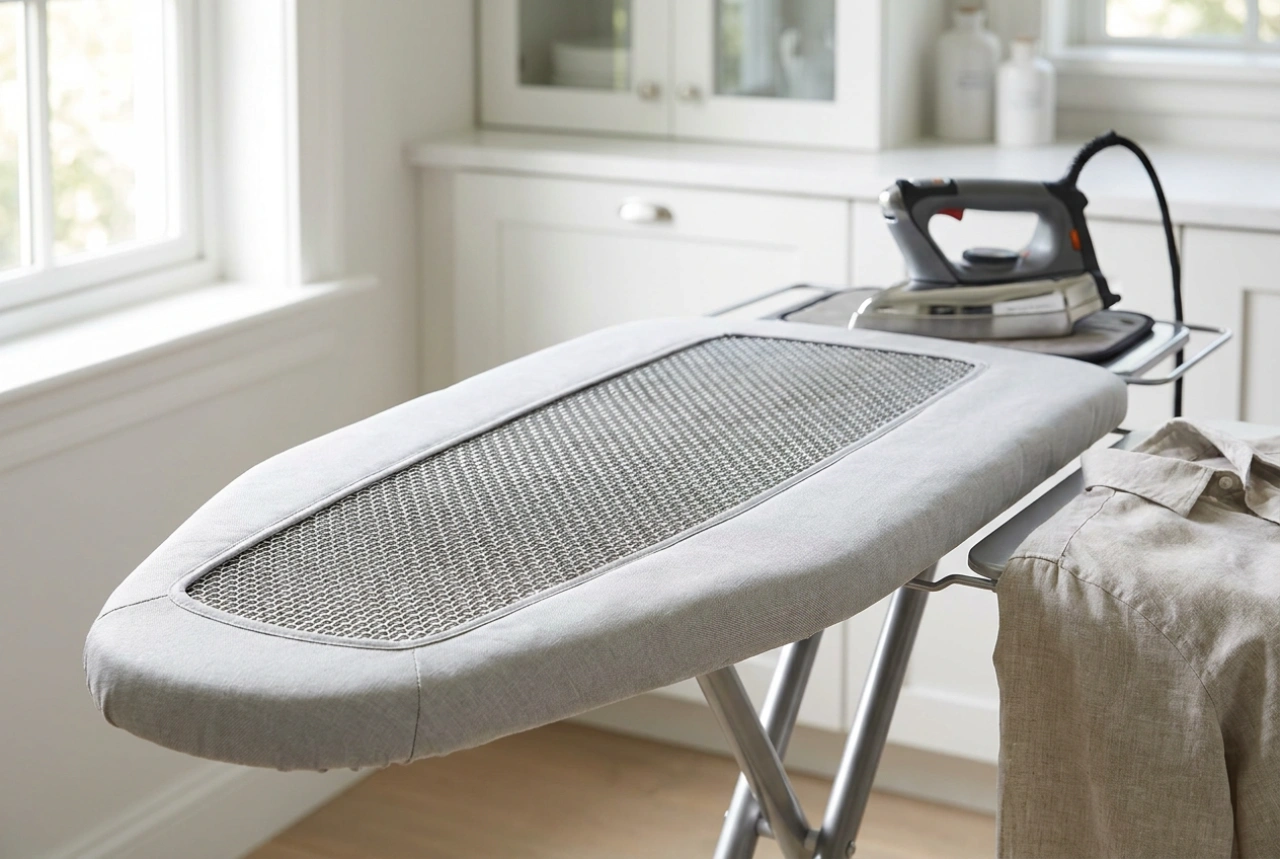
Modern ironing boards typically feature a perforated metal mesh base designed to allow steam to escape. When steam passes through the cover and hits this cooler metal, condensation occurs. If the damp black cover is left compressed against the metal frame after use, two destructive processes begin: chemical oxidation (rusting of the metal framework) and the biological growth of mould or mildew within the damp padding.
- Remove and Vent: Always detach or loosen the drawstrings of the cover immediately after a heavy steaming session. This allows air to circulate freely beneath the fabric layer.
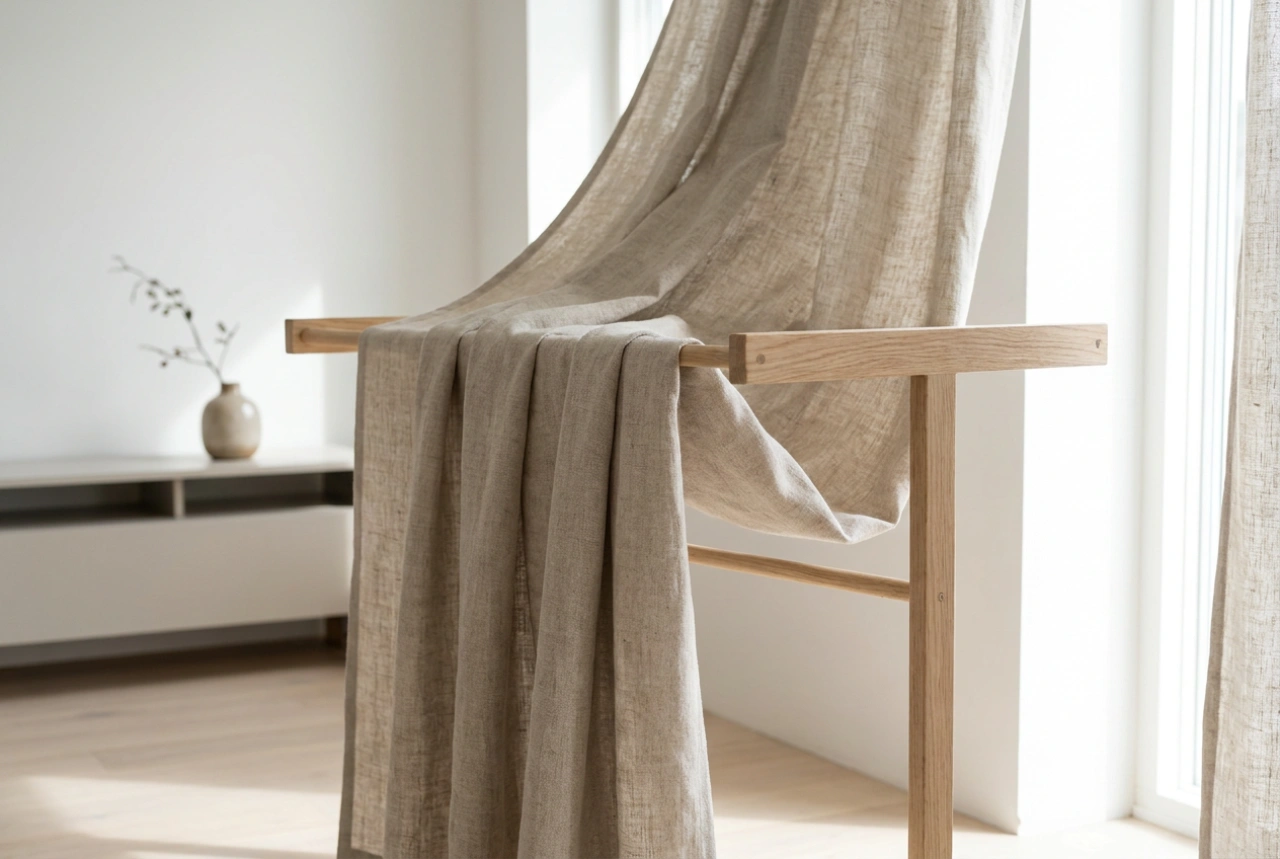
- Utilise Convection: Hang the damp cover in an area with active airflow. Utilising natural convection helps evaporate the trapped moisture before bacterial spores can colonise the damp fibres.
- Wipe the Frame: Condensation collects on the metal underside. Wipe this moisture away with a dry microfibre cloth to prevent rust transfer back onto the black fabric.
Washing and Restoring Dark Covers
When mineral buildup or dust makes washing necessary, the mechanical action and temperature of the wash cycle must be carefully controlled. High temperatures can shrink the cotton canvas or damage the synthetic elastic borders of the cover.
Wash the cover at a moderate temperature—ideally 30°C to 40°C—using a gentle liquid detergent formulated for dark colours. Liquid detergents are preferred over powders because powder particles can fail to dissolve completely in cooler water, leaving white residues that mimic limescale on black fabric. Skip the fabric softeners; they leave a hydrophobic chemical coating on the fibres, which drastically reduces the cover's ability to absorb and disperse steam in future ironing sessions.
Optimising the Underlayment
The performance of your black cover relies heavily on the pad beneath it. Foam pads tend to degrade rapidly under intense heat and trap moisture. Replacing worn foam with a thick, high-density felt underlayment improves steam management. Felt acts as an efficient buffer, absorbing excess moisture while distributing heat evenly, which prevents hot spots from scorching the dark dye of the outer cover.