

Stacking a washing machine and a tumble dryer vertically is an excellent way to reclaim valuable floor space, but doing so safely requires a strict adherence to physics, load distribution, and mechanical stability. Without the correct positioning and decoupling techniques, the intense kinetic energy generated during high-speed spin cycles can cause appliances to shift, resulting in severe physical damage or structural failure.
The Physics of Appliance Stacking: Why Order Matters
In any vertical laundry configuration, the washing machine must always serve as the base unit, with the tumble dryer positioned on top. This rule is dictated by mass, gravity, and dynamic forces. A washing machine is significantly heavier than a dryer, often weighing between 70 and 100 kilograms, largely due to internal concrete counterweights designed to stabilise the drum. When operating, especially during the spin cycle, the rapid rotation of the drum creates powerful centrifugal forces. If a heavy, vibrating washing machine were placed on top of a lighter dryer, the high centre of gravity would create extreme instability, leading to violent oscillation and potential tipping.
Conversely, a tumble dryer is relatively light, weighing between 30 and 50 kilograms, and operates with much lower rotational speeds. Placing the lighter appliance on top keeps the centre of gravity low and ensures that the heavy base unit remains firmly anchored to the floor, absorbing the bulk of the kinetic energy and preventing structural resonance.
The Crucial Role of the Stacking Kit
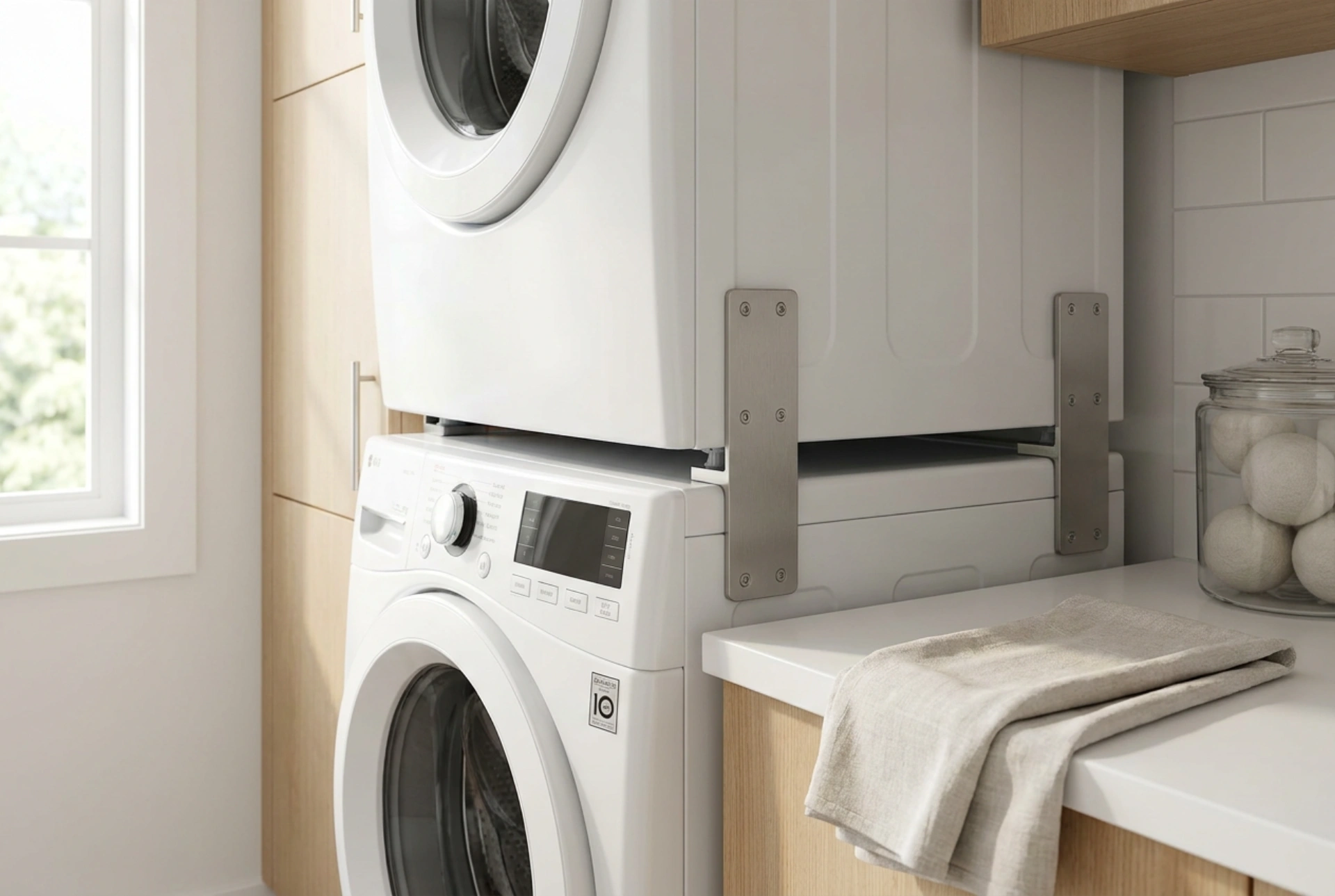
Never place a tumble dryer directly onto a washing machine without a dedicated stacking interface. The top panel of a washing machine is not designed to bear concentrated weight directly in the centre; doing so can bow the panel, interfering with the internal suspension springs and drum clearance. A stacking kit acts as a structural bridge. It transfers the weight of the dryer away from the delicate centre of the washing machine's lid and distributes it evenly across the load-bearing outer metal chassis.
Furthermore, stacking kits provide essential mechanical coupling. They contain raised lips, brackets, or channel systems that physically lock the dryer’s feet in place. This prevents the dryer from shifting or 'walking' off the washing machine due to the micro-vibrations generated during simultaneous operation. Many high-quality kits also feature integrated pull-out shelves, which not only assist with laundry handling but also add structural rigidity to the frame.
Step-by-Step Alignment and Stabilisation
Achieving a safe stack requires precise execution, focusing on levelling and surface friction. Any slight tilt in the base machine will amplify vibrational forces exponentially.
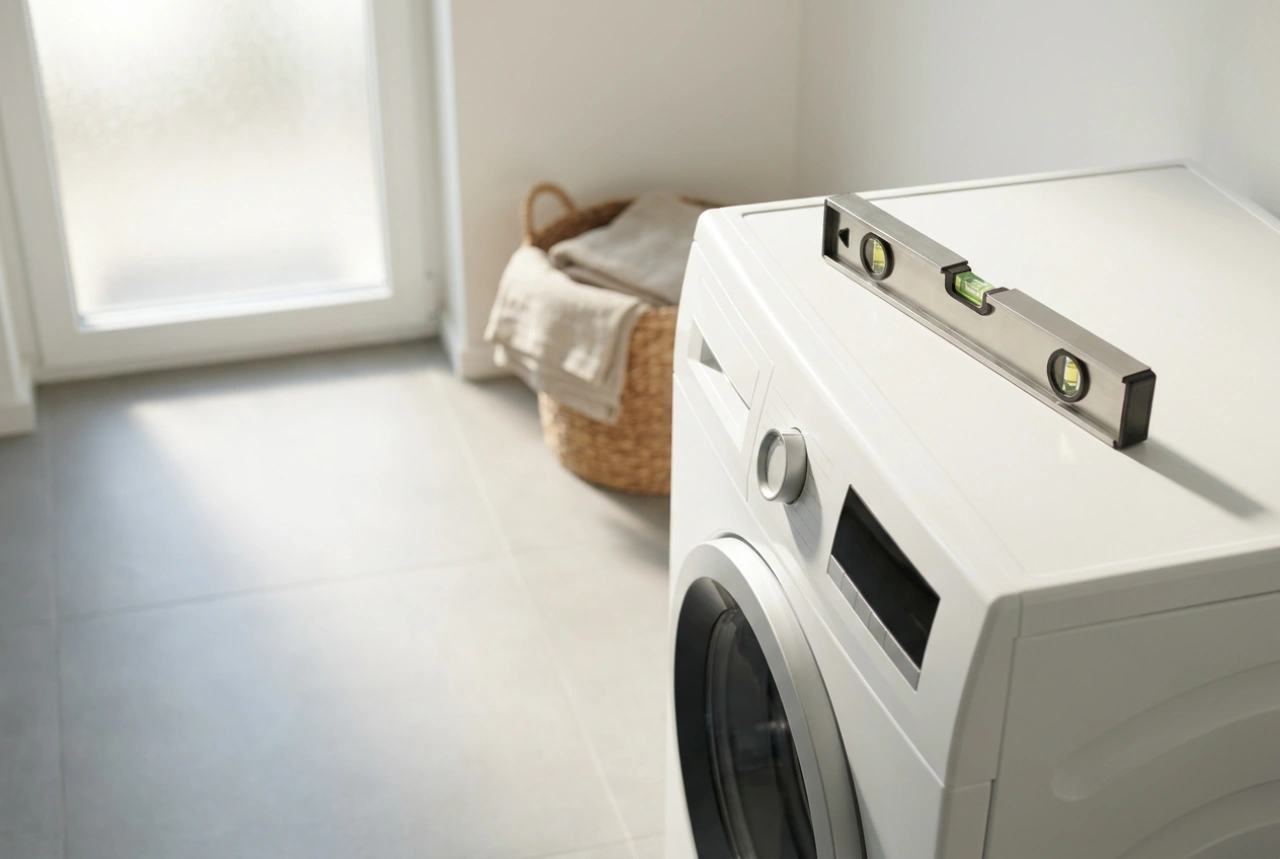
- Level the Base Unit: Place the washing machine in its final position. Use a spirit level across both axes (left-to-right and front-to-back). Adjust the threaded levelling feet until the bubble is perfectly centred. Once level, tighten the locknuts on each foot securely against the chassis to prevent them from loosening under vibration.
- Prepare the Interface: Clean the top surface of the washing machine to remove any detergent residue or dust, which can reduce friction. Install the stacking kit according to its mechanical specifications, ensuring any rubber dampening pads are correctly seated. These pads are crucial for absorbing high-frequency harmonics.
- Position the Dryer: With assistance, lift the tumble dryer and lower it vertically onto the stacking kit. Ensure the dryer’s feet slot directly into the designated recesses or locking channels of the kit.
- Secure the Structural Bind: If your stacking kit utilises a heavy-duty tension strap, thread it through the designated channels around both appliances and tighten it using the ratcheting mechanism. This binds the two independent chassis into a single cohesive structural mass, dramatically reducing independent oscillation.
Managing Resonance and Surface Materials
The surface beneath your stacked setup plays a vital role in vibration mitigation. Hard, smooth surfaces like tiled utility rooms can facilitate minor shifting. Placing high-density rubber anti-vibration pads under the feet of the bottom washing machine can decouple the entire stack from the subfloor, absorbing kinetic energy before it transfers into the building's structure. Regular checks are recommended; every six months, inspect the tension of the securing straps and ensure the levelling feet have not shifted, maintaining a perfectly balanced system.