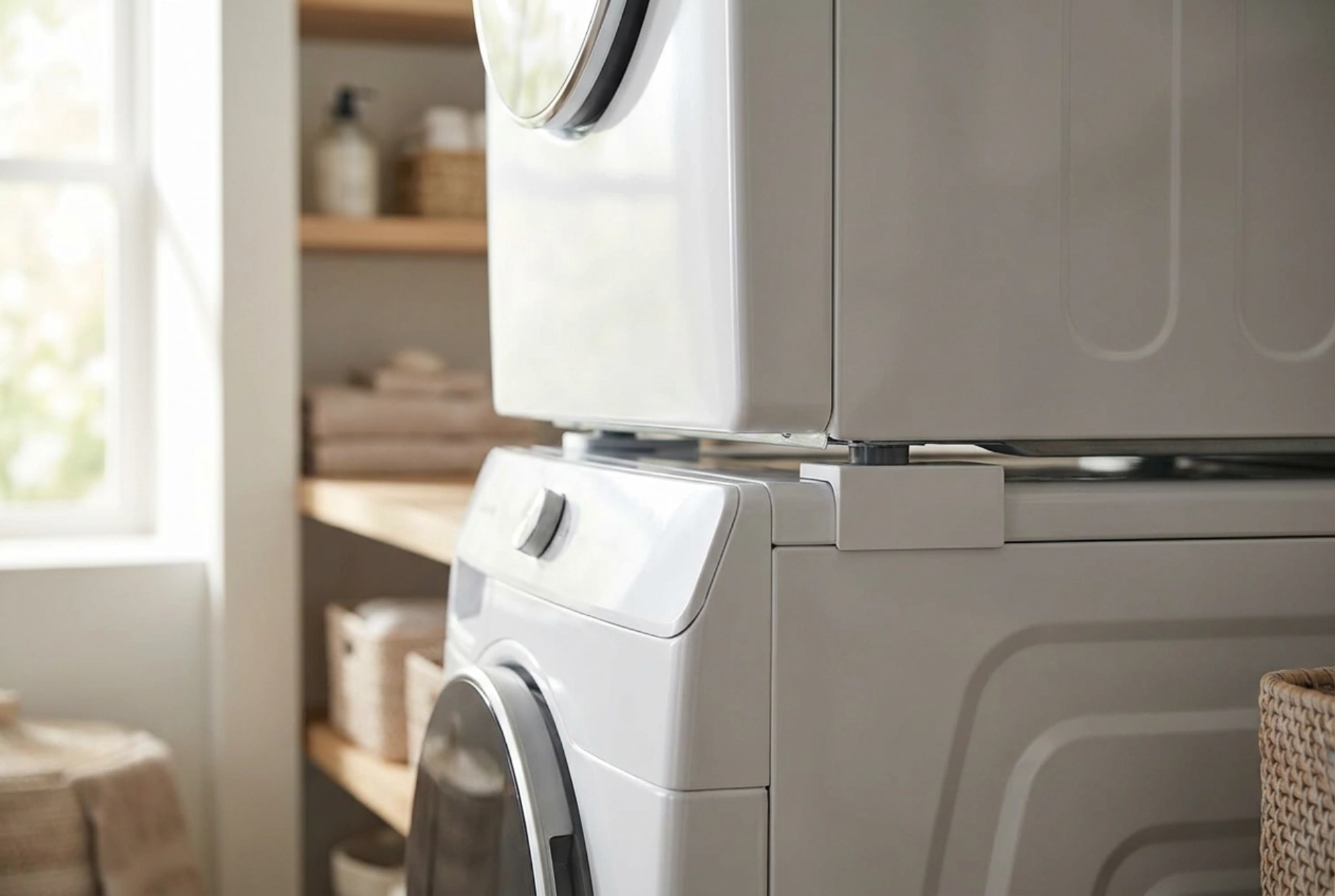


Stacking a tumble dryer on top of a washing machine saves valuable floor space, but the structural integrity of this setup depends entirely on neutralizing kinetic energy and mechanical vibrations. A dedicated stacking kit acts as a vital structural buffer, preventing dangerous shifts, surface damage, and potential appliance falls during high-speed spin cycles.
The Physics of Motion in Stacking Columns
During the spin cycle, a washing machine drum can rotate at speeds exceeding 1400 RPM. This high-speed rotation generates substantial centrifugal force and kinetic energy. Even with internal balancing systems, such as concrete counterweights and suspension springs, residual vibration travels through the outer chassis of the appliance.
If a dryer sits directly on top of a washing machine without a physical barrier, these micro-vibrations create a "creeping" effect due to the low coefficient of friction between the glossy enamel or plastic surfaces. Over time, the dryer will shift, leading to structural misalignment, heavy rattling, or catastrophic falls. A stacking kit solves this by creating a mechanical lock and dampening these vibrations before they propagate upwards.
Material Science: How Stacking Kits Absorb Energy
A standard stacking kit consists of high-density polymers or powder-coated steel brackets, accompanied by elastomer dampening pads. Each component plays a specific role in managing physical forces:
- Elastomer Pads: These soft rubber or silicone pads are placed under the dryer's feet. They have a high coefficient of friction and excellent vibration-dampening properties. They absorb high-frequency kinetic energy, converting it into trace amounts of thermal energy, thus isolating the dryer from the washer's motion.
- Rigid Frame: The main frame secures the outer perimeter of the washer's top lid. This ensures that the dryer's weight is distributed evenly across the load-bearing side walls of the washing machine, rather than pressing down on the weaker center of the top panel, which could cause flexing and internal damage.
Step-by-Step Technique for a Stable Installation
To ensure absolute stability, the installation must follow a strict sequence based on physical alignment and calibration:
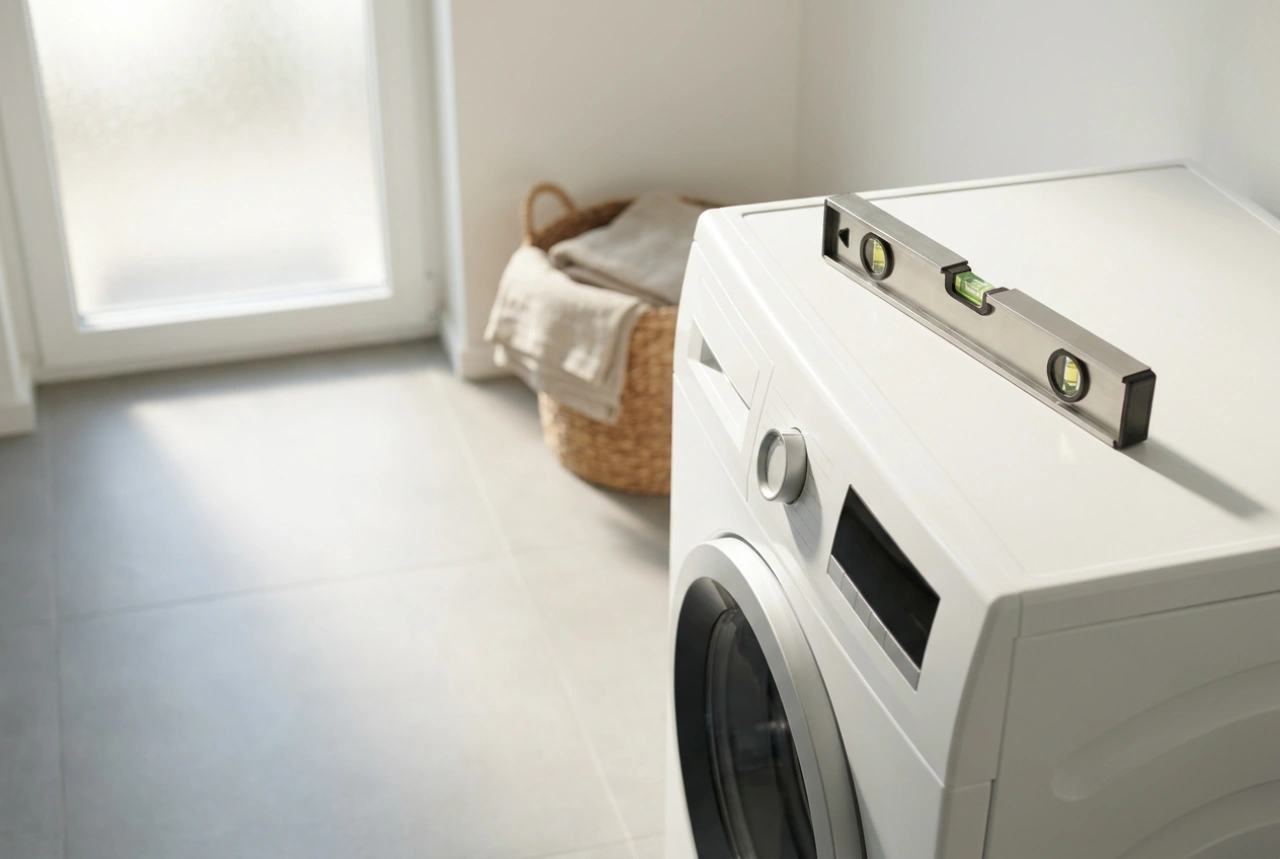
First, the base washing machine must be absolutely level. Use a spirit level on both the lateral and longitudinal axes. Adjust the washer's threaded feet and lock them in place with the locking nuts. If the base machine is unlevel by even a millimeter, the upper dryer will experience amplified lateral forces during operation.
Next, clean the top surface of the washing machine with an isopropyl alcohol solution to remove any dust, detergent residue, or manufacturing oils. This step is critical for ensuring maximum adhesion of the anti-slip pads and structural brackets.
Position the frame exactly according to the physical dimensions. Depending on the design, you may secure the kit using self-tapping screws into the washing machine's top plate (usually made of dense wood-composite) or by utilizing a heavy-duty tension strap. If using a strap-based kit, route the nylon webbing through the tension ratchet, pull it taut across both machines, and lock the ratchet to create a unified, single-mass structural column.
Finally, carefully lift the dryer onto the frame, ensuring its feet slide perfectly into the designated slots or guide rails of the kit. Double-check that no electrical cords or drain hoses are pinched between the two chassis.
The Structural Role of Pull-Out Shelves
Many stacking kits feature an integrated pull-out shelf. Beyond the convenience of loading and unloading laundry, this shelf must be engineered to withstand cantilever loads. When extended, the shelf acts as a lever, projecting force outward. It is critical never to exceed the rated weight capacity (typically 10 to 15 kilograms) when placing heavy, wet laundry baskets on it. Excessive downward force on an extended shelf can strain the front anchor points of the stacking kit, potentially compromising the stability of the entire appliance column.