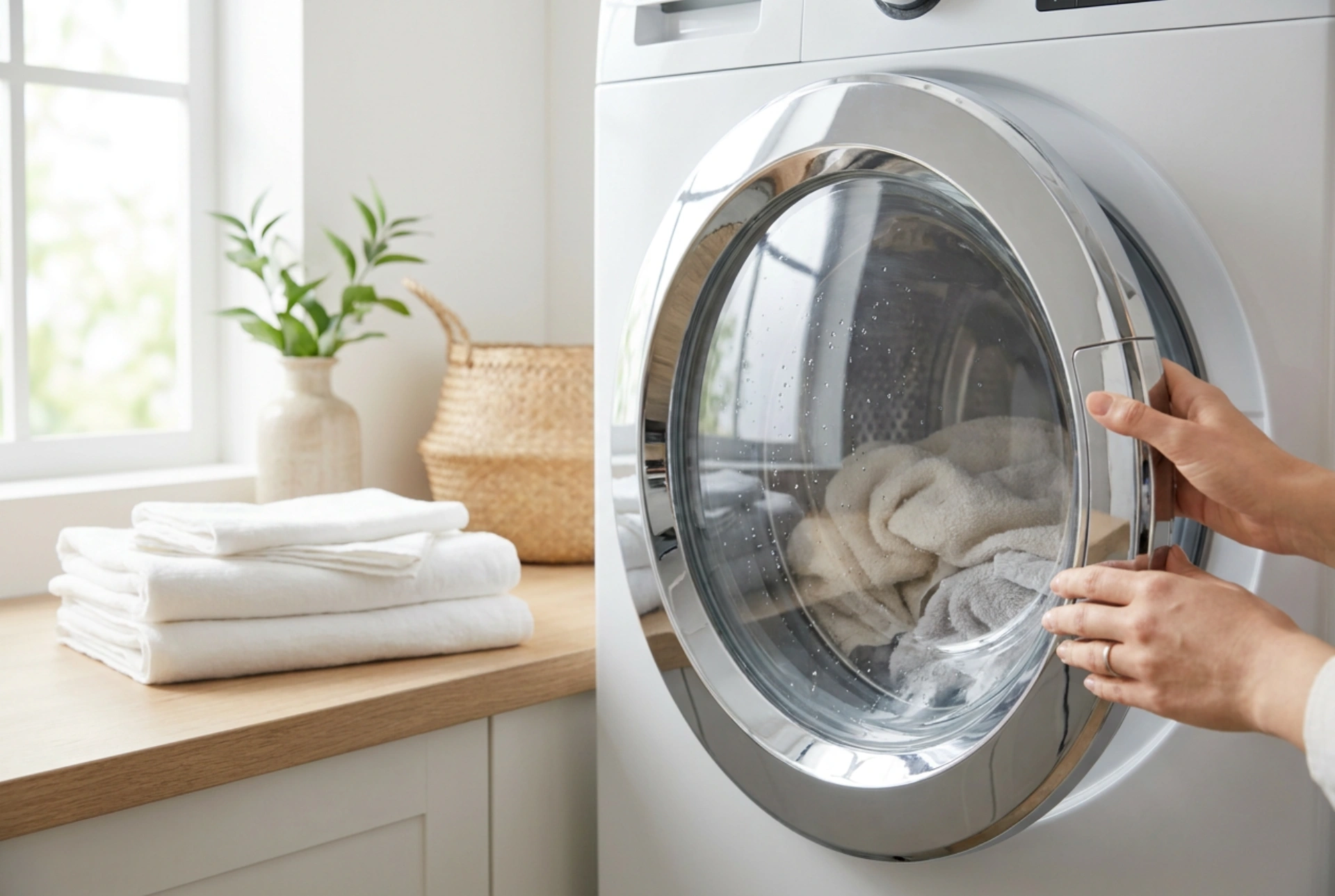


Adding forgotten garments to a running washing machine via an auxiliary door requires coordinating cycle phases with physical principles. Understanding water levels, internal pressure, and surface tension ensures you can use this feature without risking leaks.
The Hydrostatic Principle and Drum Design
The primary factor determining whether water will escape from an auxiliary door is the height of the water line inside the drum relative to the opening's lower edge. Modern front-loading washing machines operate on low-water principles, meaning the water level during a standard wash cycle sits well below the drum's center axis. However, during specific phases—such as the initial rinse or when treating delicate fabrics—the water volume is significantly higher.
Hydrostatic pressure dictates that water seeks its own level. If the auxiliary door is opened when the internal liquid level exceeds the height of the opening's lower lip, gravity pulls the water outward. Most modern appliances use electronic sensors to monitor this level, keeping the door locked if the water is too high. Understanding this threshold is crucial: never attempt to bypass these electronic safety mechanisms, as they are calibrated precisely to the physical limits of the drum's volume.
Thermodynamics and Internal Pressure Locks
Temperature plays a vital role in the safety and mechanics of the auxiliary door. When water is heated—especially during cycles exceeding 40 degrees Celsius—the air inside the drum expands, creating slight positive pressure. Simultaneously, the hot water reduces the surface tension of the liquid, making it more prone to splashing.
Additionally, high temperatures pose a thermal hazard. Washing machine control units utilize thermal sensors that disable the auxiliary door release once the internal temperature reaches a specific threshold (usually around 50 degrees Celsius). Allowing the machine to complete its heating phase before attempting to add items prevents the sudden release of hot vapor, which can condense on the cooler outer frame, creating drips that mimic a structural leak.
Step-by-Step Technique for Adding Laundry
To add garments without a single drop escaping, execute this precise sequence:
- Initiate the Pause Phase: Press the pause button to halt the drum's rotation. This allows the water to settle from a turbulent, splashing state into a calm pool at the bottom of the tub.
- Observe the Drum Motion: Ensure the drum has come to a complete standstill. Opening the door while the drum is still decelerating can cause water clinging to the drum perforations to be slung outward by centrifugal force.
- Open the Door Slowly: Gently unlatch the auxiliary door. Opening it rapidly creates a localized low-pressure zone that can draw moist air and foam outwards.
- Insert Items with Downward Trajectory: Slide the forgotten items downward into the drum. Avoid dropping them from a height, which creates splashes, and do not shove them in horizontally, which can push dry fabric against wet drum walls, wicking water out.
- Secure the Seal: Close the auxiliary door firmly until you hear the mechanical latch engage, ensuring no fabric fibers are trapped in the seal.
Managing Surfactants and Foam Expansion
Chemical factors, specifically the concentration of detergents, directly influence the success of using an auxiliary door. High-surfactant detergents lower the surface tension of water, facilitating the creation of thick micro-foam. Under mechanical agitation, this foam expands to fill the empty volume of the drum, rising far above the actual liquid level.
If you use excessive detergent, opening the auxiliary door will release this pressurized foam, which carries suspended water droplets. To prevent this, always dose detergents accurately based on water hardness and soil levels. If you notice excessive foaming through the glass, refrain from using the auxiliary door entirely during that cycle, as the foam will breach the opening and deposit chemical residue on the exterior housing.
Maintaining the Hydrophobic Seal
The physical barrier preventing leaks is the elastomeric gasket surrounding the auxiliary door. Over time, this seal can accumulate limescale, lint, and detergent film, which degrade its hydrophobic properties and prevent a tight seal.
Regular maintenance is essential to preserve this seal. Periodically wipe the gasket with a soft cloth dampened with a mild solution of citric acid to dissolve calcium deposits. Ensure the draining channels at the bottom of the auxiliary frame are free of debris, allowing any residual water to drain back into the main tub.