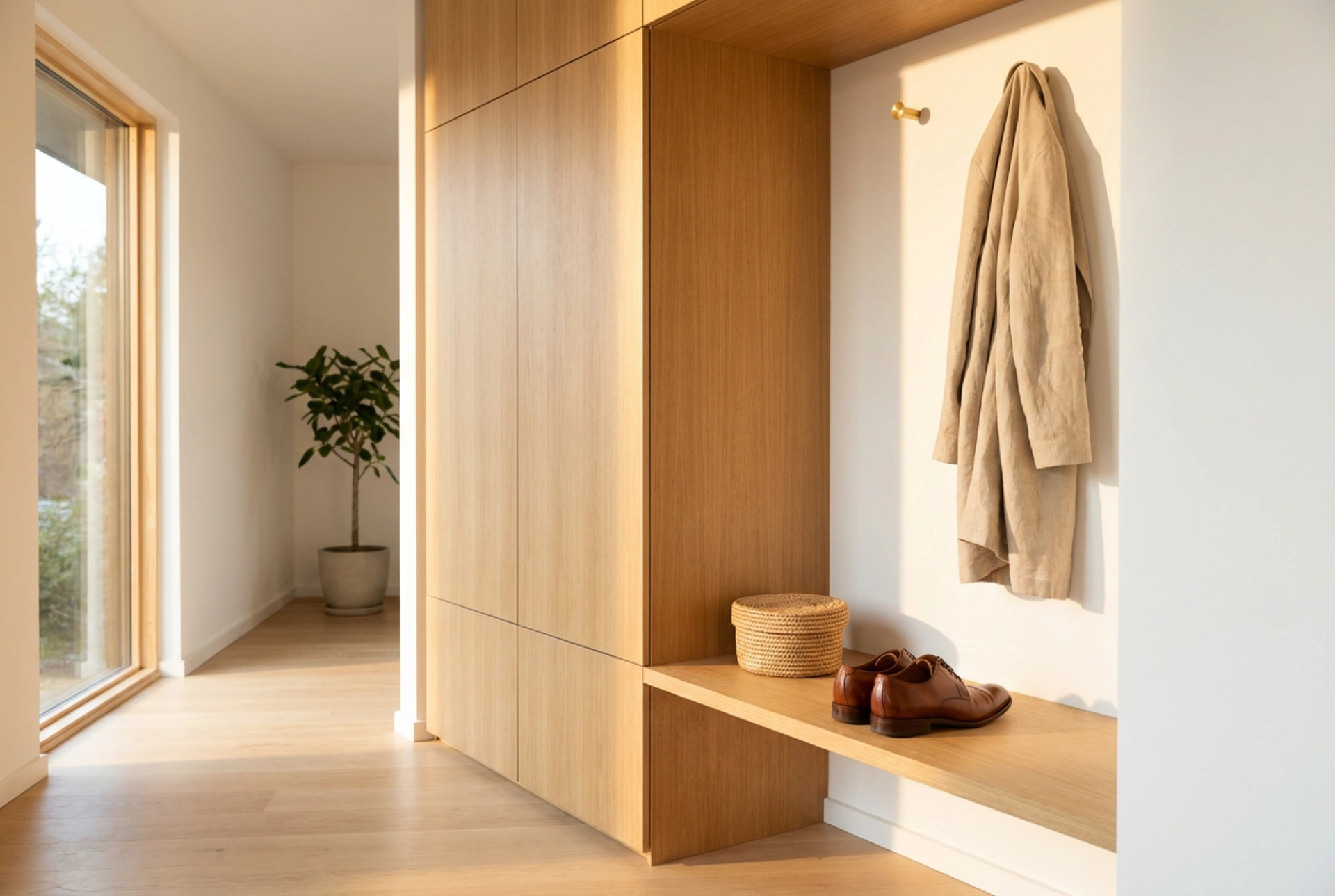


Maximising a small hallway wardrobe requires more than just clever folding; it demands an understanding of airflow, material friction, and moisture control. By applying basic physical and chemical principles, you can store seasonal outerwear and footwear efficiently without crushing fibres or risking dampness.
The Physics of Airflow: Why Overcrowding Damages Fabrics
When garments are compressed tightly inside a dark, enclosed wardrobe, the lack of air circulation creates microclimates of high humidity. Air naturally contains water vapour; when warm, moist air enters the hallway from the outside or adjacent living areas, it migrates into the wardrobe. Without sufficient ventilation, this moisture becomes trapped within the fibres of heavy coats and jackets.
For materials like wool, cashmere, and down feathers, compression is highly destructive. These natural materials rely on "loft"—the tiny pockets of air trapped within the fibres or feathers—to provide insulation and maintain their shape. Continuous physical pressure flattens these air pockets, permanently damaging the structural elasticity of the fibres. To prevent this, apply the two-finger rule: leave at least two finger-widths of space between every hanger. This gap allows natural convection currents to move through the wardrobe, balancing the internal temperature and preventing the air from reaching its dew point, which causes condensation and subsequent mould growth.
Ergonomics and Weight Distribution
A small wardrobe must be organised according to the physical properties of the items stored. Heavy objects, such as leather boots, structural bags, and umbrellas, should always reside at the absolute base of the unit. This keeps the centre of gravity low, ensuring the structural stability of the wardrobe, while also preventing the bowing of upper shelves under high load-bearing pressure.
- Active Zone (Eye to Chest Level): Reserved for daily wear. Items should be easy to extract without dragging adjacent garments, which minimises frictional wear on delicate fabric surfaces.
- Low Zone (Floor to Knee Level): Ideal for heavy footwear and storage boxes containing dense items. Use pull-out trays to access depth without needing extra clearance space.
- High Zone (Above Head Level): Perfect for lightweight, out-of-season items. Store these in breathable canvas bags to shield them from dust while allowing the fabric to breathe.
Hanger Dynamics and Material Interaction
The choice of hanger is a matter of physics and material science, not just aesthetics. Thin wire hangers exert concentrated pressure on a very small surface area of a garment's shoulder line. Over time, gravity pulls the weight of a heavy winter coat downward, causing the wire to distort the fabric, leading to permanent shoulder puckering. Instead, utilise wide-shouldered wooden or contoured plastic hangers. The broader surface area redistributes the gravitational pull across the garment's seams, preserving its natural drape.
Furthermore, consider friction. Velvet-flocked hangers are excellent for preventing slippery silk or polyester linings from sliding off, but they increase friction. In a compact wardrobe, this high friction can make it difficult to retrieve items smoothly, often pulling adjacent clothes off their hooks. For a small hallway wardrobe, smooth wooden hangers are optimal: they provide the necessary structural support for heavy coats while allowing garments to glide easily along the hanging rail during retrieval.
Chemical Humidity and Odour Control
Hallways are the primary transition zones between the outdoors and the home, meaning wet umbrellas, damp shoes, and rain-soaked coats frequently introduce moisture into the area. Placing wet items directly into a closed wardrobe triggers rapid bacterial decomposition of sweat and organic matter, producing volatile organic compounds (VOCs) that cause musty odours.
To combat this, never store damp clothing immediately. Allow outerwear to dry completely in an open, well-ventilated space before hanging it inside. To manage the inevitable ambient humidity, place desiccant packets containing silica gel on the shelves to actively adsorb water molecules from the air. For odour neutralisation, use sodium bicarbonate (baking soda) in a porous container. Baking soda is amphoteric, meaning it chemically reacts with both highly acidic and highly alkaline odour molecules, neutralising them rather than merely masking them with synthetic fragrances.