

Using white vinegar for window cleaning is a highly effective, natural method to dissolve grime, but an incorrect concentration can silently degrade your window frames and rubber seals. Finding the exact chemical balance allows you to achieve streak-free glass without compromising the structural integrity of your window installations.
The Chemistry of Vinegar on Glass Surfaces
Household white vinegar is dilute acetic acid, typically at a concentration of 5% to 8%. When applied to glass, the hydrogen ions in the acetic acid react with alkaline substances, such as calcium carbonate (limescale from rainwater) and mineral dust. This chemical reaction converts insoluble salts into highly soluble acetates, which are easily wiped away. Furthermore, acetic acid lowers the surface tension of water, allowing it to wet the glass surface evenly rather than forming droplets. Because acetic acid is highly volatile, it evaporates rapidly alongside water, leaving behind no chemical residues or surfactant films that typically attract airborne dust shortly after cleaning.
Why High Acidity Threatens Window Frames and Gaskets
While glass is chemically inert and highly resistant to acids, the materials surrounding it are not. Window frames and sealing gaskets are highly vulnerable to chemical degradation:
- Rubber and Elastomer Seals: Most window gaskets are made of EPDM (ethylene propylene diene monomer) or silicone. Continuous exposure to high concentrations of acetic acid causes plasticisers to leach out of the rubber, leading to premature hardening, loss of elasticity, and micro-cracking, which eventually destroys the airtight seal.
- Anodised Aluminium: Acidic solutions with a pH below 4 can strip the protective oxide layer from anodised aluminium frames, causing irreversible dulling, pitting, and white corrosion.
- Wood and Varnish: Acetic acid can slowly break down the polymer chains in polyurethane coatings and varnishes, exposing the underlying wood to moisture, swelling, and fungal decay.
The Safe Ratio: Formulating the Perfect Solution
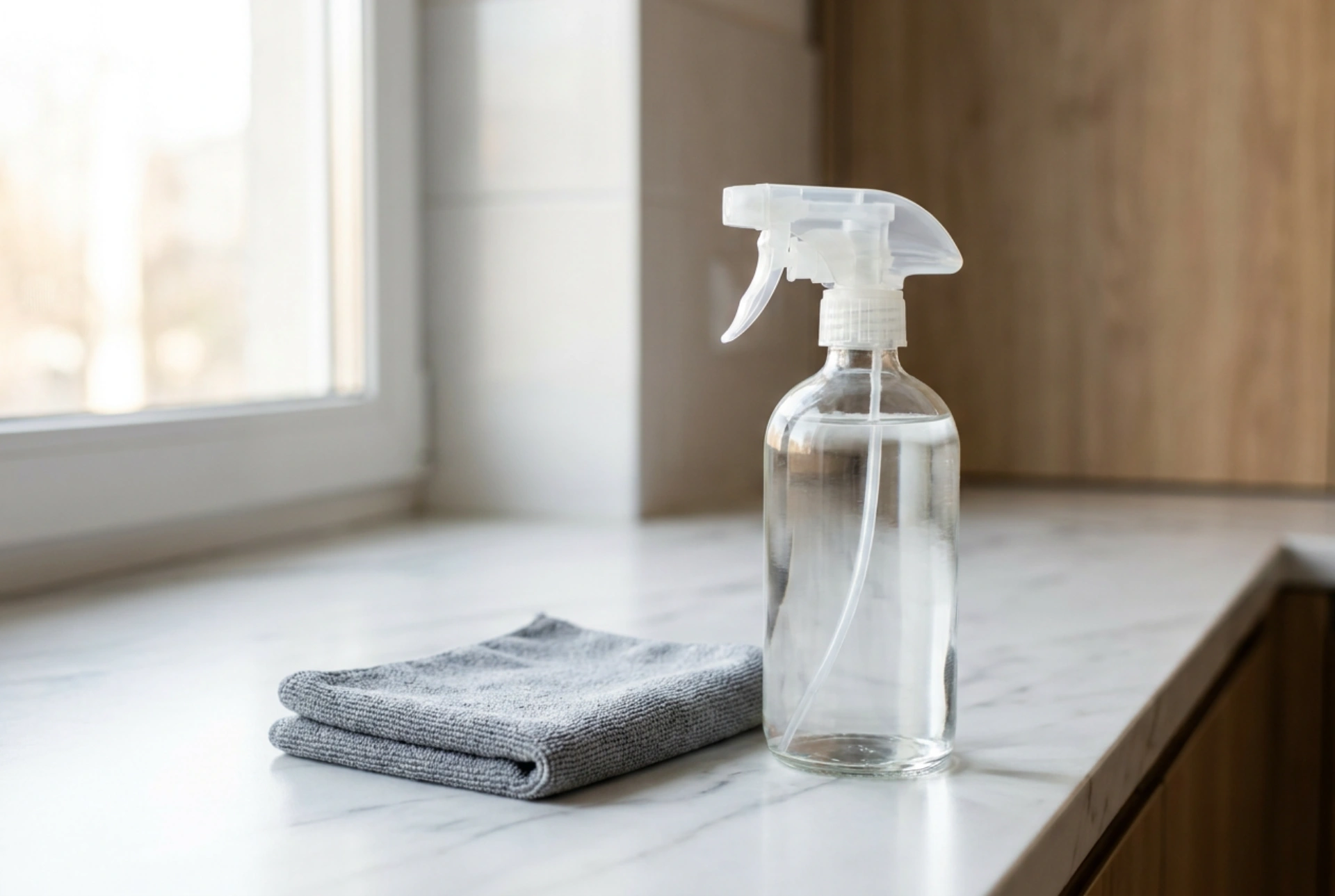
To balance cleaning power with material safety, you must dilute the acetic acid to a non-destructive level. The optimal safe ratio for regular window maintenance is 1 part white vinegar (5% acidity) to 4 parts distilled water. This dilutes the active acetic acid concentration to approximately 1%, which is sufficient to dissolve light limescale and grease while remaining safe for brief contact with seals and frames.
Using distilled or demineralised water is crucial. Tap water contains dissolved calcium and magnesium ions. When mixed with vinegar, these minerals partially neutralise the acid, reducing its cleaning efficacy. More importantly, as the tap water evaporates from the glass, these minerals precipitate out, leaving behind micro-crystals that appear as unsightly white streaks.
For colder seasons or high-humidity environments, adding 1 part of isopropyl alcohol (rubbing alcohol, 70% or higher) to this mixture accelerates evaporation, preventing the solution from lingering in corners and pooling near the gaskets.
Step-by-Step Application Technique to Protect Frames
The method of application is just as important as the chemical mixture. Avoid spraying the solution directly onto the window, as overspray inevitably runs down and pools in the lower frame channels, where it can attack the rubber seals over prolonged periods.
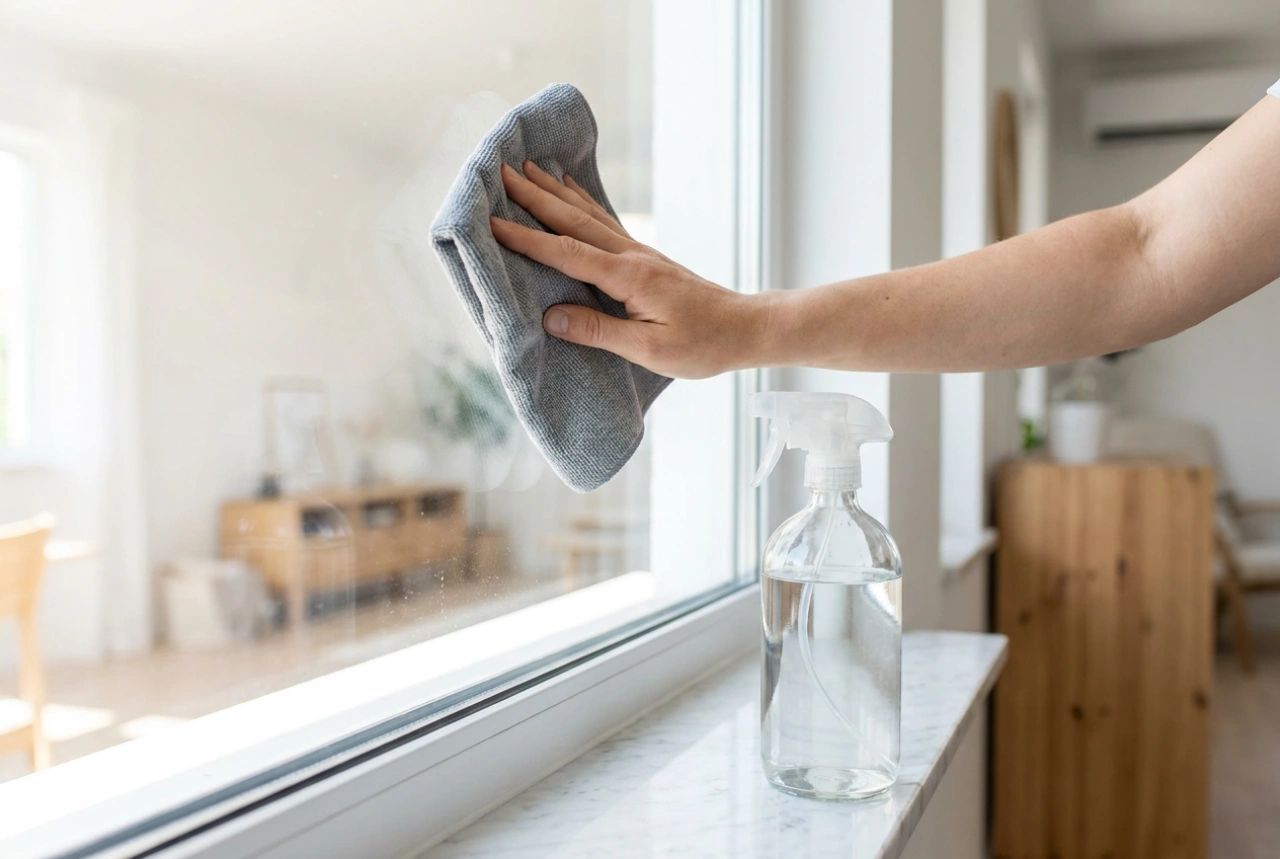
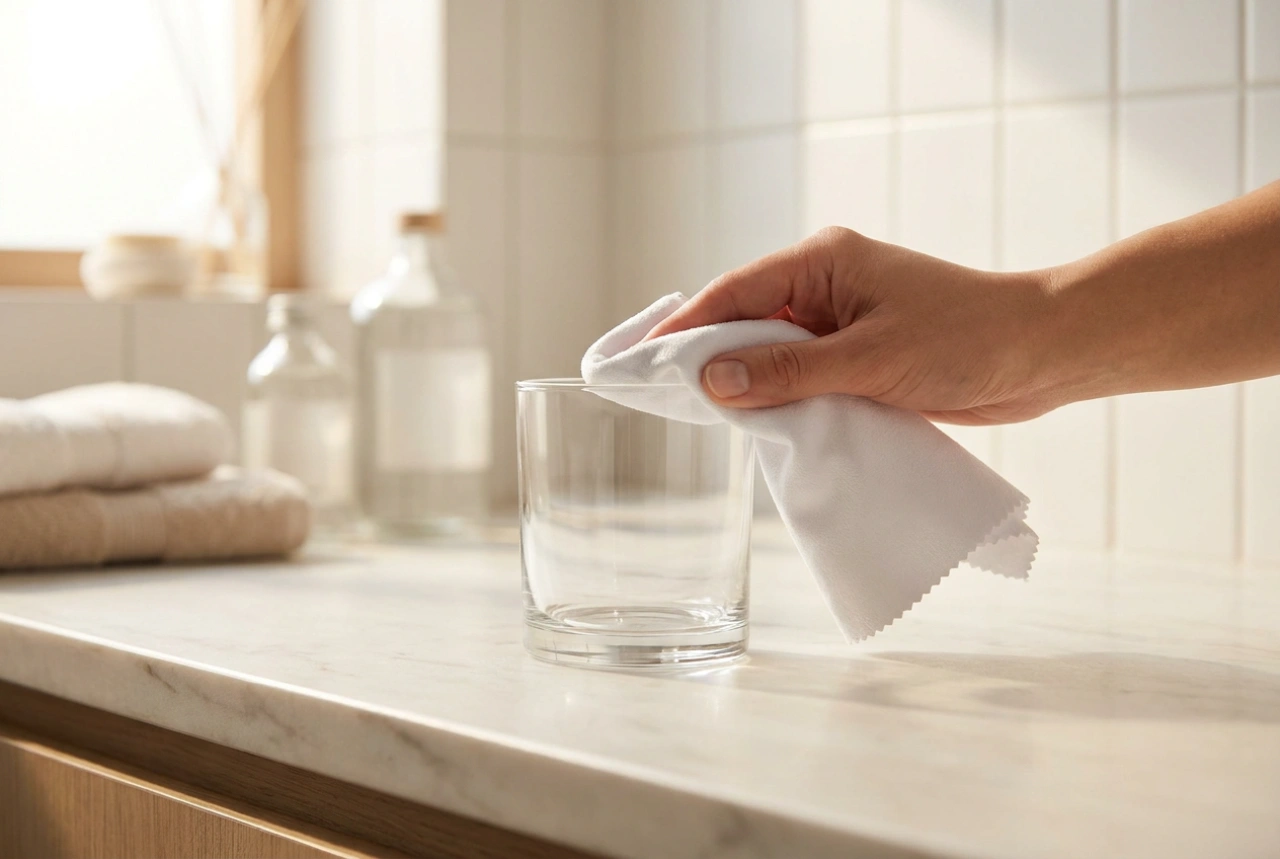
First, lightly mist a clean, high-density microfibre cloth with the diluted vinegar solution. Wipe the glass using a controlled S-motion or Z-motion from top to bottom. This mechanical action lifts and traps suspended dirt particles within the microfibre channels rather than spreading them across the pane. Once the glass is clean, immediately take a separate, dry microfibre cloth and dry the perimeter where the glass meets the frame. This prevents capillary action from drawing any remaining moisture under the rubber gaskets, keeping the vulnerable seals completely dry and free from chemical pooling.