

Structuring cosmetics within an organizer fitted with a mirror requires balancing physical accessibility, center-of-gravity dynamics, and the chemical preservation of active ingredients. By understanding how materials interact and how light reflects, you can create a functional vanity setup that extends the shelf life of your skincare.
Gravitational Balance and Physical Stability
When arranging items in a portable or rotating organizer with an integrated mirror, the distribution of mass is paramount. Mirror attachments shift the center of gravity upward and outward, increasing the risk of tipping. To counteract this physical force, place high-density containers, such as glass bottles containing thick liquid foundations, heavy facial oils, or water-based serums, at the very bottom or center of the organizer. This lowers the center of gravity and increases the static equilibrium of the unit.
Lightweight plastic tubes, powders, and synthetic brushes should occupy the upper tiers or perimeter slots. If your organizer rotates, centripetal force will act on the items during movement. Placing heavier items closer to the central axis of rotation minimizes the moment of inertia, ensuring a smooth, stable spin and preventing tall, narrow bottles from falling outward due to centrifugal forces.
Light Reflection and Chemical Preservation
The presence of a mirror introduces specific thermodynamic and optical challenges. Mirrors reflect both visible light and infrared radiation. If your organizer is positioned near a window, the mirror can focus specular reflections directly onto your skincare products. This localized concentration of light and thermal energy can raise the temperature inside product containers, accelerating chemical reactions that break down active compounds.
Emulsions, such as moisturizing creams and lotions, are thermodynamic mixtures of oil and water held together by emulsifiers. Excess heat from concentrated light reflections can disrupt these molecular bonds, causing the emulsion to split into separate phases. Furthermore, photo-sensitive molecules—including retinoids, L-ascorbic acid (Vitamin C), and specific peptide chains—undergo rapid photo-oxidation when exposed to UV and concentrated visible light. To protect these sensitive formulations, store opaque or amber-glass bottles away from the direct path of the mirror's reflection, reserving the most exposed slots for inert items like metal eyelash curlers, solid hair clips, or synthetic cosmetic brushes.
Ergonomic Order of Operations and Viscosity
A highly efficient organizer should mimic the chronological sequence of your skincare and makeup routine. Organize your products from left to right or bottom to top based on the viscosity of the liquid and the order of application. The rule of thumb for skincare is to apply products from the lowest viscosity (water-like) to the highest viscosity (oil- or wax-based).
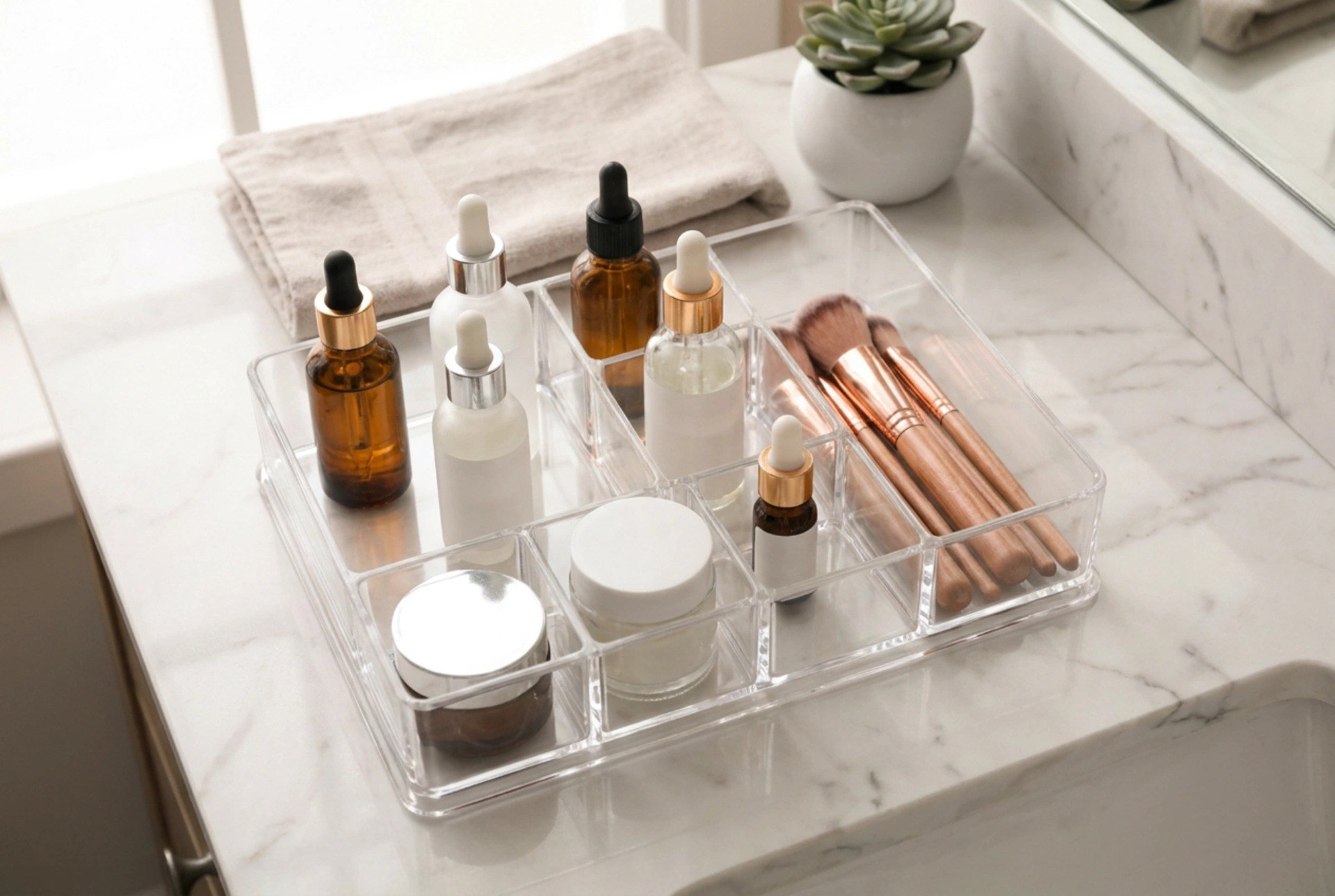
- Lower Tiers (High Viscosity & Prep): Store heavy creams, facial oils, and cleanser bottles here. These are either used first in the cleansing phase or last to seal in moisture, requiring stable, easy-to-reach positioning.
- Middle Tiers (Low Viscosity & Treatment): Place liquid toners, watery essences, and low-viscosity serums in the mid-level compartments. Keeping these at eye level allows for precise dosing and prevents accidental spills of highly fluid, expensive liquids.
- Upper Tiers or Side Pockets (Dry & Powder Products): Place pressed powders, eyeshadow palettes, and mechanical tools at the top. These items are sensitive to moisture and should be kept away from the damp environment of lower shelves where spilled liquids might collect.
Caring for Acrylic and Mirror Surfaces
Most high-quality cosmetics organizers are fabricated from polymethyl methacrylate (PMMA), commonly known as acrylic, paired with glass or metal-backed mirrors. Acrylic is highly susceptible to solvent-induced degradation. Standard household glass cleaners containing ammonia or high concentrations of ethanol can cause "crazing"—the formation of micro-cracks in the acrylic matrix that permanently dulls the plastic and compromises its structural integrity.
To clean both the acrylic body and the glass mirror safely, use a solution of warm water and a tiny drop of a mild surfactant, such as a neutral dishwashing liquid. Apply this solution with a dense microfiber cloth. Microfiber features microscopic wedge-shaped polyester and nylon fibers that physically lift oils and dust through capillary action, eliminating the need for aggressive rubbing. To polish the mirror surface to a streak-free finish, dry it using a clean, dry microfiber cloth in circular motions, neutralizing static charge and preventing dust from immediately settling back onto the surface.