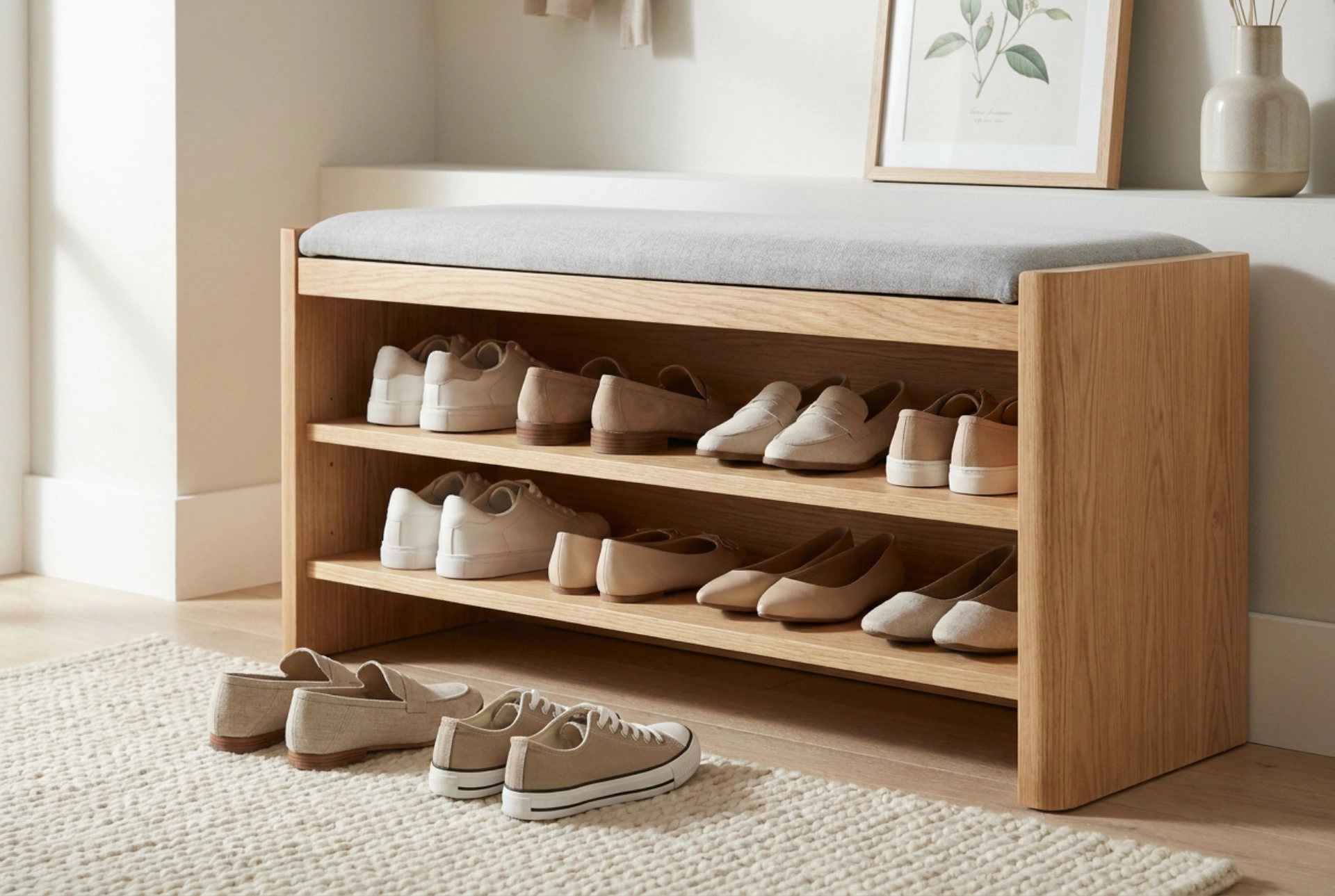


Efficient entryway organisation hinges on balancing accessibility with optimal preservation conditions for various footwear materials. A spacious shoe cabinet with an integrated bench serves as both a functional seating platform and a controlled microclimate for your shoes, provided the principles of structural sorting and airflow are correctly applied.
The Science of Shoe Preservation: Airflow and Moisture Control
When worn, footwear absorbs perspiration and environmental moisture. Storing damp shoes in a sealed, unventilated environment accelerates the degradation of organic materials like leather and encourages the proliferation of bacteria and fungi. A well-designed shoe cabinet must balance dust protection with passive ventilation.
To prevent material breakdown, choose cabinets with slatted doors, open backs, or breathable wire mesh shelves. When shoes are placed on solid wooden or laminate shelves, ensure they are completely dry before storage. The ideal relative humidity inside a shoe cabinet should hover between 40% and 50%. Exceeding this threshold risks fungal growth, while extremely dry air can cause natural leather to desiccate, crack, and lose its structural flexibility.
Material Selection for Bench Shoe Cabinets
An entryway bench cabinet undergoes dual mechanical stress: static load from stored footwear and dynamic load from individuals sitting down to put on or remove shoes. Solid hardwoods such as oak or beech offer superior structural integrity and resistance to warping under load, whereas high-density fibreboard provides a budget-friendly, stable alternative if properly sealed against humidity.
The seating surface requires careful material consideration. High-resilience polyurethane foam wrapped in tightly woven synthetic textiles, such as treated polyester or microfibre, ensures longevity. These materials resist abrasion from zippers, buckles, and keys, and do not absorb moisture from wet outerwear. Furthermore, a removable, washable cover facilitates easy maintenance and limits the accumulation of environmental dust and allergens at the entryway.
The Hierarchy of Footwear Segregation
Organising shoes within a cabinet requires a systematic approach based on weight, frequency of use, and material sensitivity. Implementing a strict spatial hierarchy prevents mechanical damage and optimises daily ergonomics:
- Bottom Shelves (Heavy and Wet Footwear): Reserve the lowest compartment for heavy boots, wellingtons, and outdoor shoes. This prevents dirt, road salt, and water from dripping onto other pairs. It also lowers the cabinet's centre of gravity, enhancing overall stability.
- Middle Shelves (Daily Wear): Position frequently used trainers, flats, and casual shoes at waist level for easy retrieval without excessive bending.
- Top Shelves or Drawers (Delicate and Seasonal Pairs): Store premium leather shoes, heels, and off-season footwear on the upper levels. These should ideally be placed in breathable cotton dust bags or on cedar shoe trees to maintain their shape and absorb residual moisture.
Active Microclimate Management and Hygiene
Even with excellent passive ventilation, active odour and moisture control are vital for maintaining a hygienic shoe cabinet. Rather than relying on synthetic chemical masking agents, use natural desiccants and antimicrobial agents to address the root causes of odour.
Placing small linen bags filled with activated charcoal or sodium bicarbonate on each shelf actively adsorbs volatile organic compounds and excess water vapour. Additionally, cedar wood inserts can be placed inside leather shoes; cedar contains natural essential oils that act as natural fungicides and insect repellents while imparting a subtle, clean scent. Establish a routine of wiping down shelves with a damp cloth and a mild surfactant, followed by thorough air-drying, to eliminate abrasive dirt particles that could scratch shoe outsoles and uppers.