

Dedicated larder refrigerators offer vast, uninterrupted cooling space, but maximizing their potential requires understanding the physical and chemical principles of food preservation. By mastering temperature gradients, relative humidity, and gas exposure, you can significantly extend the shelf life of your fresh ingredients.
Thermodynamic Principles of a Freezerless Refrigerator
A refrigerator without a freezer compartment operates under a single thermodynamic cycle, leading to more uniform temperature distribution than combined units. However, natural convection still plays a critical role. Warm air, being less dense, rises toward the top shelves, while colder, denser air settles at the bottom. To maintain a stable internal environment, air must circulate freely. Overpacking shelves obstructs this convection, creating localized warm pockets where bacterial proliferation accelerates. Maintaining a 10% to 15% clearance around stored items ensures that the cooling fan can distribute air evenly, keeping the average temperature within the optimal 2°C to 4°C range to slow down enzymatic reactions and microbial reproduction.
Managing Humidity and Ethylene Chemistry
Fresh produce continues to undergo cellular respiration after harvest, consuming oxygen and releasing water vapor and carbon dioxide. This process is highly dependent on relative humidity (RH). Controlling this microclimate prevents physical degradation.
- High-Humidity Zones (85-95% RH): Leafy greens, cruciferous vegetables, and herbs lose moisture rapidly through transpiration. Storing them in dedicated humidity-controlled drawers, where physical barriers restrict airflow, prevents wilting by trapping evaporated water vapor.
- Low-Humidity Zones (60-70% RH): Fruits that produce ethylene gas—a natural plant hormone that accelerates ripening and decay—require active ventilation. Ethylene-sensitive crops (like cucumbers, carrots, and leafy greens) must be physically separated from heavy ethylene producers (such as apples, pears, and stone fruits) to prevent premature cellular breakdown and yellowing.
Material Science of Storage Containers
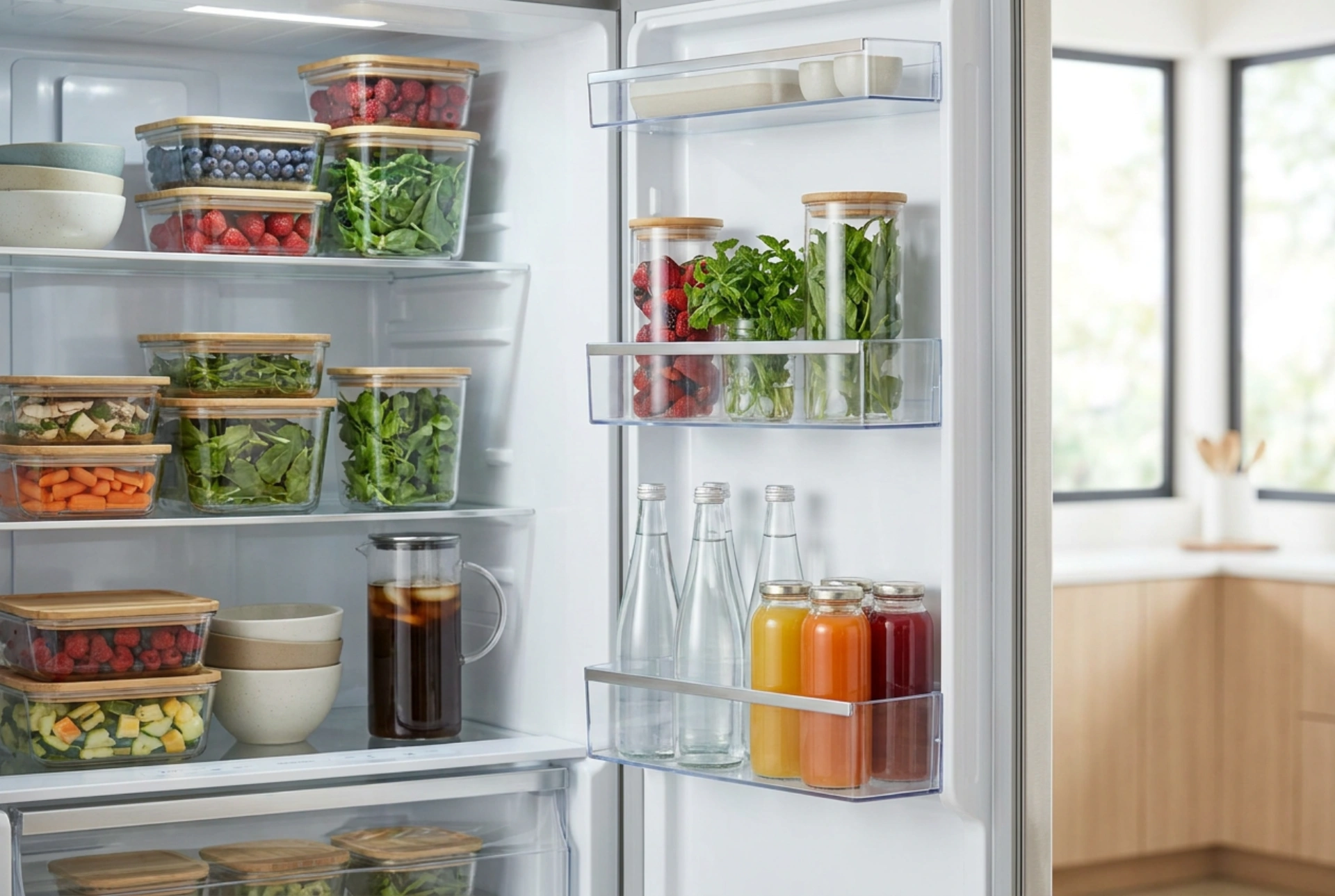
The choice of storage vessel directly influences thermal conductivity and chemical stability. Glass is highly recommended for food preservation because it has a high thermal mass, meaning it retains its temperature when the refrigerator door is opened, minimizing thermal shock to the food. Furthermore, glass is completely non-porous and chemically inert, preventing the absorption of volatile organic compounds (odors) and eliminating the risk of chemical migration.
Polyethylene and polypropylene containers are lightweight and flexible, but semi-permeable to gases. Over time, plastic containers allow oxygen to slowly penetrate, accelerating lipid oxidation in fatty foods. Stainless steel provides excellent thermal conductivity, cooling down rapidly, but is opaque, which can lead to forgotten items and food waste. Always ensure metal containers are sealed with airtight, non-reactive lids to prevent oxidation.
Systematic Organization and the Order of Operations
To prevent cross-contamination and utilize the natural temperature gradient, organize your larder fridge systematically. Keep ready-to-eat foods, preserves, and fermented items on the top shelves, where the temperature is slightly warmer (~4°C). The middle shelves, sitting at a stable 3°C, are best suited for dairy products and eggs, preserving their delicate protein and fat structures. Reserve the lowest shelves, which are the coldest zones (around 1.5°C to 2°C), for raw proteins. This low temperature dramatically slows down psychrophilic bacteria. Always store raw proteins in sealed glass containers to prevent drip-contamination.