

Efficient wardrobe organisation relies on understanding how gravity and friction interact with different fabrics. Maximising space with trouser hangers requires selecting the correct mechanical design for each textile weight and using precise folding techniques to eliminate unnecessary bulk.
Fabric Mechanics: Friction, Gravity, and Crease Prevention
Trousers are subject to gravitational pull, which can either work to remove wrinkles or, if hung incorrectly, distort the fabric's natural drape. Heavy fabrics like denim and wool flannel possess high internal friction, meaning they grip hanger bars easily but require sturdy support to prevent structural stretching. Conversely, lightweight materials like silk, linen, or fine tropical wools have low surface friction, causing them to slide off standard hangers and pool at the bottom of the wardrobe. Understanding the coefficient of friction of your garments dictates the type of bar covering needed; rubberised sleeves or flocked velvet surfaces provide the necessary resistance to counteract gravitational slip without damaging delicate fibres.
Hanger Geometry: Selecting the Right Mechanical Support
The structural design of a trouser hanger directly impacts both space efficiency and fabric preservation. Different hanger types solve specific structural problems inside the wardrobe:
- Clamping Hangers: These hold trousers vertically from the bottom hem. By utilising gravity, the weight of the waistband pulls the fabric downward, naturally smoothing out wear creases. This method requires significant vertical clearance but is highly space-efficient horizontally.
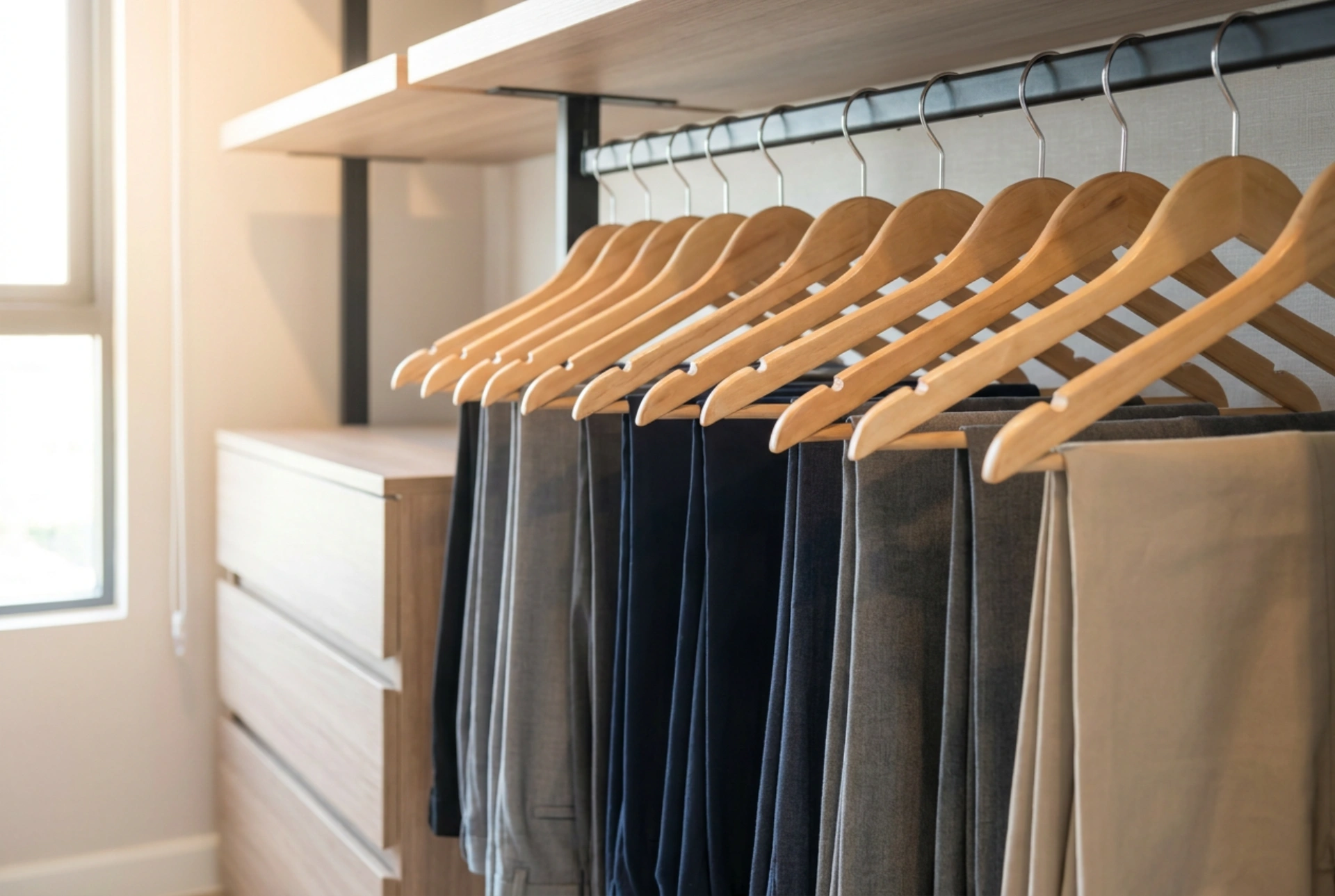
- Open-Ended Single Bars: These allow for rapid sliding access. However, they must feature a non-slip coating. If the bar diameter is too narrow, it creates a high-pressure point that leaves a permanent horizontal crease across the thigh line of the trousers. A bar diameter of at least 1.5 centimetres is recommended to distribute the load evenly.
- Multi-Tiered Hangers: These stack multiple pairs of trousers vertically on a single hook. While excellent for saving lateral rod space, they increase the depth profile of the hanging cluster. To prevent excessive bulk, alternate the direction of the waistbands (one facing left, the next facing right) to distribute the uneven thickness of the pockets and fly closures.
The Step-by-Step Mechanics of the Friction Fold
To hang trousers over a horizontal bar without them slipping or creating excess bulk, you can employ the interlocking fold method. This technique utilises the friction of the fabric legs against one another to lock the garment securely in place.
First, hold the trousers upside down by the hems, with the legs separated. Next, straddle the hanger bar by pulling one leg through the centre of the hanger and folding it down over the bar until the hem rests near the crotch seam. Finally, fold the second leg directly over the first leg in the opposite direction, pulling it through the hanger frame. This interlocking structure ensures that the weight of each leg counterbalances the other. The friction between the overlapping fabrics prevents the trousers from sliding off, even on smooth wooden or metal bars, whilst keeping the overall thickness of the folded garment to a minimum.
Spatial Distribution and Microclimate Control
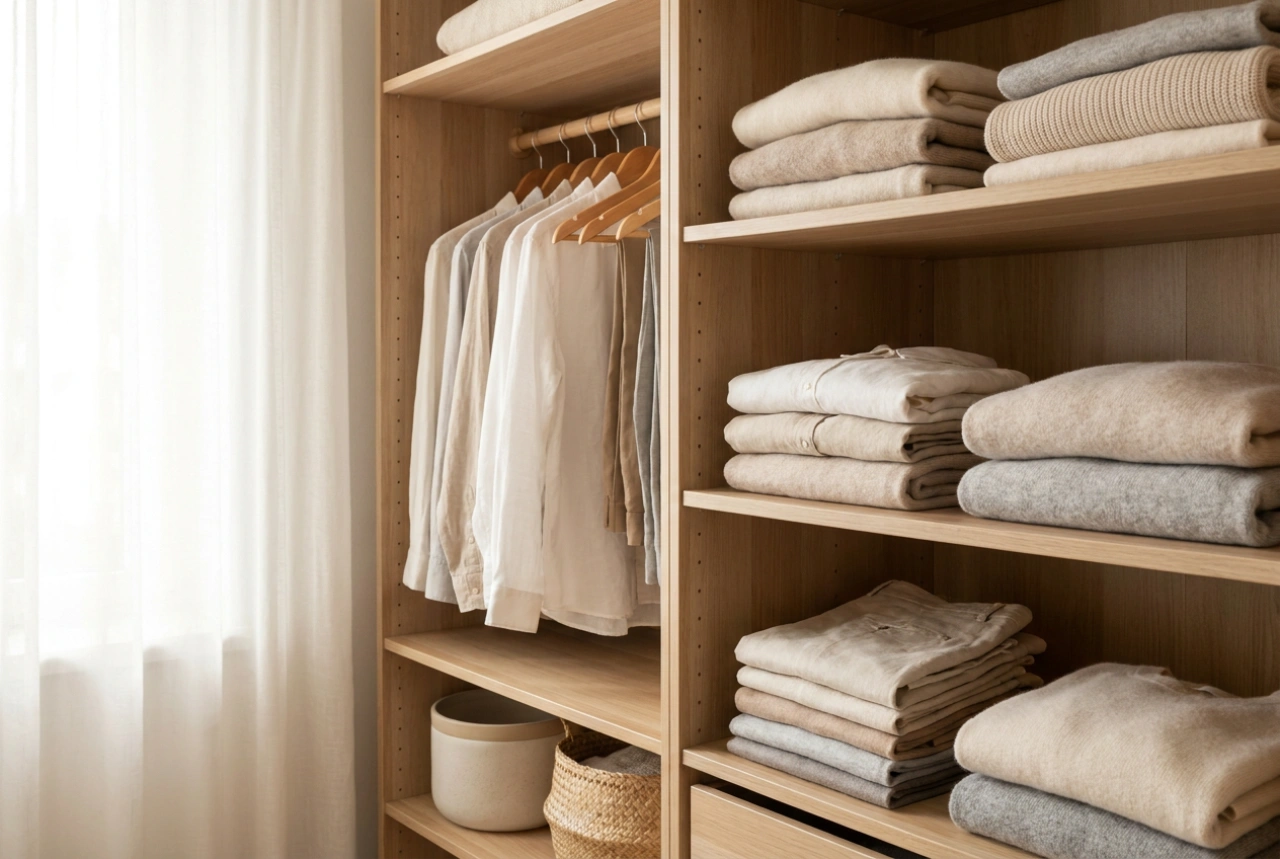
The spatial arrangement of hangers on the wardrobe rail affects both access and fabric longevity. Compressed garments suffer from restricted airflow, creating microclimates where trapped humidity can degrade natural fibres and encourage mould growth. Always maintain a clearance of at least 1.5 to 2 centimetres between each hanger. This gap allows sufficient air circulation to regulate the temperature and moisture within the wardrobe. Additionally, group trousers by material weight: hanging heavier denim together and lighter tailored trousers in another section prevents heavy fabrics from compressing and wrinkling their delicate neighbours.