

Storing footwear correctly inside a wardrobe is not just about visual neatness; it is a critical practice for preserving material integrity, preventing structural warping, and controlling moisture accumulation. By implementing structured shoe racks and adhering to seasonal storage rules, you protect delicate leathers, rubber soles, and textiles from premature degradation.
The Science of Footwear Preservation: Airflow and Moisture Control
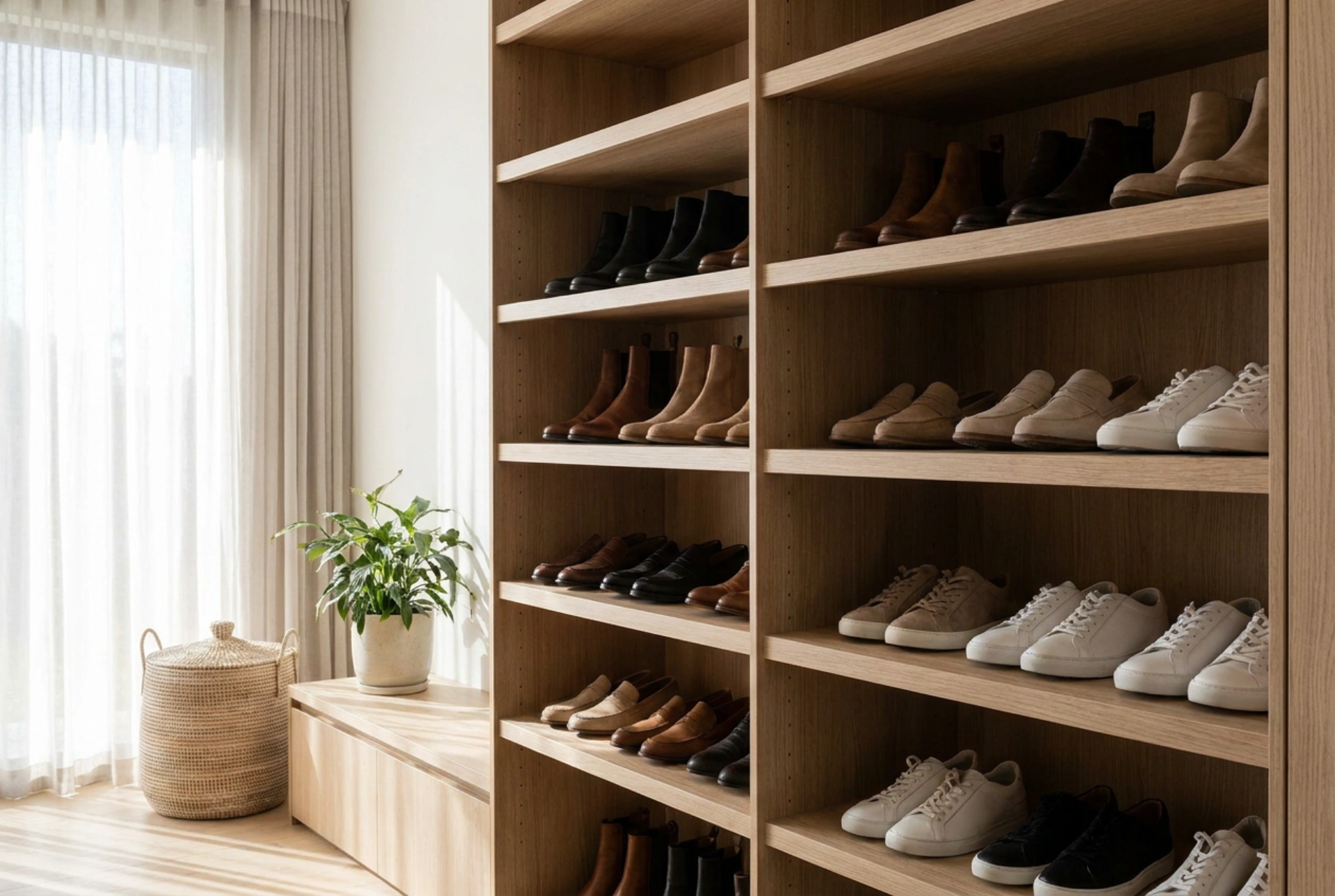
Shoes absorb a significant amount of perspiration during wear, which penetrates the inner linings and midsoles. If placed immediately into a sealed container or an unventilated shelf, this moisture becomes trapped, leading to hydrolyzed adhesives, weakened stitching, and the proliferation of odor-causing bacteria or mold. An effective wardrobe shoe rack must prioritize passive ventilation. Open-slat wooden or wire mesh shelves allow air to circulate freely around the entire shoe, facilitating dry-out. For high-end leather, the drying process should be gradual; exposing damp leather to direct heat sources causes the natural collagen fibers to shrink and crack. Instead, ambient room temperature with consistent airflow on an open rack is the ideal environment for stabilization.
Structural Physics: Choosing the Right Rack Design
The geometry of your shoe storage directly impacts the physical shape of your footwear. Flat shelves are highly versatile and prevent stress on the soles, whereas slanted shelves must feature a non-slip lip to prevent heels from sliding, which can strain the heel counter over time. When configuring shelf heights, anatomical accommodation is key. Flat shoes and sneakers require a clearance of only 15 to 20 centimeters. Ankle boots and mid-calf styles require 25 to 30 centimeters, while tall knee-high boots demand at least 45 to 50 centimeters. Storing tall boots without upright structural support causes the shafts to crease, permanently damaging the leather grain and weakening zipper mechanisms. Utilize tension boot trees or acid-free paper stuffing to maintain vertical tension on these shelves.
The Seasonal Rotation Protocol: Cleaning and Preservation
Before transitioning shoes to long-term storage for the off-season, they must undergo a systematic cleaning and conditioning process to halt chemical degradation during dormancy:
- Deep Cleansing and Neutralization: Remove all surface debris using a horsehair brush. For leather, use a pH-balanced leather cleaner to strip away accumulated salt, oils, and grime without stripping the natural moisture barrier of the hide.
- Moisture and Oil Re-balancing: Leather is skin; without active conditioning, the natural oils evaporate, leading to brittle fibers. Apply a thin layer of cream conditioner containing natural waxes to replenish the lipid content. Allow it to penetrate for twenty minutes before buffing.
- Tension Maintenance: Insert raw cedar wood shoe trees into closed shoes. Cedar serves a dual physical purpose: it exerts gentle, outward tension to smooth out wear creases in the vamp, and its porous cellular structure actively absorbs residual moisture and acidic sweat deposits from the interior lining.
Long-Term Storage Environment and Layout
The physical placement of your footwear within the wardrobe should follow a frequency-of-use hierarchy. Daily footwear should reside on the lower, most accessible racks, while seasonal items must be moved to higher shelves or sealed in breathable textile bags. Avoid storing off-season shoes in airtight plastic boxes. Plastics emit volatile organic compounds as they age, which can chemically react with shoe glues and synthetic uppers, causing yellowing and stickiness. Instead, opt for breathable cotton shoe bags placed on the upper tiers of your wardrobe racks. Ensure the storage area maintains a stable temperature between 15°C and 22°C with a relative humidity level of 40% to 50% to prevent both drying and fungal spore activation.