

An organized home relies on minimizing the cognitive load associated with locating everyday essentials like keys, writing instruments, and incoming mail. Deploying a compact drawer unit at a primary entry point or workspace establishes a physical "launchpad" that systematically intercepts clutter before it spreads across larger horizontal surfaces.
The Physics of Clutter: Why Flat Surfaces Fail
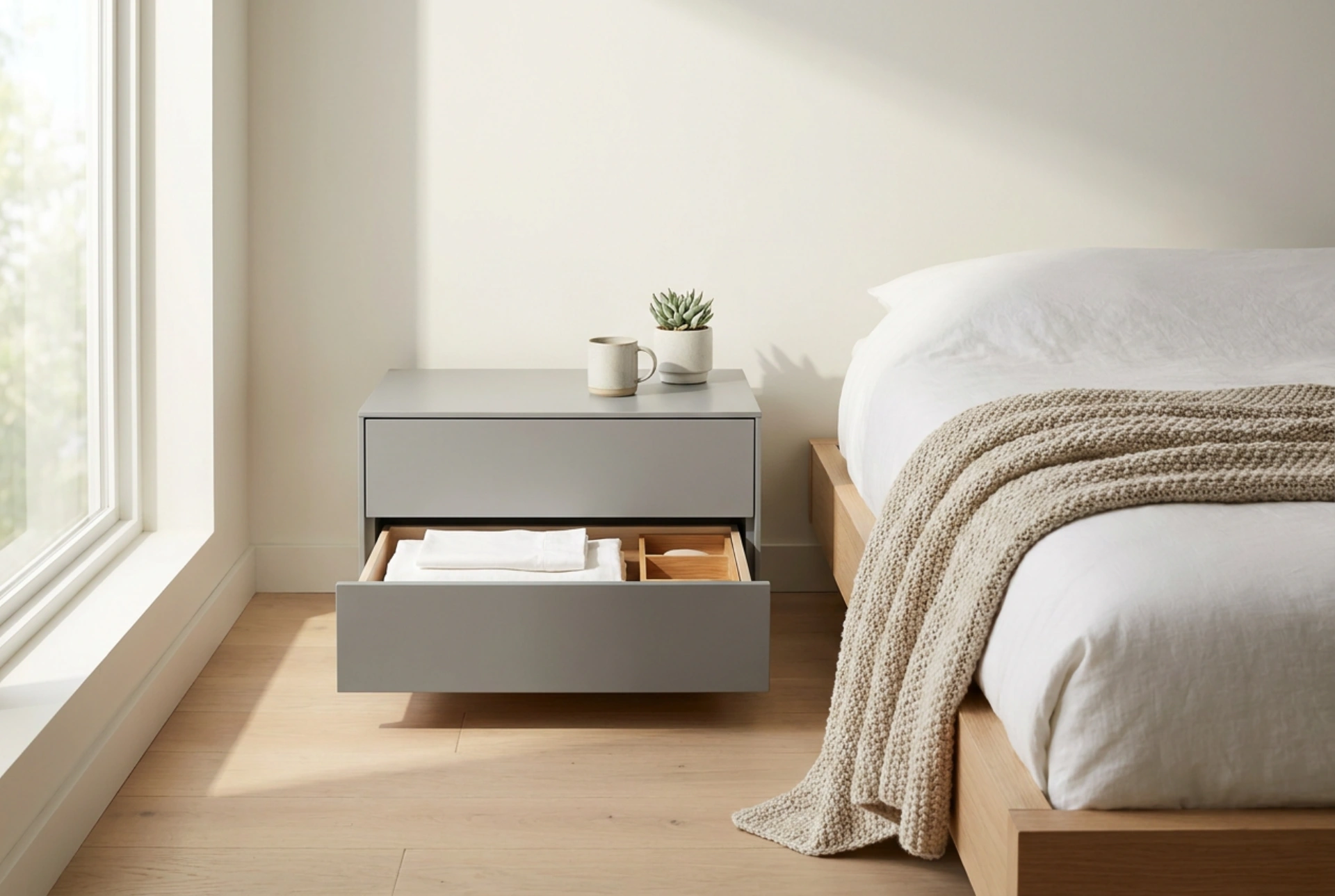
Horizontal surfaces, such as countertops, desks, and console tables, act as natural gravity wells for loose items. Because placing an object down on an open surface requires less physical energy than opening a storage container, unassigned items rapidly accumulate. This phenomenon, driven by the "horizontal plane bias," leads to visual noise and physical obstruction. To counteract this, a small drawer unit introduces vertical containment. By transitioning storage from a two-dimensional plane to a three-dimensional vertical stack, you maximize spatial efficiency. The physical boundary of a drawer also protects contents from dust and environmental wear while removing them from the visual field, reducing daily sensory clutter.
Designing the Tiered Drawer System
To make a small chest of drawers highly functional, you must organize the drawers by frequency of physical interaction. This ergonomic principle ensures that the most frequently used items require the least physical effort to retrieve and replace.
The Immediate Access Zone
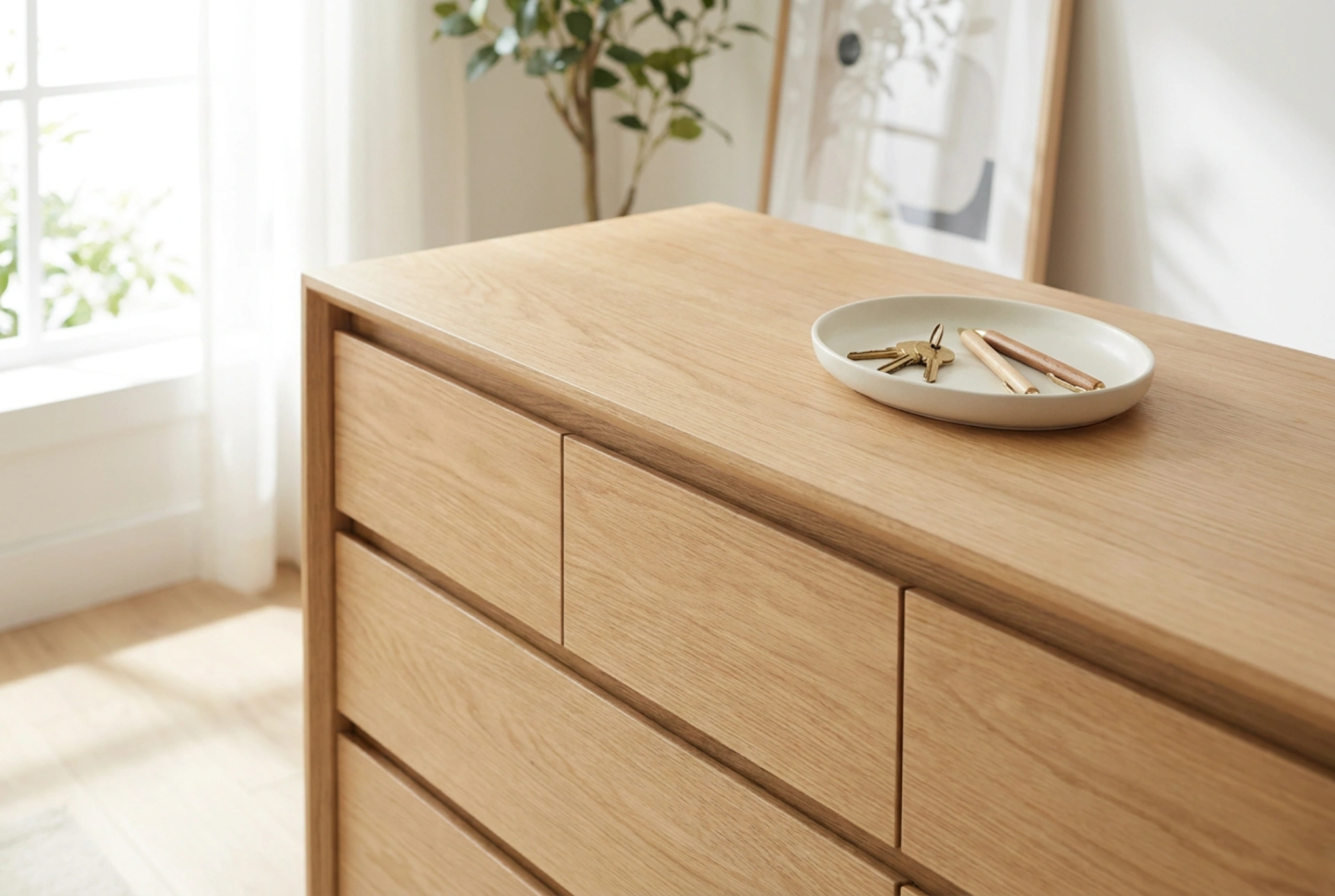
The top drawer is reserved for items used multiple times a day. This includes keys, wallets, daily eyewear, and pocket tools. Placing a shallow, open ceramic or wooden tray on top of the unit itself creates a transitional zone for immediate offloading when you walk through the door, while the top drawer itself houses these highly secure daily essentials when they are not in active rotation.
The Active Utility Zone
The middle drawer contains tools used daily but not constantly. Writing instruments, small adhesive pads, charging cables, and basic scissors belong here. Keeping these items in the middle drawer prevents them from cluttering the primary work surfaces while keeping them within easy reach of a seated or standing position.
The Archival and Backup Zone
The lowest drawer holds items needed occasionally—perhaps once a week or once a month. This includes spare batteries, backup keys, adhesive tape, or minor repair tools. Placing heavier or rarely used items at the bottom also lowers the physical center of gravity of the unit, making it more stable when upper drawers are pulled open.
Optimizing Internal Drawer Geometry
Simply placing items into a drawer loose will inevitably result in shifting, tangling, and chaos due to the kinetic energy generated when opening and closing the drawer. To prevent this, you must apply internal zoning principles.
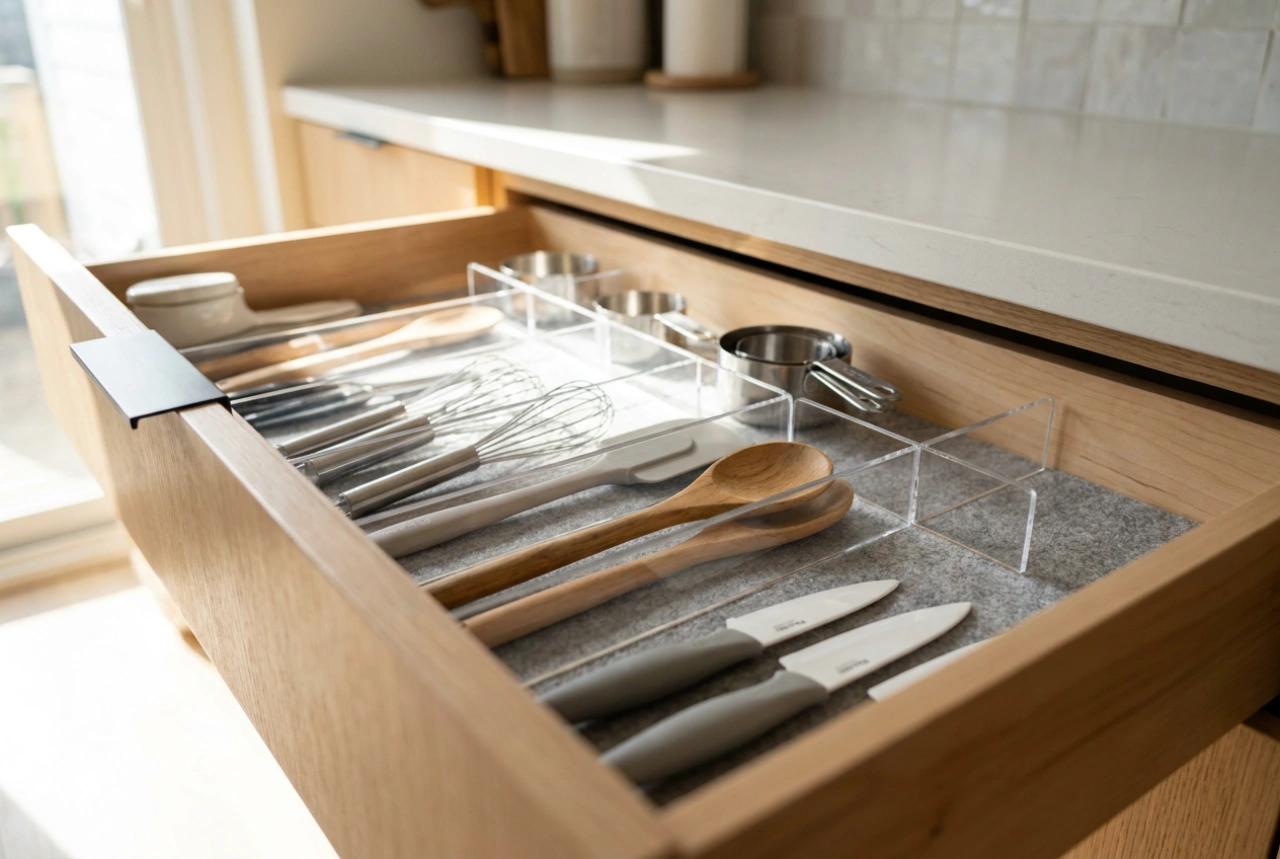
- Friction and Stability: Line the bottom of each drawer with a high-friction material such as silicone, rubber, or heavy felt. This prevents items from sliding backward or forward when the drawer is operated, maintaining the structural layout of the contents.
- Modular Division: Utilize rigid inserts made of lightweight wood, bamboo, or recycled plastics. Rectangular compartments align with the natural geometry of most household items. Avoid deep, circular containers, which waste valuable corner space and reduce overall storage density.
- Volumetric Efficiency: Ensure that the height of your drawer dividers matches the depth of the drawer. If dividers are too shallow, small items can jump compartments during sudden movements, ruining the organization system.
The Daily Maintenance Protocol
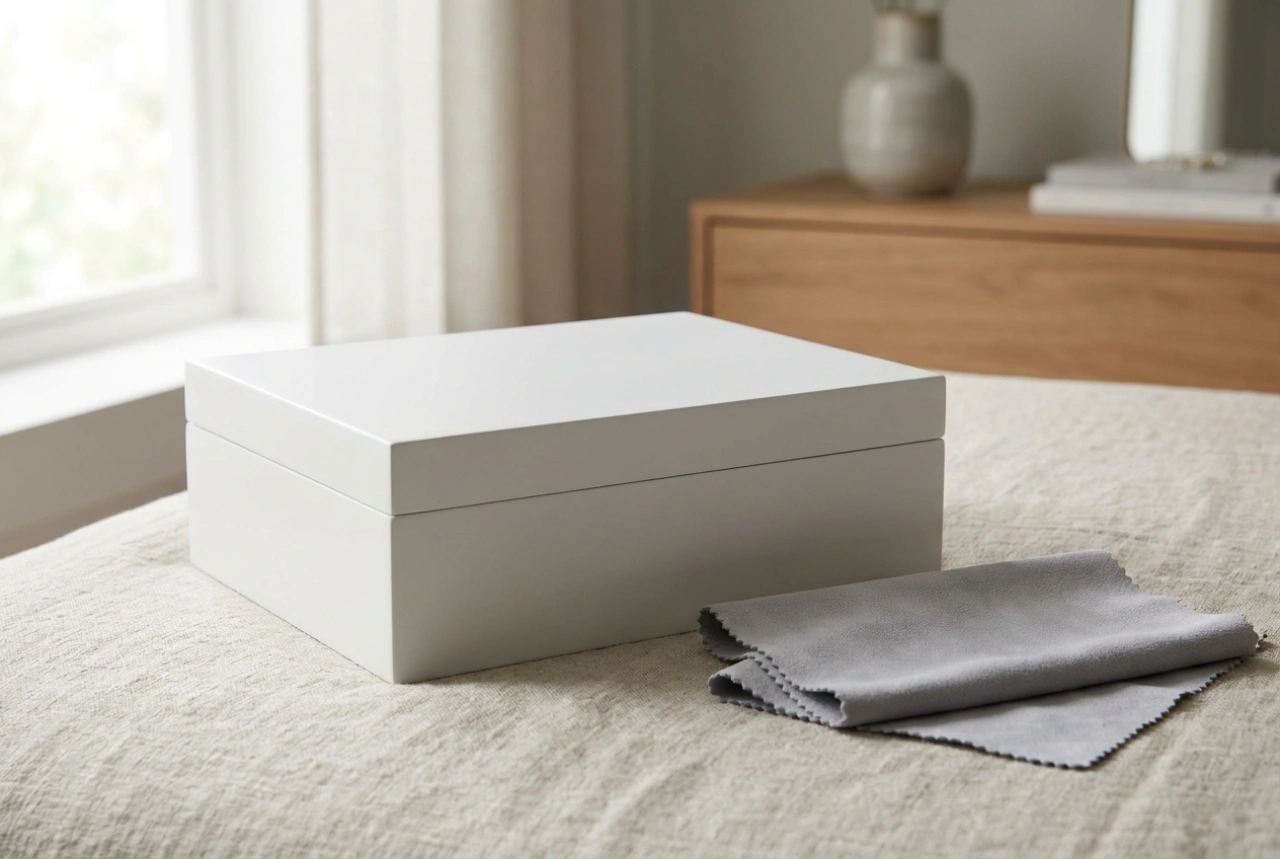
A physical storage system is only as good as the habit loop supporting it. Establish a strict "one-touch" rule: when you enter the room or finish a task, place items directly into their designated drawer compartments rather than setting them temporary on top of the unit. Once a week, perform a rapid, two-minute audit of the transitional tray on top of the unit, filing away papers, returning tools to their respective drawers, and wiping down the surfaces with a dry microfiber cloth to maintain the cleanliness of the wood or composite materials.