

Efficiently managing a large bedroom wardrobe requires more than simply stacking garments; it demands an understanding of material science, ergonomics, and microclimate control. Proper shelf division not only maximises usable space but also preserves the structural integrity of different textile fibres over months of storage.
The Physics of Wardrobe Microclimates
Inside any closed wooden or composite wardrobe, a distinct microclimate develops. Relative humidity and air temperature fluctuate depending on the room's heating and external wall proximity. Because warm, moist air naturally rises, the upper shelves of a wardrobe tend to be slightly warmer and drier, while the lower sections can trap cooler, denser air. To prevent moisture accumulation—which leads to musty odours and mould growth—it is essential to maintain proper air circulation.
Packing shelves to maximum capacity compresses the fibres and restricts airflow. A physical clearance of at least two to three centimetres should be left between the top of a folded stack and the shelf above. This gap allows convection currents to circulate air, carrying away residual humidity that fabrics naturally absorb from the room.
Vertical Division: Ergonomics and Weight Distribution
Structuring a large wardrobe for seasonal transitions relies on dividing the space into active, semi-active, and passive storage zones. This division is guided by both human ergonomics and the physical weight of the garments.
- The Passive Zone (Top Shelves): Located above eye level, these shelves are ideal for off-season garments. Lightweight, high-volume items such as winter down jackets, polyester parkas, and spare bedding should be stored here. Keeping lighter items at the top prevents structural stress on the shelving unit itself.
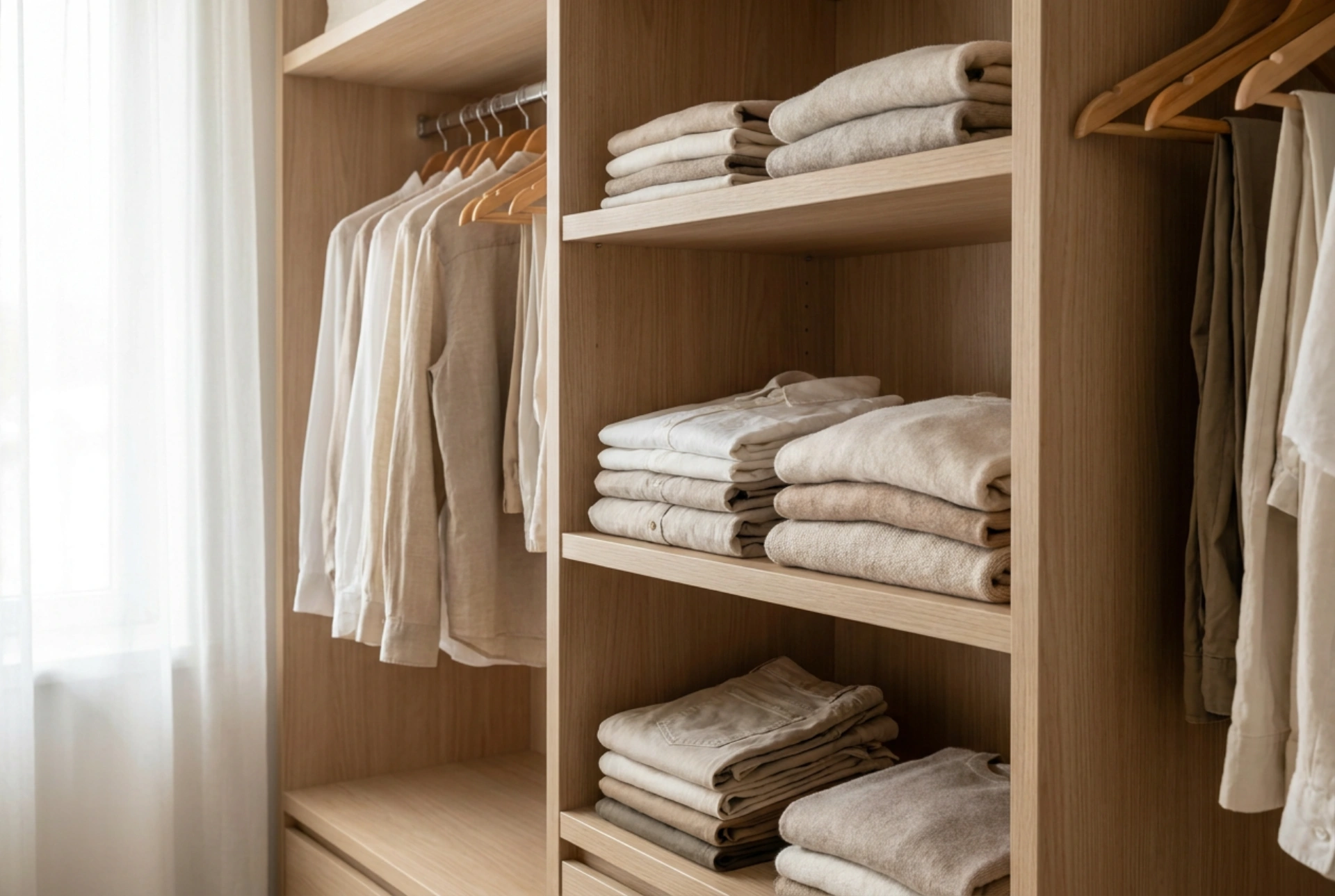
- The Active Zone (Middle Shelves, 70 to 140 cm from the floor): This is the primary ergonomic zone. Shelves here must be dedicated to current-season clothing that is accessed daily, such as cotton t-shirts, activewear, and lightweight trousers. Items should be arranged in single-layer stacks to avoid disturbing adjacent garments when retrieving a piece.
- The Semi-Active Zone (Lower Shelves): The bottom sections are perfect for heavy, bulky winter knitwear, woollen blankets, and denim. Placing heavy items at the base lowers the centre of gravity of the furniture, increasing stability.
Material Science: Preserving Seasonal Fibres
Different textile fibres react uniquely to storage conditions. Wool, silk, cotton, and synthetic polymers require distinct folding and placement strategies to prevent permanent creasing and fibre degradation.
Knitwear vs. Woven Fabrics
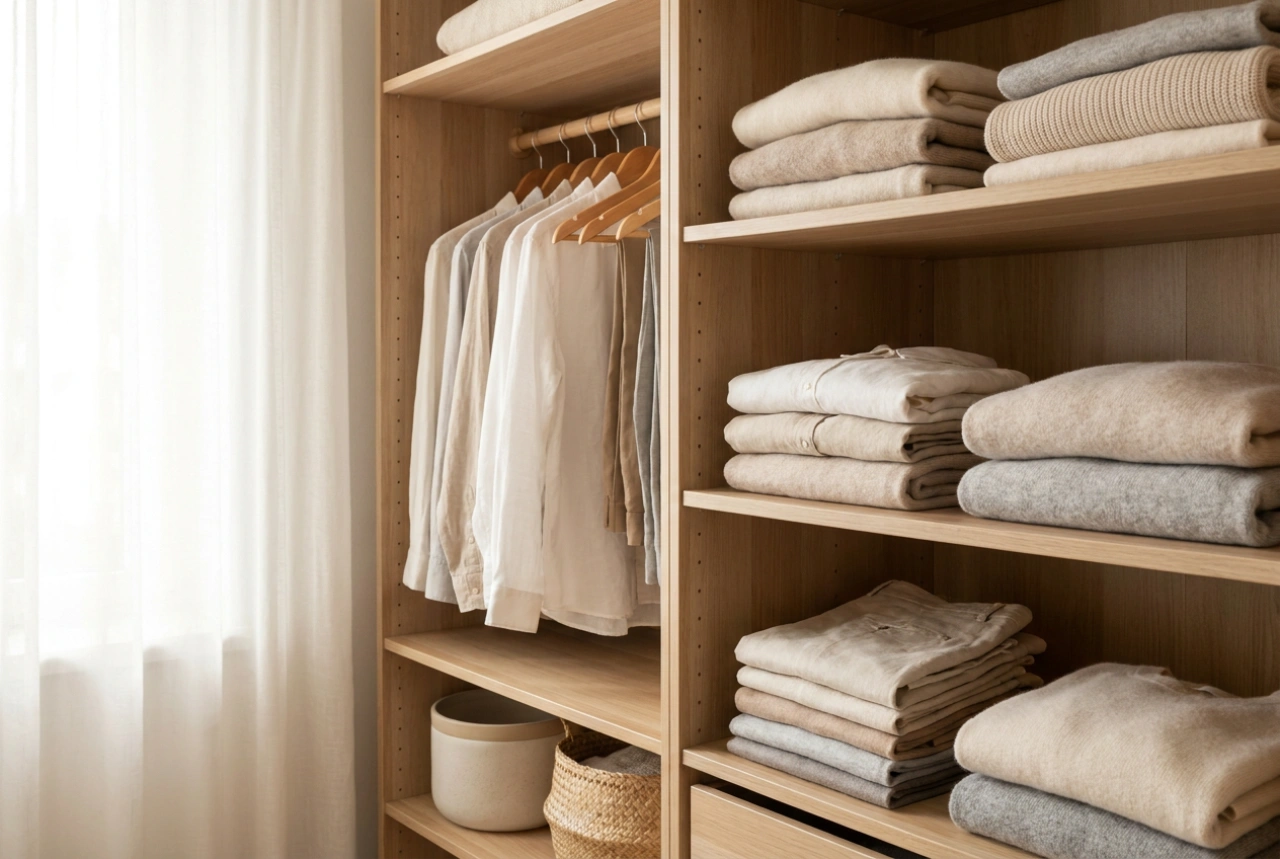
Knitwear, particularly merino wool, cashmere, and heavy cotton knits, should never be hung. Gravity exerts continuous tensile stress on the looped knit structure, causing the garment to lose its shape and stretch permanently. Instead, these items must be loosely folded and stored on lower or middle shelves. To prevent the weight of the stack from crushing the delicate loft of cashmere or mohair, limit stacks of knitwear to no more than three or four items, placing the heaviest garments at the bottom of the stack.
Woven fabrics, such as linen and heavy cotton shirts, have higher structural stability but are highly susceptible to creasing. If folded, they should be stored using soft rolls or flat folds with minimal compression. For off-season storage, wrapping delicate woollens in acid-free tissue paper prevents chemical yellowing caused by the lignin present in standard cardboard or raw wood shelving.
The Seasonal Transition Protocol
Before moving garments into passive storage shelves for several months, they must undergo a systematic cleaning and preparation process. Storing clothes with invisible organic residues, such as skin cells, sebum, or sweat, invites textile pests and leads to irreversible fabric discolouration due to oxidation.
First, wash all garments thoroughly using a pH-neutral detergent and ensure they are 100% dry. Even a minor level of residual moisture locked inside a storage container or top shelf will encourage fungal spores to thrive. Avoid using liquid fabric softeners on items destined for long-term storage; the fatty acids in softeners can oxidise over time, creating yellow patches and attracting insects.
For seasonal transition, utilise breathable cotton storage bags rather than airtight plastic vacuum bags for natural fibres like wool and silk. Natural fibres need to breathe to maintain their molecular moisture balance. Vacuum packing synthetic fibres is acceptable, but doing so to natural wool can crush the delicate fibres and damage their natural insulation properties.