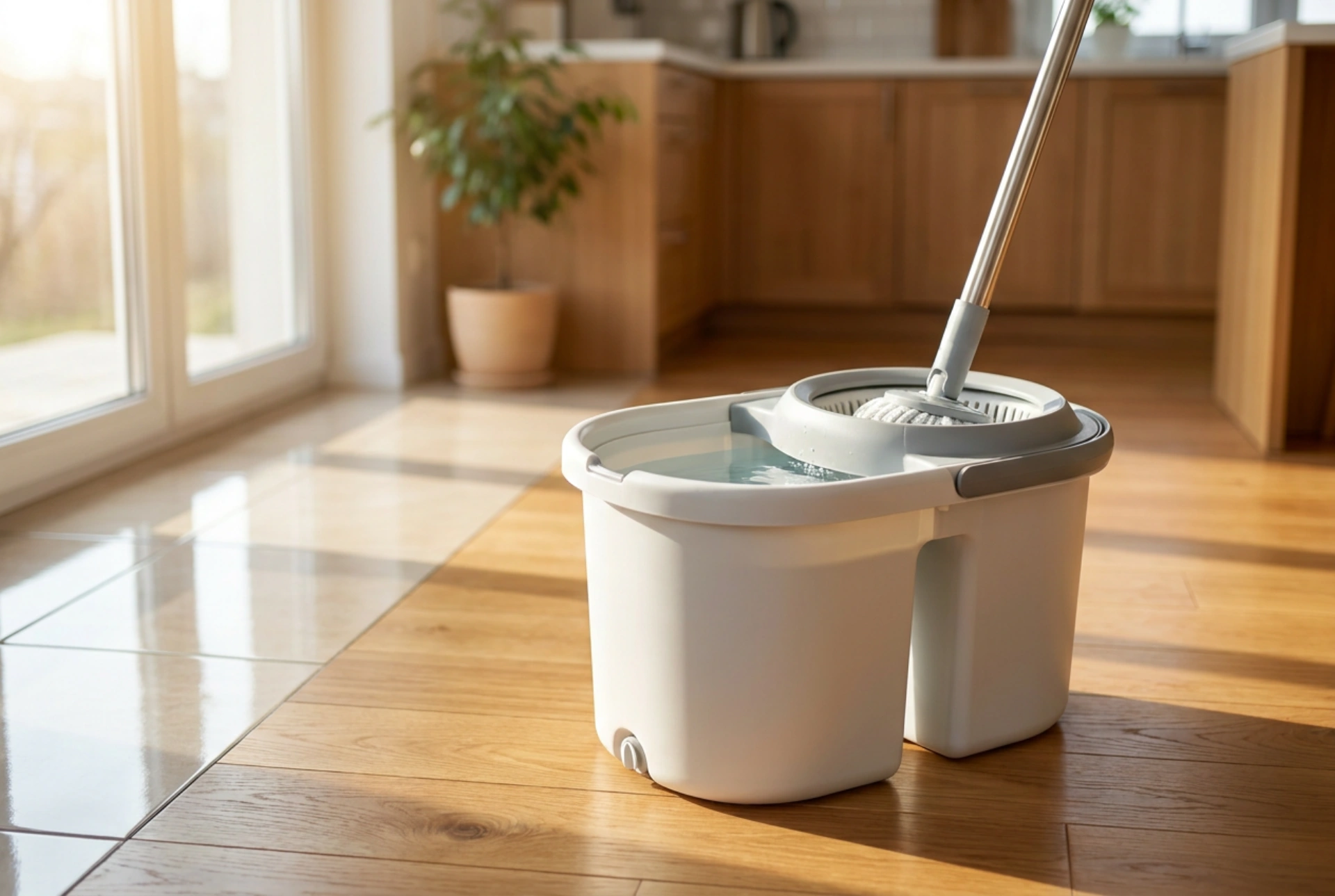


Traditional mopping often redistributes suspended soil and contaminated water across your floors, leaving a dull residue after drying. Utilizing a dual-compartment bucket system physicalises the separation of clean washing solution from dirty recovery water, achieving a clinically cleaner finish through mechanical isolation.
The Physics of Soil Redistribution and Separation
When cleaning a hard surface, the primary goal is to detach soil particles—such as silica, organic proteins, and lipids—and suspend them in a liquid medium before removing them entirely. In a standard single-cavity bucket, the very first rinse contaminates the entire volume of water. As you continue, you are essentially applying a diluted solution of suspended dirt back onto the floor. When the water evaporates, these micro-particles settle, forming a cloudy microscopic film that dulls surfaces and accumulates in grout lines.
A dual-compartment system solves this by exploiting physical barriers. One chamber holds the fresh water mixed with a surfactant, while the second chamber captures the dirty effluent squeezed from the mop head. By preventing the mixing of these two liquids, the mop fibres are always re-saturated with clean, uncontaminated solution. This maintains the concentration gradient of the cleaning agent, allowing it to continuously emulsify grease and lift dirt effectively.
Optimising Water Temperature and Chemical Solutions
To maximise the efficiency of your dual-compartment system, you must understand the thermodynamics of cleaning. Warm water, ideally between 40°C and 50°C, lowers the surface tension of the liquid. This allows the clean water to penetrate the microscopic pores of the flooring material more deeply. However, excessive heat should be avoided as it can destabilise certain floor finishes, accelerate the evaporation of the water before it can be wiped away, or warp delicate timber structures.
When selecting a cleaning agent, avoid excess surfactant dosage. Over-saturation leaves a sticky chemical residue on the floor that acts like a magnet for subsequent dust and grime. For most sealed surfaces, a neutral pH surfactant is recommended. For sanitising tiles or treating organic stains, a mild dilution of oxygen bleach can be added to the clean chamber. Always fill the clean compartment first to establish the correct water-to-chemical ratio before beginning the cleaning cycle.
The Mechanics of the Figure-Eight Technique
The movement pattern used during mopping directly influences how much soil is collected versus how much is merely relocated. Pushing the mop back and forth simply shifts debris along the stroke path, dropping particles at each turn. Instead, employ a continuous figure-eight motion. This kinetic technique ensures that the leading edge of the mop always faces the direction of travel, trapping loose particles and hair within the microfibres rather than releasing them.
When transitioning the mop back to the bucket, the order of operations is crucial. First, insert the soiled mop into the wringing or rinsing chamber. Apply mechanical pressure—either via a foot pedal, hand press, or vertical lever depending on your bucket design—to expel the dirty water and trapped particulates into the waste compartment. Only when the mop has been thoroughly wrung should you submerge it into the clean chamber to re-hydrate the fibres. This strict sequence preserves the integrity of your washing solution from the first square metre to the last.
Tailoring the Method to Flooring Materials
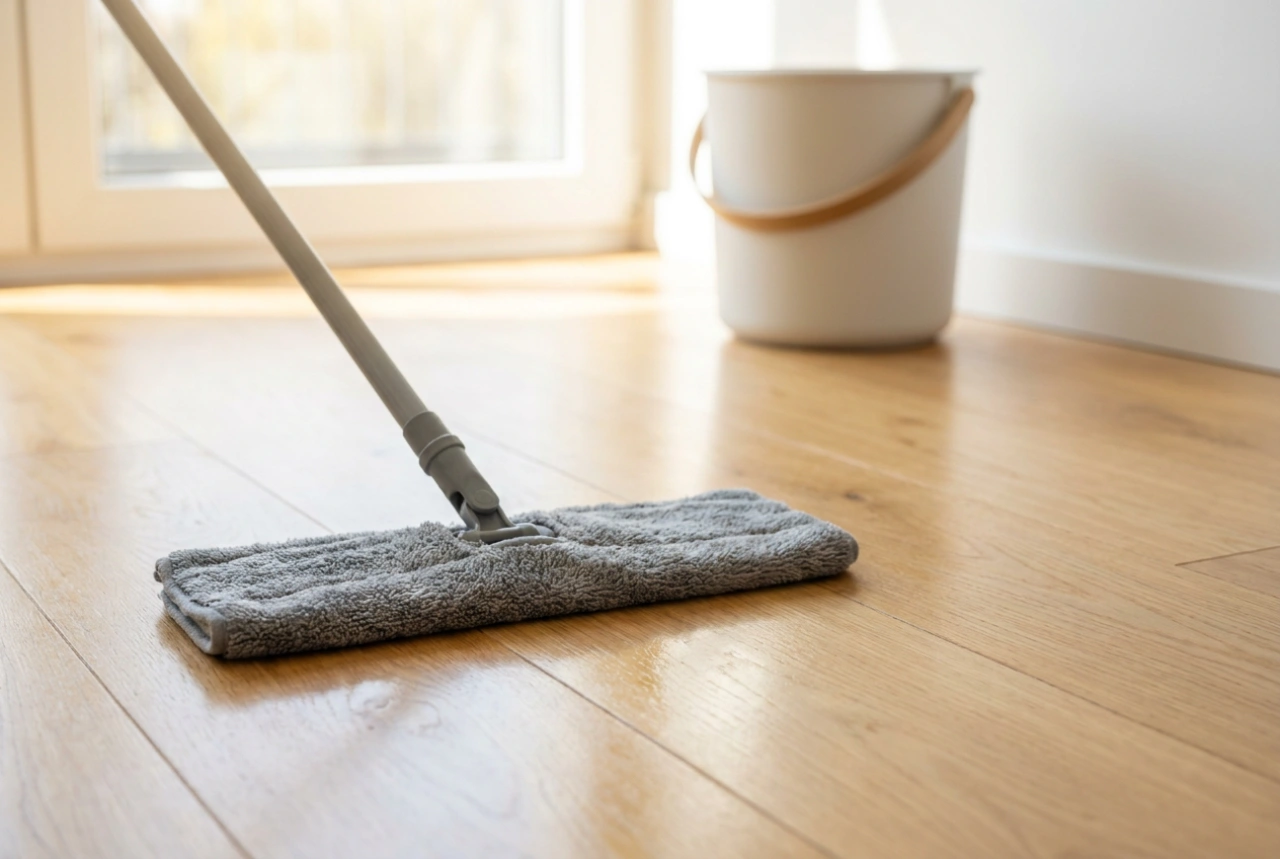
Different floor materials require varying levels of moisture control, which can be precisely managed using the wringing compartment of your dual bucket. For timber, engineered wood, or laminate floors, moisture is the enemy. Capillary action can draw standing water into the joints, causing the core material to swell and buckle. For these surfaces, wring the mop until it is merely damp to the touch, ensuring the moisture evaporates within two minutes of application.
Ceramic tiles and natural stone can tolerate higher moisture levels, which helps to loosen stubborn dirt from textured surfaces. However, grout joints are highly porous and prone to absorbing dirty water. By using the dual-compartment system, the water squeezed into the grout is clean, preventing the dark, unhygienic discolouration typical of single-bucket mopping.