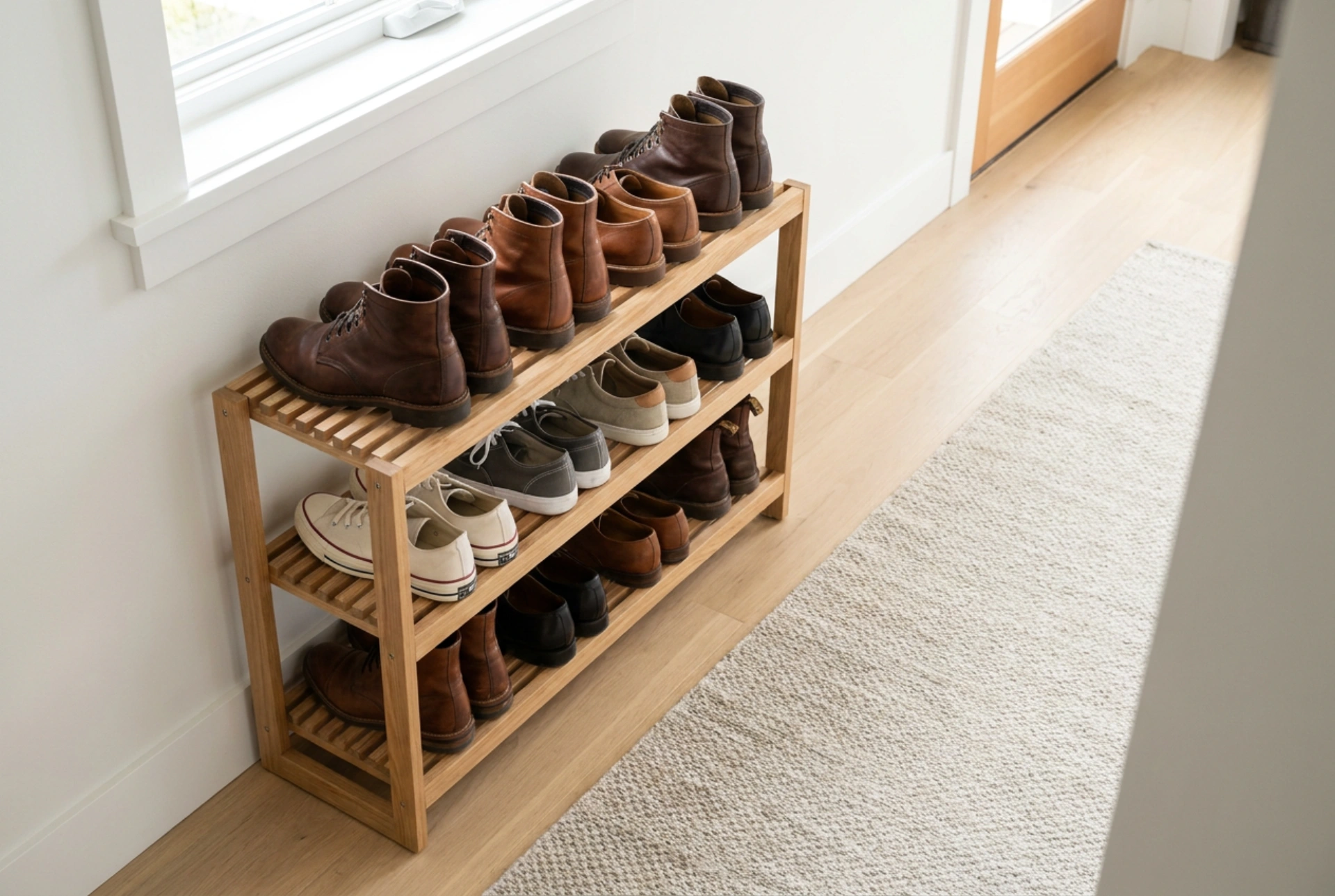


Organising a shoe cabinet efficiently requires more than just lining up pairs; it involves understanding geometry, material physics, and ergonomics to maximise space and preserve footwear. By applying systematic spatial techniques, you can turn a cluttered cupboard into an accessible, well-aerated storage system.
The Heel-to-Toe Method: Maximising Spatial Geometry
Shoes possess a natural tapered geometry, where the toe box is wider than the heel. When you place a pair of shoes side-by-side facing the same direction, you create unoccupied trapezoidal gaps on either side of the heels. To eliminate this dead space and increase cabinet capacity by up to twenty percent, apply the alternating heel-to-toe method.
Position the left shoe with the toe facing forward, and the right shoe with the heel facing forward. This interlocking arrangement allows the wider toe box of one shoe to nestle against the narrower heel of its counterpart. This simple geometric correction reduces the overall width footprint of each pair, enabling you to fit more shoes on a single shelf without crushing the uppers or distorting their structure.
Material Preservation: Airflow and Moisture Management
Every time you wear shoes, the materials absorb moisture from perspiration. Storing damp footwear in a confined cabinet with poor ventilation creates a high-humidity microclimate, which accelerates the breakdown of organic adhesives and promotes the growth of odour-causing bacteria. Maintaining material integrity requires a deliberate approach to placement and spacing.
- Maintain Air Gaps: Leave a clearance of at least two to three centimetres between adjacent pairs. This gap facilitates natural air convection, allowing moisture to evaporate evenly from the leather, canvas, or synthetic mesh.
- Respect Structural Integrity: Never stack shoes directly on top of one another. The weight of the upper shoe can permanently compress the internal heel counters and thermoplastic toe boxes of the lower shoe, leading to irreversible creasing and structural collapse.
- Use Shoe Trees: For premium leather footwear, insert unvarnished cedar wood shoe trees before placing them on the shelf. The porous cedar actively absorbs residual moisture and acidic sweat while maintaining the natural tension of the shoe upper.
Ergonomics and Weight Distribution: The Three-Tier Rule
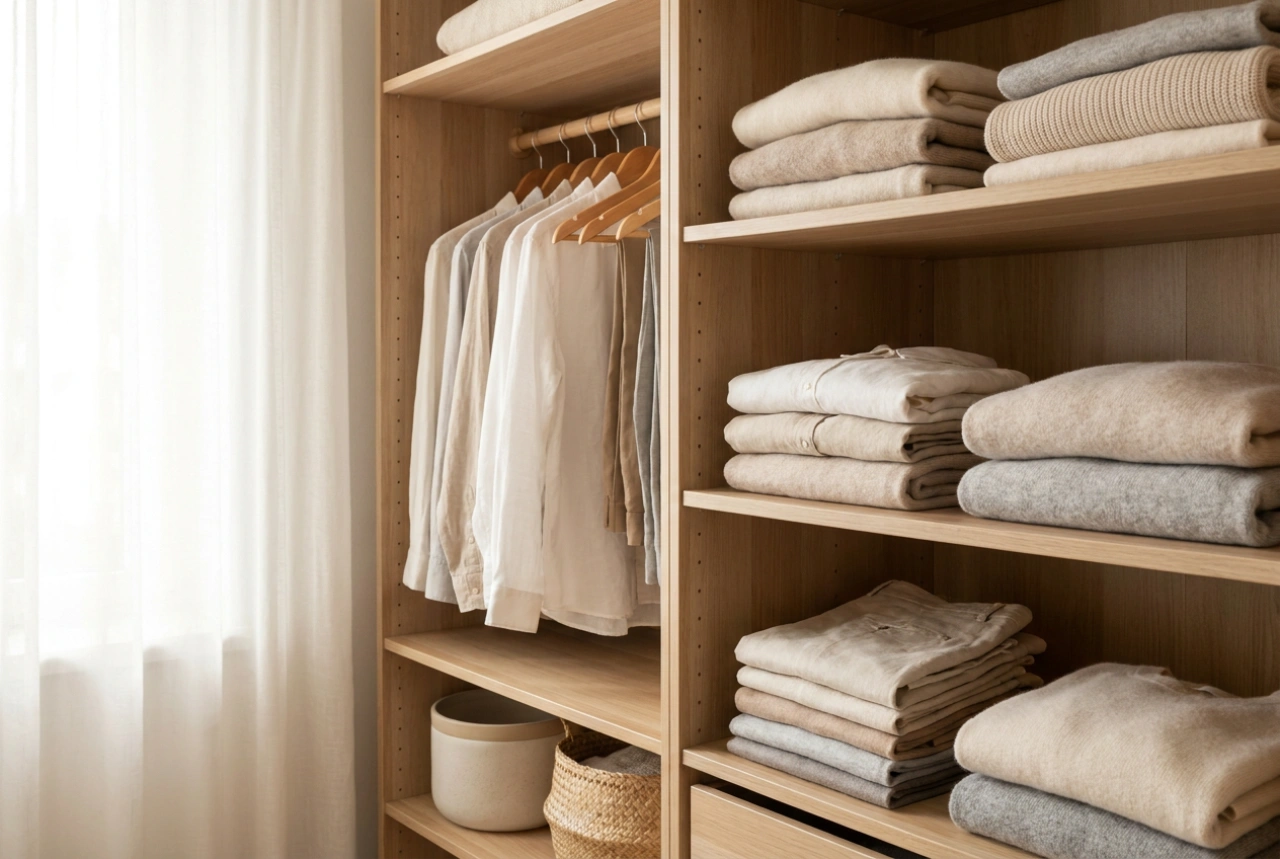
To ensure quick retrieval and maintain cabinet stability, organise shelves based on the weight of the footwear and the ergonomics of human movement. Categorising your cabinet into three distinct zones minimises physical strain and protects delicate materials.
The Lower Zone (Bottom Shelves): Reserve this area for heavy footwear, such as work boots, hiking boots, and heavy leather shoes. This keeps the centre of gravity of the cabinet low, preventing tipping. Additionally, because outsoles inevitably accumulate grit and moisture, keeping heavy shoes at the bottom ensures that falling debris does not contaminate clean footwear stored below.
The Golden Zone (Waist-to-Eye-Level Shelves): Place your most frequently worn everyday shoes, such as trainers, loafers, or office shoes, in this highly visible region. Having these pairs at eye level reduces retrieval time to seconds and eliminates the need for constant bending, protecting both your posture and the shoes from hasty, rough handling.
The Upper Zone (Top Shelves): Utilise the highest shelves for lightweight, out-of-season, or occasion-specific footwear, such as sandals in winter or formal heels. Since these are used less frequently, placing them out of immediate reach keeps the daily-use zones free from clutter.
Surface Protection and Chemical Maintenance
The soles of outdoor shoes carry various contaminants, from road salt to acidic soil particles, which can chemically degrade wooden or veneered cabinet shelves over time. To prevent this degradation, install removable, non-porous shelf liners made of ethylene-vinyl acetate (EVA) or polypropylene. These materials are chemically inert and repel water, oils, and dirt.
When cleaning the cabinet shelves, avoid harsh chlorine-based bleaching agents, which can weaken wooden joints and leave chemical residues that transfer to your footwear. Instead, use a dilute solution of a pH-neutral, plant-based surfactant in lukewarm water. Wipe down the liners and shelves with a damp microfibre cloth, and ensure the surfaces are completely dry before returning the shoes to prevent moisture build-up.