

Determining the correct depth for a wardrobe is essential to prevent clothes from being crushed, doors from jamming, and fabrics from wearing out prematurely. For standard parallel hanging, the absolute minimum internal depth required is 55 centimeters, though 60 centimeters remains the professional standard for optimal garment preservation.
The Physics of Apparel: Why 60 Centimeters is the Golden Standard
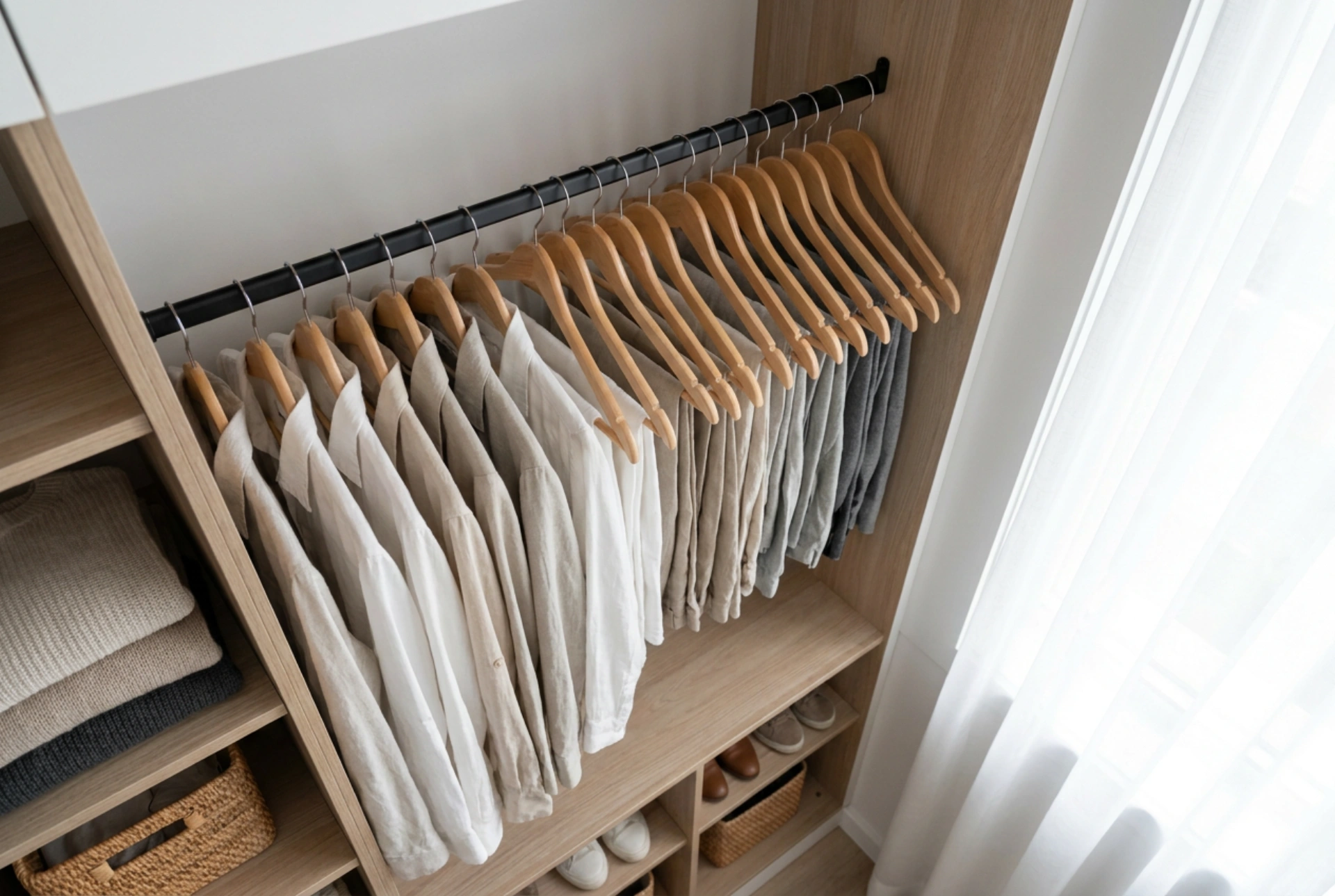
To understand wardrobe depth, one must look at human anatomy and garment construction. Standard adult clothes hangers measure between 42 and 46 centimeters in width. However, garments do not sit flat on a hanger. Thick winter coats, structured suit jackets, and even heavy wool sweaters extend several centimeters beyond the edges of the hanger due to shoulder padding and sleeve volume. When hung, a typical men's suit jacket or heavy winter coat requires a clearance width of 55 to 58 centimeters to hang naturally without touching the back wall or the front door.
When garments are squeezed into a space that is too shallow, several physical processes occur. The constant lateral pressure compresses the air pockets within insulation materials (such as down or synthetic fibers), permanently reducing their thermal efficiency. Furthermore, natural fibers like wool and silk require airflow to release moisture and naturally shed wrinkles. Cramming clothes into a tight space traps ambient humidity, leading to musty odors and fabric degradation.
Door Mechanics: Hinged vs. Sliding Systems
When planning wardrobe dimensions, it is critical to distinguish between external carcass depth and internal usable depth. The choice of door mechanism directly dictates the total space your wardrobe will occupy in the room.
- Hinged Doors: Hinged door systems are highly space-efficient regarding depth. Since the door panels sit flush with the front edge of the wardrobe frame, they do not consume internal storage space. If you build a carcass with an overall depth of 60 centimeters, you will have approximately 58 centimeters of usable internal hanging depth, which is perfectly sufficient for all garment types.
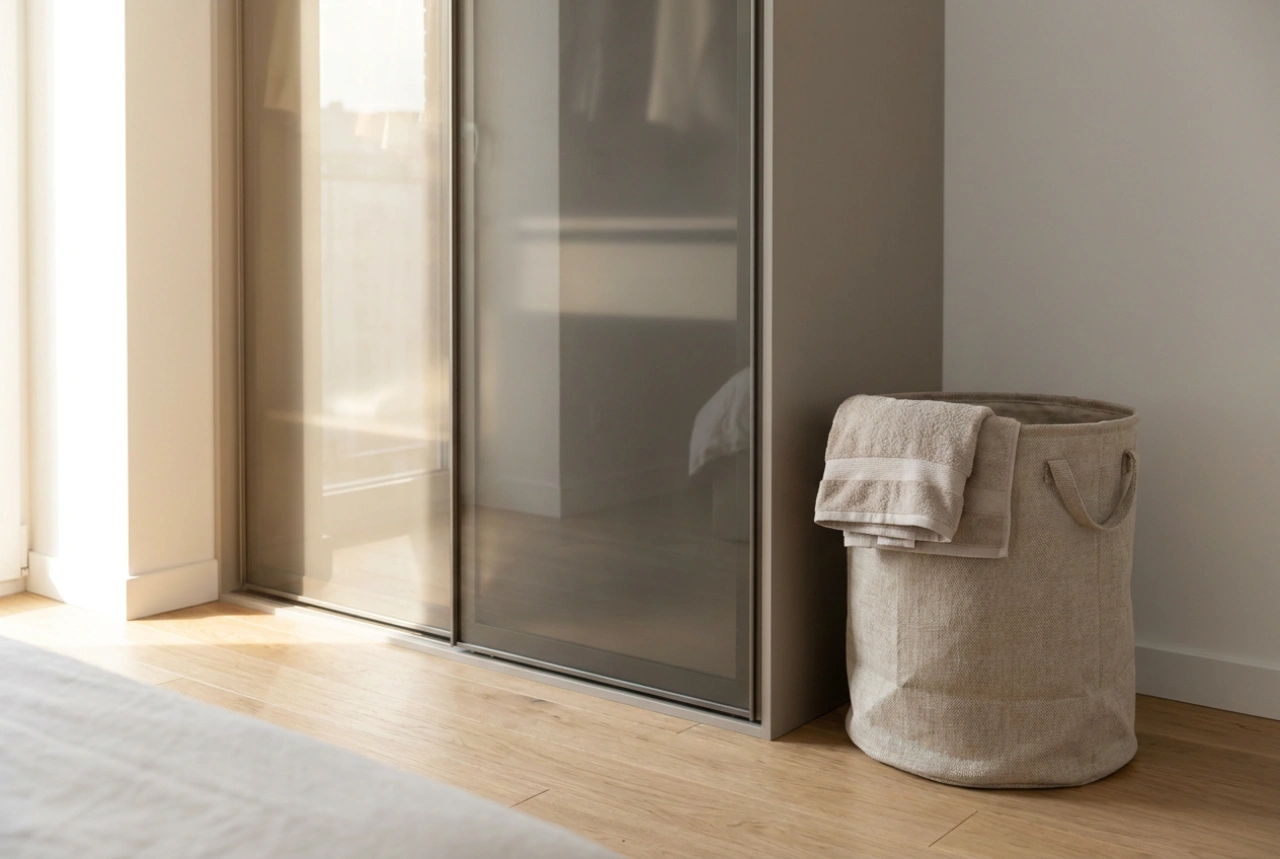
- Sliding Doors: Sliding door systems require a double track system to allow the panels to bypass one another. This track mechanism typically consumes between 8 and 10 centimeters of the wardrobe's total depth. Consequently, to achieve a healthy 60 centimeters of internal clearance, the wardrobe carcass must be designed with an external depth of at least 68 to 70 centimeters.
The Practical Consequences of a Shallow Wardrobe
Attempting to force standard hangers into a wardrobe with an internal depth of less than 55 centimeters leads to immediate functional issues. The most common problem is sleeve entrapment. Every time a hinged door is closed or a sliding door is moved, sleeves and lapels are dragged along the moving parts. This friction causes pilling, fabric tears, and can catch delicate materials like lace or silk in the hinges or sliding tracks.
Additionally, angled hanging occurs when clothes are forced into an inadequate space. Hangers naturally twist to accommodate the narrow space, causing a domino effect where every garment is pressed tightly against the next. This creates deep, stubborn creases that require frequent ironing, which further subjects the textile fibers to heat damage and shortens the lifespan of your wardrobe.
Ergonomic Workarounds for Shallow Spaces
When architectural constraints, such as narrow hallways or recessed niches, limit the available depth to less than 50 centimeters, standard parallel hanging is no longer viable. In these scenarios, the orientation of the hanging system must be rotated by 90 degrees.
Transverse (or pull-out) wardrobe rails are the primary solution for shallow spaces. Instead of hanging garments parallel to the back wall, clothes are hung facing forward, perpendicular to the back wall. This system requires an internal depth of only 35 to 40 centimeters. When selecting a transverse rail, opt for high-grade steel telescoping mechanisms that allow the entire rack to slide smoothly outward, providing full visibility and easy access to the garments at the back.