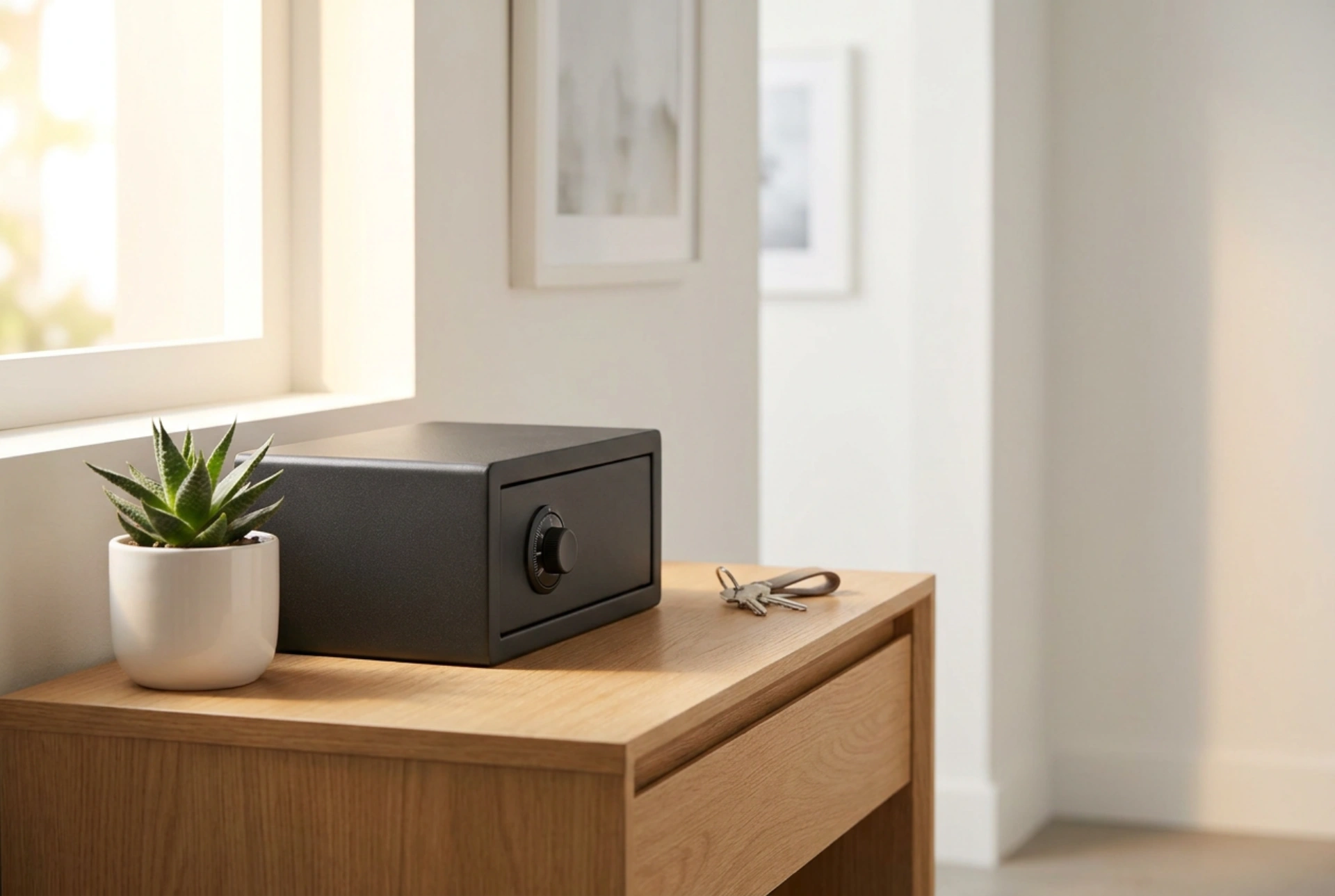


Storing a spare house key in an outdoor metal lockbox offers a reliable access solution, but environmental exposure can quickly render both the locking mechanism and the key itself useless. To ensure your emergency entry system remains fully functional when needed, you must manage material compatibility, moisture control, and mechanical wear.
The Chemistry of Corrosion: Protecting the Key and Lock
When different metals come into contact in the presence of moisture, galvanic corrosion can occur. Cheap spare keys made of iron or low-grade steel will rust rapidly when stored inside a damp metal box, eventually fusing to the internal tray or leaving a thick layer of iron oxide that prevents the key from fitting into the door lock. To prevent this, always use a high-quality solid brass or nickel-plated brass key. Brass is highly resistant to atmospheric corrosion because it naturally forms a protective brown copper carbonate patina rather than destructive rust.
Inside the lockbox, condensation is the primary enemy. As outdoor temperatures fluctuate, air inside the sealed box warms and cools, drawing in atmospheric moisture that condenses on the cold metal walls. This trapped humidity degrades both the dial mechanism and the key. Placing a small, sealed packet of silica gel inside the box acts as a passive desiccant, adsorbing water vapor from the air. Because silica gel has a finite capacity, it should be replaced or regenerated (by heating it gently in an oven) at least once a year to maintain its moisture-absorbing properties.
Mechanism Maintenance: Dry Lubrication vs. Sticky Oils
Mechanical lockboxes rely on precise physical components: spring-loaded pins, rotating dials, or sliding shackle gates. Over time, dust, pollen, and microscopic metal shavings accumulate inside these tight tolerances, causing the dials to stick or the locking bar to seize. The natural instinct is to spray the mechanism with a light household penetrating oil. However, liquid oils leave a sticky residue that actively attracts and binds airborne dust, eventually forming a thick, gummy paste that permanently jams the lock.
Instead, utilize dry lubricants such as fine graphite powder or dry PTFE (polytetrafluoroethylene) spray. These lubricants operate on a molecular level, reducing friction between sliding metal parts without leaving a wet surface. To apply, puff a tiny amount of dry graphite directly into the keyway and onto the rotating dials, then spin the dials repeatedly to distribute the powder evenly. This dry barrier ensures smooth mechanical movement even in sub-zero temperatures where liquid oils would freeze and thicken.
Strategic Installation: Physics of Placement and Anchoring
The physical location of your metal lockbox dictates its exposure to weathering elements. Mounting the box in direct sunlight subjects it to extreme thermal cycling, which accelerates condensation and degrades any rubber gaskets or protective weather covers. Choose a sheltered, shaded location—such as under an eave, behind a structural pillar, or inside a covered porch—where it is protected from driving rain and direct UV radiation.
Secure mounting requires understanding the physics of leverage. A lockbox poorly anchored into mortar or wood can be easily pried off with a simple crowbar. When mounting to masonry, avoid cheap plastic wall plugs, which degrade under tension and temperature changes. Instead, drill precise holes using a masonry bit and insert heavy-duty steel sleeve anchors or concrete screws. These fasteners expand directly against the solid brick or concrete, distributing the load and resisting high pull-out forces.
Operational Rotation and Wear Prevention
Even with proper lubrication, a static code can lead to mechanical telltales. If a push-button lockbox is left with the same combination for years, the specific internal springs corresponding to those numbers will weaken, and the buttons themselves will develop subtle physical wear, such as polished surfaces or slight play. An observant intruder can exploit these signs. To mitigate this risk, rotate your access code biannually. This redistributes physical wear across different internal levers and springs, keeping the tension uniform across all buttons or dials. Additionally, clean the exterior casing with a dry microfiber cloth to remove oily fingerprint residues that could reveal the code.