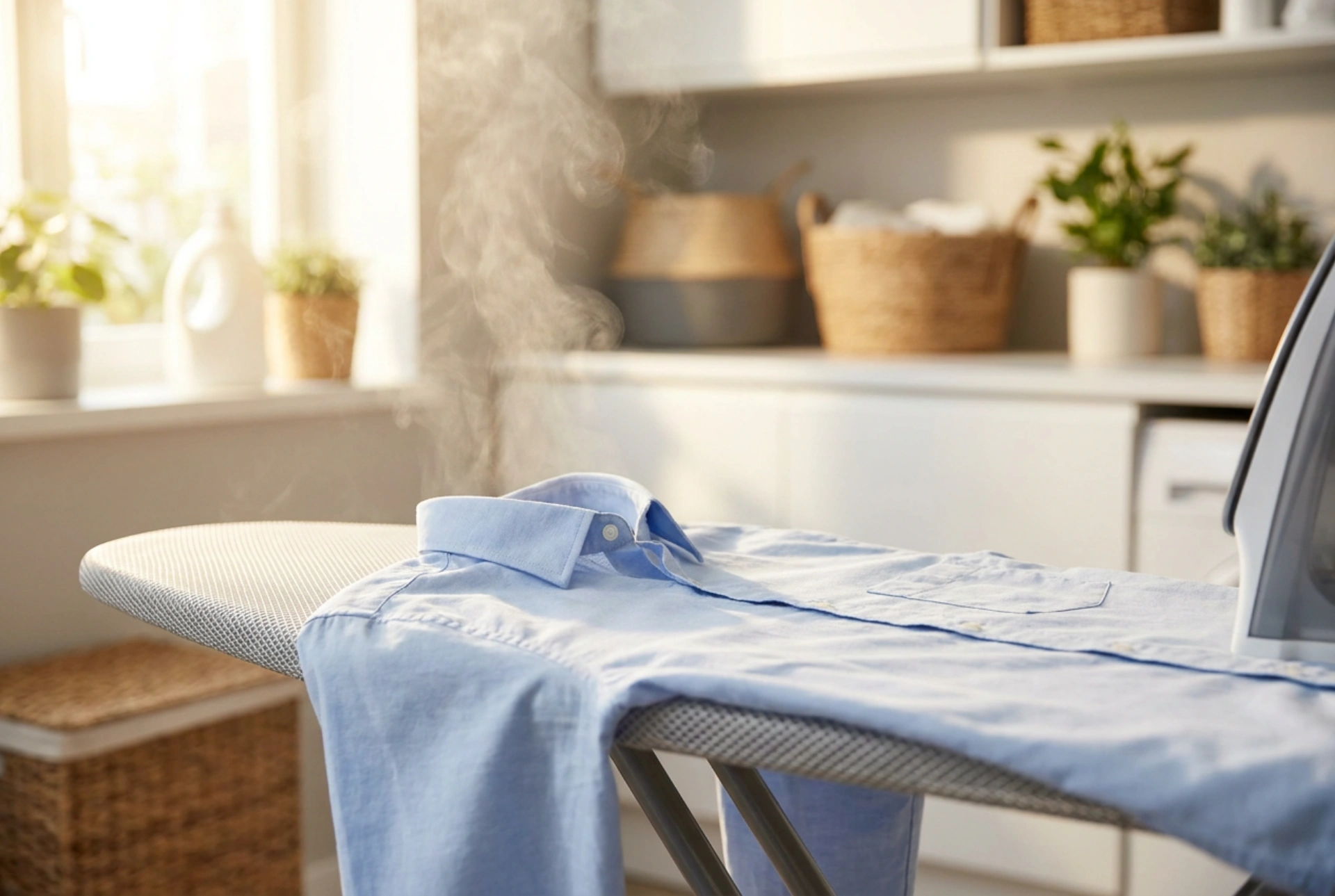


High-output steam generators and steam irons can quickly overwhelm standard ironing surfaces, leading to pooled condensation, damp clothes, and rusted equipment. Managing this excess moisture requires an understanding of thermodynamics, board construction, and active ventilation techniques.
The Physics of Steam Ironing and Condensation
Steam ironing relies on the combination of heat and water vapor to relax the intermolecular bonds of polymer chains within fabric fibers (such as cellulose in cotton or proteins in wool). As heat and moisture penetrate the fabric, the fibers become temporarily plastic, allowing them to be smoothed out under the pressure of the iron plate. Once the iron moves away, the fabric cools and dries, locking the fibers into their new flat state.
However, when high-pressure steam passes through the garment, it immediately begins to lose thermal energy. When this vapor hits the cooler ambient air under the ironing surface, it undergoes a phase transition, condensing back into liquid water. If the ironing board cannot quickly dissipate or vent this vapor, the moisture becomes trapped within the cover and padding, eventually soaking back into the garment or dripping onto the floor.
How Ironing Board Construction Influences Moisture Flow
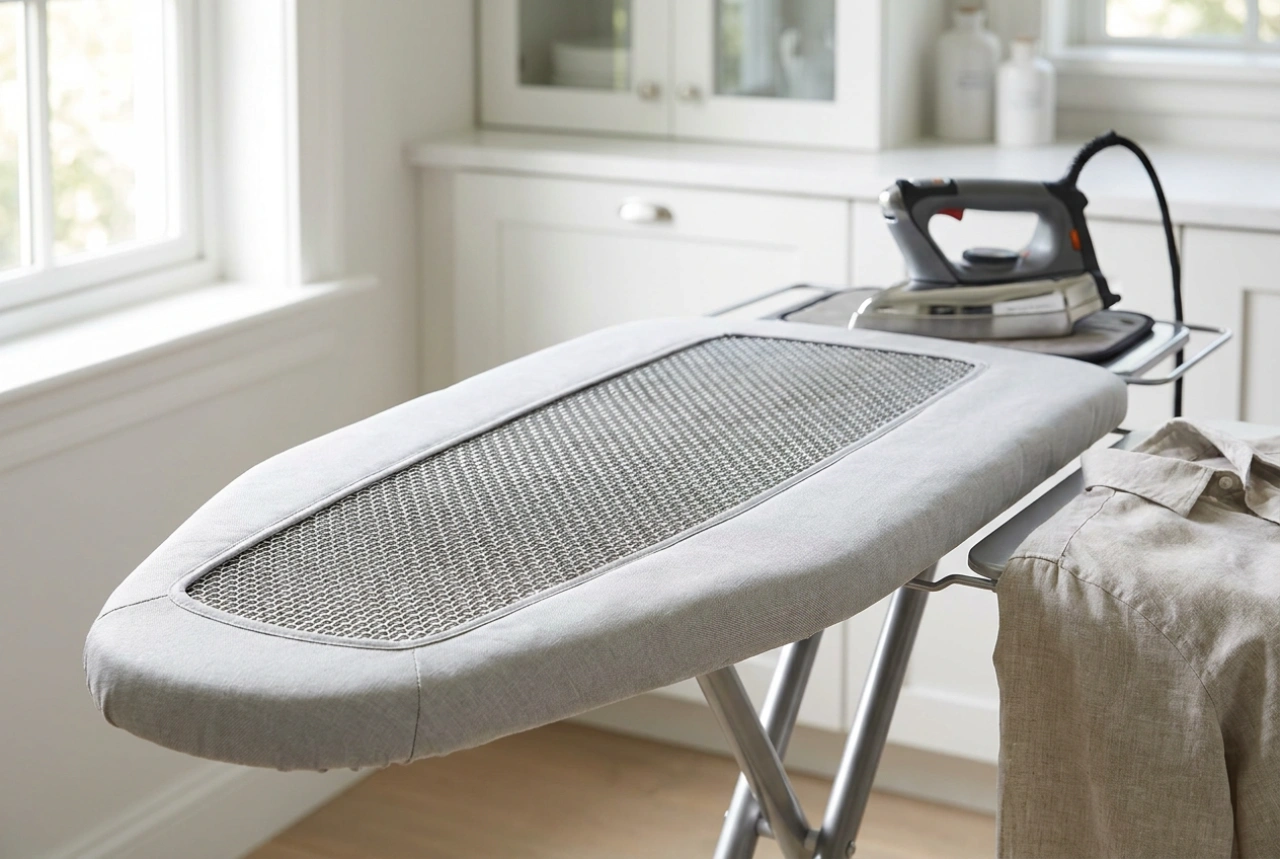
Traditional ironing boards often featured solid wood or non-perforated sheet metal decks. While sturdy, these materials act as vapor barriers. When steam hits a solid surface, it has nowhere to go but sideways or back up into the fabric. To manage high steam volumes, modern boards utilize a mesh deck design, typically made of expanded metal or perforated steel. This open structure allows vapor to pass completely through the board, preventing moisture accumulation at the contact point.
The Anatomy of a High-Performance Cover
An effective steam-ironing setup relies on a multi-layered cover system designed to handle liquid water and vapor simultaneously. Standard covers often fail because they lack the necessary thickness and material properties to manage thermal and moisture gradients.
- Top Layer (100% Cotton): Provides high friction to hold garments in place and is naturally heat-resistant. It allows steam to pass through while absorbing minimal moisture.
- Middle Layer (Felt or Open-Cell Foam): This padding distributes the pressure of the iron and absorbs temporary surges of moisture. Felt made of synthetic fibers or dense wool is ideal because it maintains its structural loft when wet, unlike cheap polyurethane foam which collapses.
- Bottom Layer (Breathable Membrane or Metallic Mesh): Some high-end covers feature a metallic heat-reflecting layer. While this reflects heat back to speed up drying, it must be micro-perforated to prevent acting as a vapor barrier.
Active Steam Boards: The Role of Ventilation and Suction
For heavy steam usage, passive ventilation through a mesh board may not be sufficient. Active ironing boards resolve this by incorporating integrated electric fans that operate in two distinct modes:
The Suction (Extraction) Function
By pulling air downward through the board, the suction function draws excess steam through the garment, the padding, and the mesh deck. This rapid airflow instantly cools and dries the fabric, setting the crease and preventing the rebound of wrinkles. Crucially, it sucks the moisture away from the user and prevents condensation from forming on the underside of the board frame.
The Inflation (Blowing) Function
By pushing air upward, this function creates an air cushion under the garment. This is designed for delicate or stretch fabrics, allowing them to be smoothed by hand or lightly steamed with minimal physical contact, preventing seam impressions and shiny patches.
Best Practices for Preventing Dampness
To keep your ironing setup dry and extend the lifespan of your board, follow these practical maintenance steps:
- Post-Ironing Ventilation: Never fold and store an ironing board immediately after use. Leave it open in a well-ventilated room for at least 30 minutes to allow the padding and cover to dry completely.
- Regulate Steam Output: Use steam only on the forward stroke to relax the fibers, and use dry heat on the backward stroke to evaporate the remaining moisture.
- Check Underlay Integrity: Inspect the foam or felt padding annually. If the padding becomes compacted or degraded, its moisture-holding capacity drops, leading to rapid dripping beneath the board.