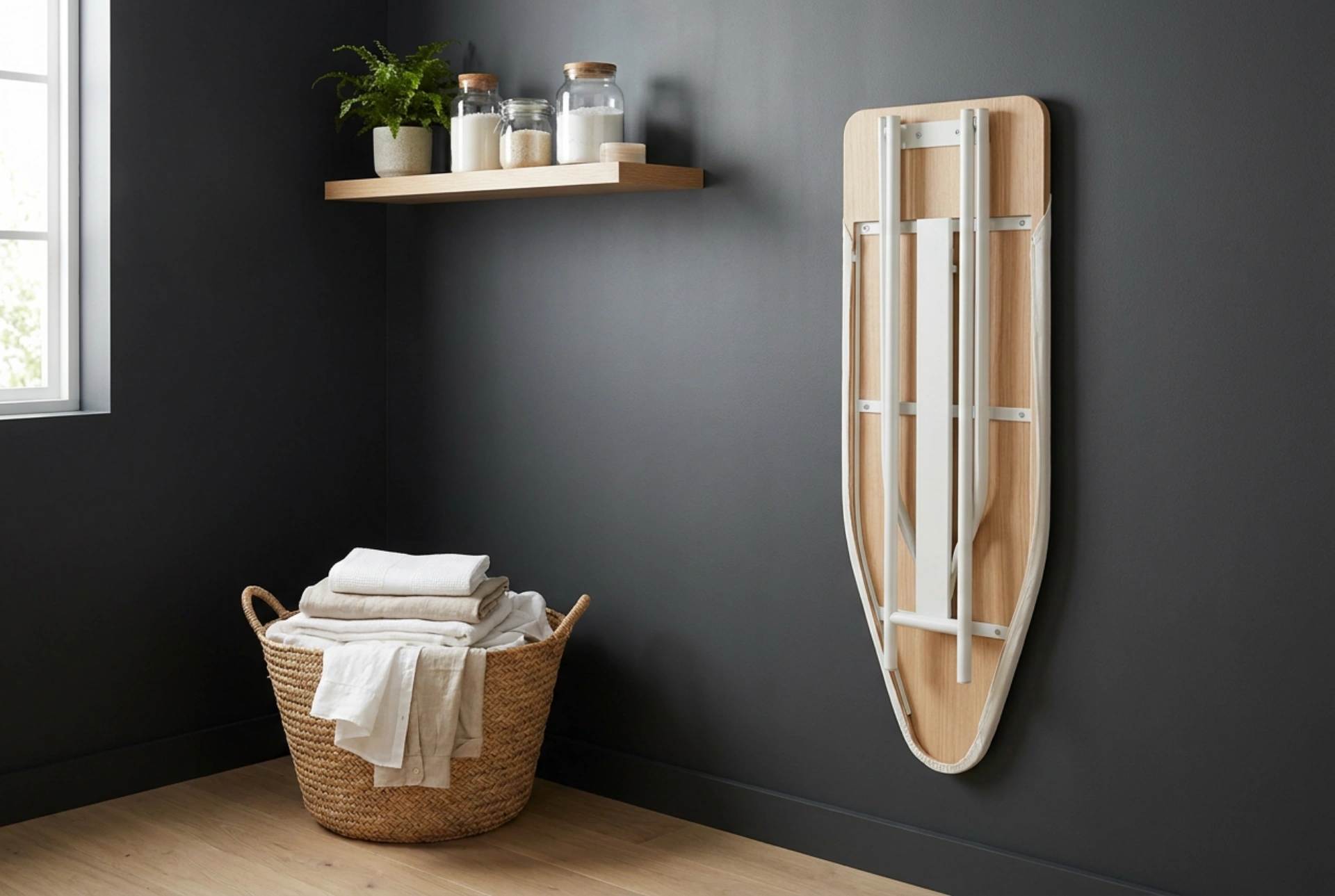


Integrating a wall-mounted folding ironing board is one of the most effective ways to optimise space in a modern home laundry room. By understanding the structural forces, thermodynamics of fabric pressing, and ergonomic principles involved, you can create a highly functional workspace that streamlines your garment care routine.
The Physics of Wall Anchoring and Cantilever Forces
A wall-mounted ironing board acts as a cantilever—a projecting beam supported only at one end. When you apply downward pressure during ironing, this leverage multiplies the force exerted on the wall bracket. For instance, pressing down with 5 kilograms of force at the tip of the board can translate to a pull-out force of several times that amount at the upper wall anchors. Therefore, understanding your wall composition is critical for structural integrity.
For masonry or solid brick walls, heavy-duty nylon expansion plugs or sleeve anchors are required. When a screw is driven into a nylon plug, it forces the polymer to expand laterally against the borehole walls, creating high frictional resistance. In contrast, hollow plasterboard (drywall) walls cannot support cantilever loads on the plasterboard alone; the bracket must be anchored directly into the timber studs. Locating these structural studs and securing them with heavy-gauge wood screws ensures that the shear and tensile forces are safely transferred to the building's frame.
Thermodynamics of Steam and Material Selection
Effective ironing is not just about heat and pressure; it is a chemical and physical process of altering polymer chains in fabric fibres. High temperatures weaken the intermolecular bonds (such as hydrogen bonds) holding the fibres in wrinkled shapes, while moisture (steam) acts as a plasticiser, allowing the molecules to slide into flat alignments. To facilitate this, the design of your ironing board must handle high moisture levels.
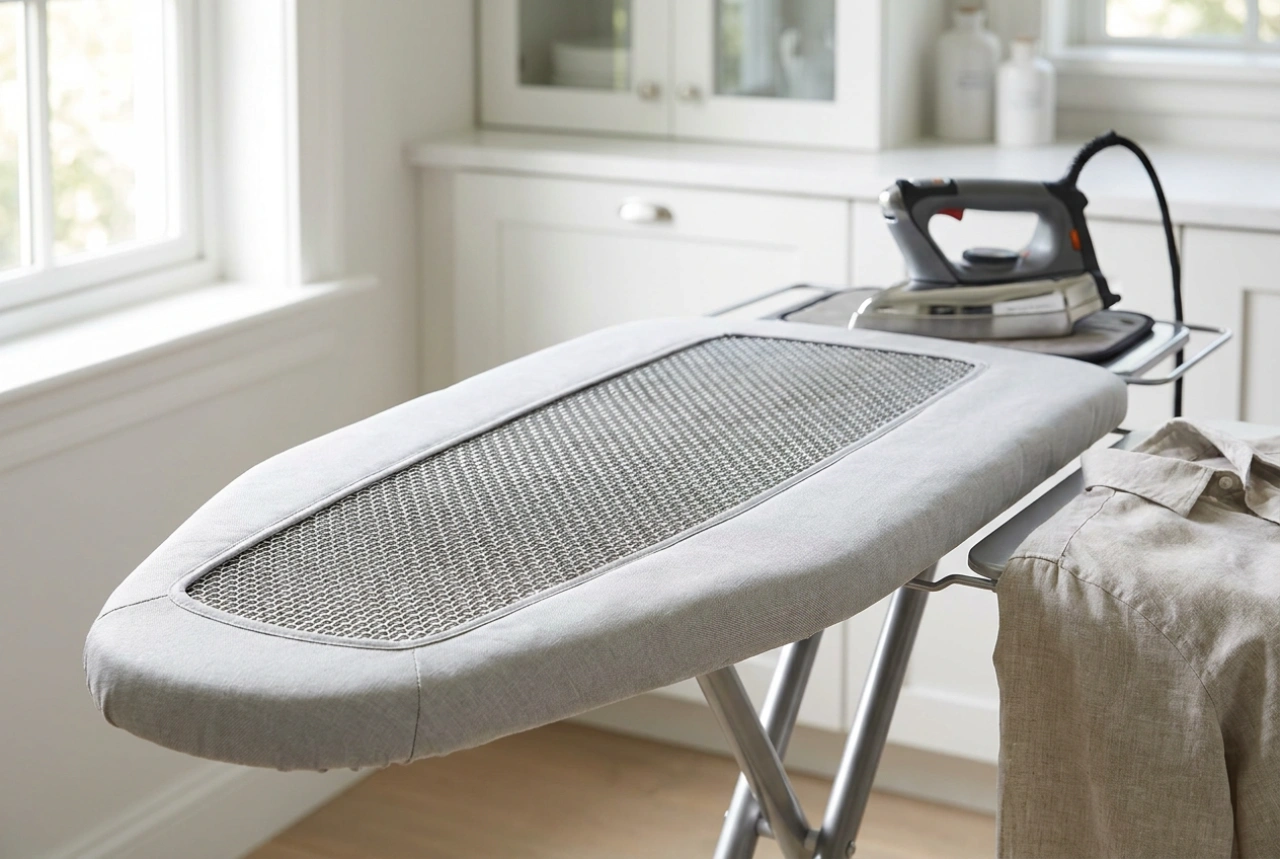
Most high-quality wall-mounted boards utilise a perforated steel mesh surface. This mesh is critical because it allows excess steam to escape downwards rather than condensing on the board surface. If steam is trapped, it quickly saturates the padding, leading to water spots on garments and eventual rust on the metal frame. The padding itself should consist of a thick felt layer, which absorbs residual moisture, covered by a heat-reflective cotton top. Covers treated with metallic particulate coatings (such as microscopic aluminium particles) reflect thermal energy back up through the garment, effectively heating the fabric from both sides simultaneously and reducing ironing time.
Ergonomics, Height Calibration, and Joint Maintenance
Incorrect ironing board height forces the body into a sustained asymmetrical posture, causing muscle fatigue in the trapezius and lumbar regions. To determine the scientifically optimal mounting height, stand with your elbows bent at a 90-degree angle; the surface of the board should sit approximately 10 to 15 centimetres below your elbow height. This range allows your shoulder muscles to remain relaxed while keeping your wrists at a neutral angle during pressing motions.
The mechanical pivot points and spring-assisted mechanisms of a folding board require routine maintenance to prevent wear. Over time, metal-on-metal friction can cause binding and squeaking. Applying a thin layer of dry silicone lubricant to the hinge joints every six months keeps the folding action smooth. Avoid using wet, oil-based lubricants, as they attract airborne lint and dust from textiles, forming a sticky abrasive paste that accelerates joint wear and risks staining clean laundry.
Thermodynamics of Storage and Safe Operation
A key operational mistake is folding the board back against the wall immediately after use. When you turn off the iron, the board's pad and cover still retain significant latent heat and moisture. Folding a damp, warm pad against a cold, non-porous wall creates an ideal microclimate for mildew and mould growth, which can damage both the wall paint and the fabric cover.
- Allow the board to remain extended for at least 10 to 15 minutes post-ironing to facilitate the evaporation of residual moisture.
- Ensure the power cord of the iron is fully cooled before wrapping it, preventing thermal degradation of the wire insulation.
- When folded, secure the locking latch to prevent accidental deployment due to kinetic vibrations in the room.