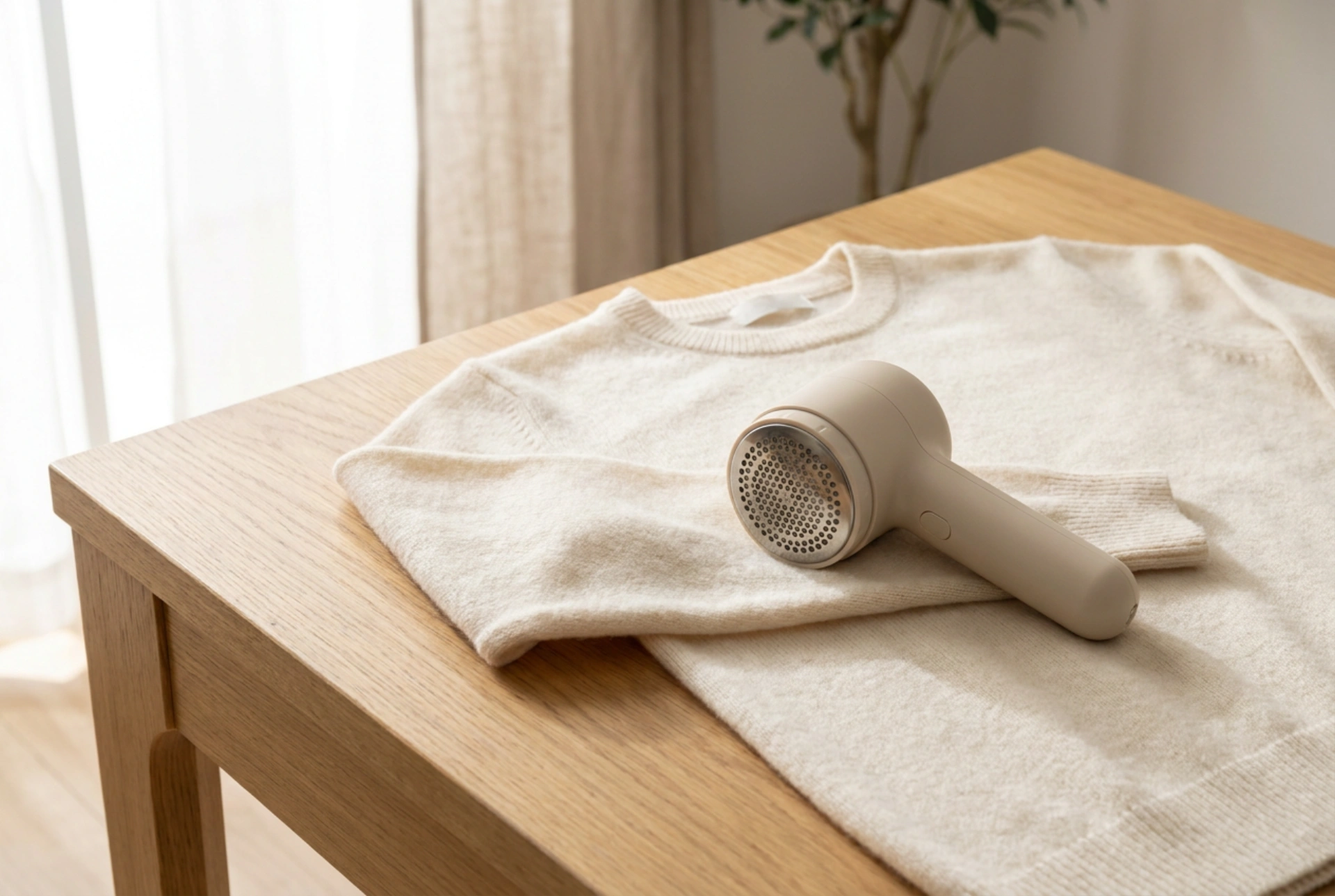


Electric fabric shavers are highly effective tools for restoring the pristine surface of pilled knitwear, but delicate fibers like cashmere, merino wool, and silk blends require a precise technique to prevent catastrophic snags. Understanding how these devices interact with delicate yarns ensures you can safely remove unsightly bobbles without cutting the structural threads of your favourite garments.
The Physics of Pilling: Why Knits Bobble
Pilling occurs when short, loose fibers within a yarn slip out of the twist due to friction during wear. These loose ends tangle together on the surface of the fabric, forming small, dense spheres known as pills or bobbles. Fine knits made from long-staple fibers like cashmere pill less over time, but initial wear often releases shorter structural fibers. An electric fabric shaver solves this by shearing off these tangled clusters. Inside the device, a set of rapidly rotating blades spins beneath a perforated metal foil. The pills enter the holes in the foil and are instantly clipped by the blades. However, if the knit is not held correctly, the main structural yarn can protrude into the foil holes, resulting in a hole in the garment.
Preparation: Creating a Tension-Controlled Workspace
Before turning on your fabric shaver, you must prepare the garment to eliminate any uneven tension or slack. Never attempt to shave a garment while wearing it, or when it is draped over an uneven surface like an ironing board or your lap.
- Find a hard, flat surface: A clean wooden or laminate table is ideal. The solid surface beneath the knit prevents the fabric from yielding under pressure, which keeps the plane of the fabric perfectly level.
- Secure the fabric: Lay the garment completely flat. Use your non-dominant hand to gently stretch the section you are working on, making it taut but not over-stretched. Over-stretching can distort the weave and pull structural loops upward into the path of the blades.
- Check for loose threads: Inspect the area for snagged loops, loose seams, or structural damage. Any loop that stands higher than the pills must be pulled to the inside of the garment beforehand; otherwise, the shaver will slice through it, creating a hole.
The Mechanics of Shaving: Pressure, Motion, and Spacing
When operating an electric shaver on delicate knits, control is entirely down to your hand movement and the spacer settings of the device. Most high-quality fabric shavers feature an adjustable distance cap or guard. For delicate knits like cashmere, mohair, or fine merino, always set this guard to its maximum height setting first.
Apply virtually zero downward pressure. The weight of the device itself is usually sufficient. Let the metal foil glide over the surface of the fabric. Use light, fluid, circular motions rather than long, linear sweeps. Circular movements allow the perforated foil to catch the pills from multiple angles, which is crucial because bobbles do not always stand upright in a single direction. If some pills remain, reduce the spacer height incrementally, testing on an inconspicuous area first, such as the inner seam or underarm.
Managing Different Fiber Types
Different natural fibers react differently to the shearing process. Cashmere and merino have highly crimped, elastic fibers that benefit from a very light, swift pass. Mohair and alpaca, however, are naturally haloed and fluffy; a fabric shaver can easily strip away their characteristic loft. For brushed or haloed knits, keep the distance guard at its highest setting and only target the densest, most obvious pills, leaving the soft halo intact. Synthetic-blend knits tend to hold onto pills much more tightly because synthetic fibers are exceptionally strong. These require slightly more patience and a slower, more deliberate circular motion to ensure clean shearing without pulling on the base fabric.
Post-Shearing Fiber Relaxation
Once you have finished shaving the garment, empty the lint collector frequently. A full chamber reduces the suction power of the fan behind the blades, which is necessary to draw the pills into the foil holes. After shaving, the sheared fibers will have slight static electricity and may look somewhat flattened. To restore the natural loft and bounce of the wool, suspend the garment on a padded hanger and apply a gentle plume of steam from a handheld garment steamer or a steam iron held several centimetres away. Do not press the iron onto the fabric. The moisture and warmth will cause the wool fibers to relax, bloom, and regain their natural, soft texture.