

Before throwing a blazer into the washing machine, you must understand that water and mechanical agitation can permanently alter its shape. Assessing the internal structure and fibre composition of your jacket is crucial to avoiding irreversible shrinkage and delamination.
The Hidden Architecture of a Blazer
A blazer is not just a single layer of fabric; it is a complex engineering feat comprising outer fabric, lining, shoulder pads, and internal chest support. Most modern tailored jackets rely on "fusing"—a synthetic interfacing glued to the outer fabric under high heat and pressure to give the chest and lapels their crisp structure. When exposed to hot water and the vigorous spinning of a washing machine, this adhesive dissolves or degrades. This leads to "bubbling," where the outer fabric separates from the lining and creates permanent, unsightly ripples that cannot be ironed out.
Higher-end blazers may use a floating canvas made of horsehair or wool. While this canvas is not glued, it is highly sensitive to water. Getting a canvassed jacket thoroughly wet causes the natural fibres of the canvas and the outer shell to shrink at different rates, resulting in severe warping and distortion of the jacket's front panels.
Fibre Physics and the Threat of Shrinkage
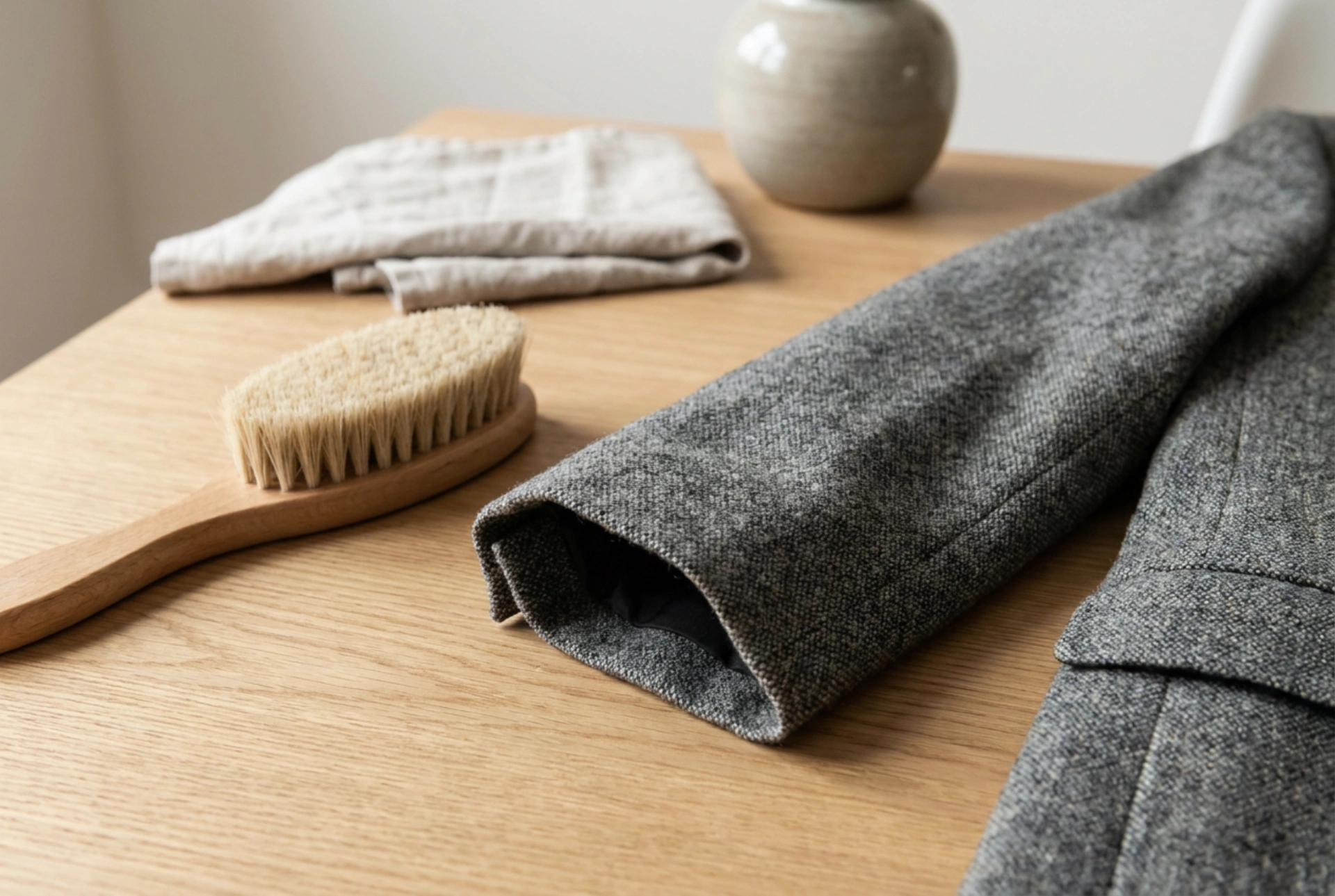
The outer shell of a high-quality blazer is often made of animal fibres like sheep's wool, cashmere, or silk. At a microscopic level, wool fibres are covered in scales. When exposed to heat, moisture, and mechanical agitation (such as the tumbling action of a washing machine drum), these scales open up, interlock, and contract. This process, known as felting, is irreversible and causes the garment to shrink significantly while losing its soft texture.
Synthetics like polyester, nylon, or viscose are less prone to felting, but they present another issue: differential shrinkage. A polyester-blend outer fabric might not shrink at all, but the viscose lining inside might contract by 5% when wet. This discrepancy pulls the seams, causing the hem and lapels to pucker, and puckered seams are nearly impossible to flatten again.
How to Assess the Risk: The Pinch and Structure Test
Before deciding to wash a blazer at home, perform a quick mechanical and chemical assessment to determine if it is unstructured or structured:
- The Pinch Test: Gently pinch the fabric on the chest area of the blazer, pulling the outer fabric and the inner lining apart. If you feel a third, stiff layer floating freely between them, your jacket has a stitched canvas and must never be machine washed. If the chest area feels thick, stiff, and inseparable, it is fused, posing a high risk of bubbling.
- The Structure Check: Unstructured blazers—those without shoulder pads, chest canvas, or full linings—are the safest candidates for home washing. If the blazer is essentially a single layer of cotton, linen, or synthetic fabric, the risk of structural damage is minimal.
- The Colourfastness Test: Moisten a cotton swab with water and a tiny drop of mild detergent. Rub it gently on an inconspicuous inside seam. If any dye transfers to the swab, the garment will bleed in the wash and should be professionally dry cleaned.
Step-by-Step Low-Risk Washing Protocol
If your blazer is unstructured and made of washable fibres (like cotton, linen, or synthetics), you can wash it using a highly controlled cycle. Follow these precise parameters to minimise physical and chemical stress:
1. Preparation and Protection
Empty all pockets and button the blazer fully to maintain its alignment. Turn the jacket inside out to protect the outer face from friction against the washing machine drum. Place it inside a large, mesh laundry bag to restrict excessive movement.
2. Temperature and Cycle Selection
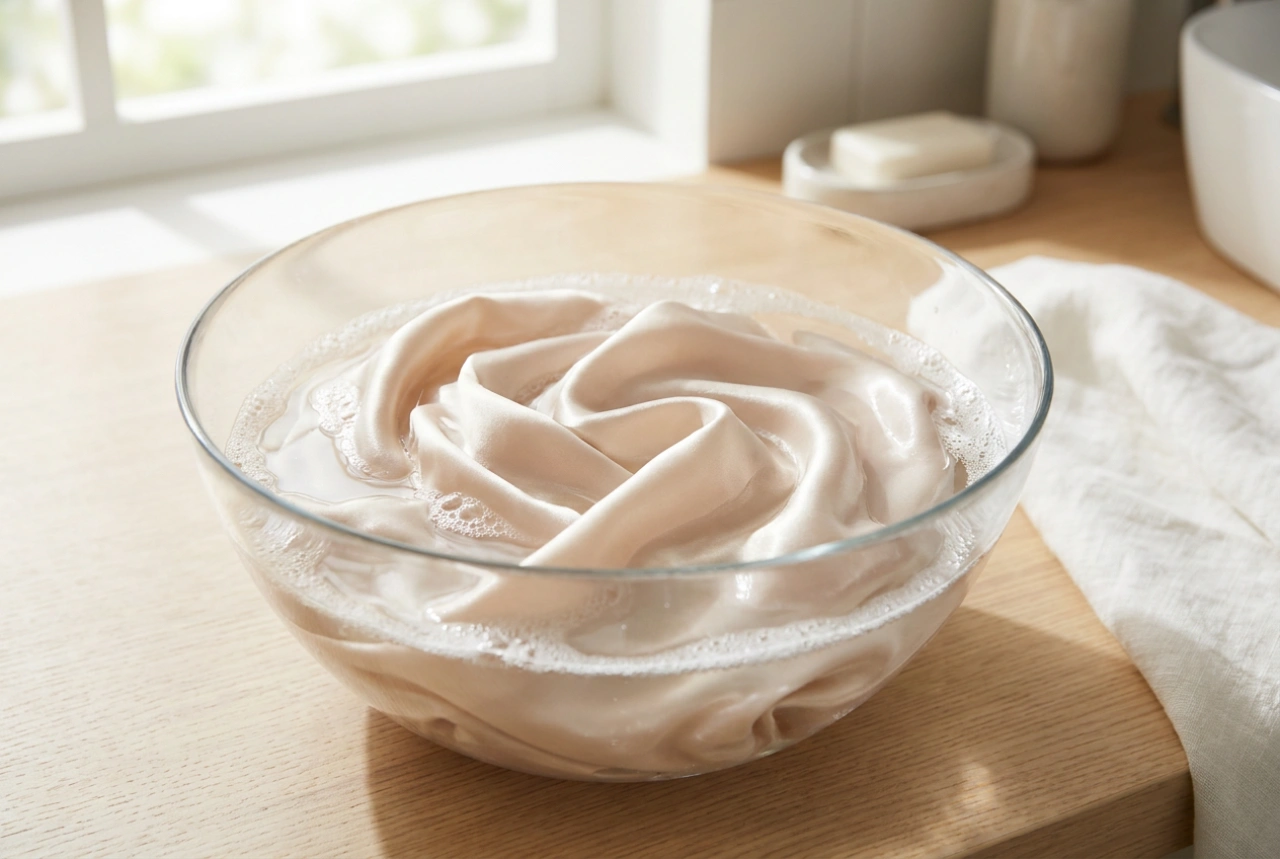
Set your washing machine to a dedicated wool or hand-wash cycle. Crucially, the water temperature must not exceed 30°C. Cold water keeps the fibres relaxed and prevents any residual adhesive from softening. Use a specialised, pH-neutral liquid detergent formulated without enzymes, as standard enzymes can degrade protein-based fibres like wool.
3. Eliminate the Spin Cycle
Deactivate the spin cycle completely or set it to a maximum of 400 RPM. Centrifugal force forces wet fabric against the drum wall, causing deep creases and putting immense strain on the seams and shoulder shapes.
4. Drying without Distortion
Never wring out a wet blazer. Instead, lay it flat on a clean, dry towel and gently roll it up to absorb excess water. Unroll it, reshape the shoulders by hand, and place it flat on a drying rack, or hang it on a wide, contoured wooden hanger that mimics human shoulders. Avoid thin wire hangers, which will stretch the wet shoulder seams out of shape.